The Flax
A free B1-level English story for language learners, readable online in 7 languages, with an option to listen via the free Storyteller app.
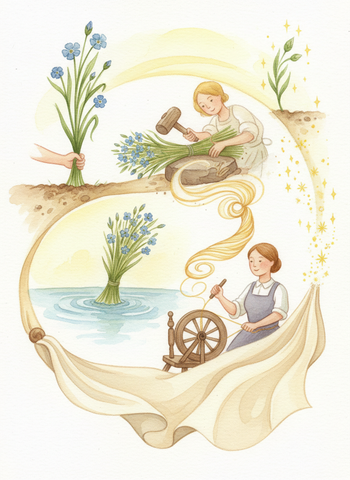
A proud stalk of flax is pulled up, soaked, beaten, and spun into linen — and just when it thinks its story is over, each ending turns out to be a new beginning.
The flax was in full bloom; it had pretty little blue flowers as delicate as the wings of a moth, or even more so. The sun shone, and the showers watered it; and this was just as good for the flax as it is for little children to be washed and then kissed by their mother. They look much prettier for it, and so did the flax.
El lino estaba en plena floración; tenía unas florecitas azules delicadas como las alas de una polilla, o incluso más. El sol brillaba, y los chubascos lo regaban; y esto era tan bueno para el lino como lo es para los niños pequeños que los bañen y luego los bese su madre. Se ven mucho más bonitos por ello, y lo mismo le pasaba al lino.
"People say that I look exceedingly well," said the flax, "and that I am so fine and long that I shall make a beautiful piece of linen. How fortunate I am; it makes me so happy, it is such a pleasant thing to know that something can be made of me. How the sunshine cheers me, and how sweet and refreshing is the rain; my happiness overpowers me, no one in the world can feel happier than I am."
«La gente dice que me veo muy bien», dijo el lino, «y que soy tan fino y largo que haré una hermosa pieza de tela de lino. Qué afortunado soy; eso me hace tan feliz, es una cosa tan agradable saber que se puede hacer algo de mí. Cómo me alegra el sol, y qué dulce y refrescante es la lluvia; mi felicidad me abruma, nadie en el mundo puede sentirse más feliz que yo.»
"Ah, yes, no doubt," said the fern, "but you do not know the world yet as well as I do, for my sticks are knotty;" and then it sung quite mournfully—
«Ah, sí, sin duda», dijo el helecho, «pero tú aún no conoces el mundo tan bien como yo, pues mis tallos son nudosos»; y entonces cantó bastante afligido:
"Snip, snap, snurre, Basse lurre: The song is ended."
«Snip, snap, snurre, Basse lurre: La canción ha terminado.»
"No, it is not ended," said the flax. "To-morrow the sun will shine, or the rain descend. I feel that I am growing. I feel that I am in full blossom. I am the happiest of all creatures."
«No, no ha terminado», dijo el lino. «Mañana brillará el sol, o caerá la lluvia. Siento que estoy creciendo. Siento que estoy en plena flor. Soy el más feliz de todos los seres.»
Well, one day some people came, who took hold of the flax, and pulled it up by the roots; this was painful; then it was laid in water as if they intended to drown it; and, after that, placed near a fire as if it were to be roasted; all this was very shocking. "We cannot expect to be happy always," said the flax; "by experiencing evil as well as good, we become wise." And certainly there was plenty of evil in store for the flax.
Bueno, un día llegó gente que agarró el lino, y lo arrancó de raíz; esto fue doloroso; luego lo pusieron en agua como si tuvieran intención de ahogarlo; y, después de eso, lo colocaron cerca de un fuego como si fuera a ser asado; todo esto fue muy impactante. «No podemos esperar ser felices siempre», dijo el lino; «al experimentar tanto el mal como el bien, nos volvemos sabios.» Y ciertamente había mucho mal reservado para el lino.
It was steeped, and roasted, and broken, and combed; indeed, it scarcely knew what was done to it. At last it was put on the spinning wheel. "Whirr, whirr," went the wheel so quickly that the flax could not collect its thoughts. "Well, I have been very happy," he thought in the midst of his pain, "and must be contented with the past;" and contented he remained till he was put on the loom, and became a beautiful piece of white linen. All the flax, even to the last stalk, was used in making this one piece.
Lo remojaron, lo asaron, lo quebraron y lo peinaron; en verdad, apenas sabía qué le estaban haciendo. Por fin lo pusieron en la rueca. «Zumba, zumba», sonaba la rueca tan deprisa que el lino no podía ordenar sus pensamientos. «Bueno, he sido muy feliz», pensó en medio de su dolor, «y debo contentarme con el pasado»; y contento se quedó hasta que lo pusieron en el telar, y se convirtió en una hermosa pieza de lino blanco. Todo el lino, hasta el último tallo, se empleó en hacer esta única pieza.
"Well, this is quite wonderful; I could not have believed that I should be so favored by fortune. The fern was not wrong with its song of
«Vaya, esto sí que es maravilloso; no habría podido creer que la fortuna me favorecería tanto. El helecho no se equivocaba con su canción de
'Snip, snap, snurre, Basse lurre.'
“Snip, snap, snurre, Basse lurre”.
But the song is not ended yet, I am sure; it is only just beginning. How wonderful it is, that after all I have suffered, I am made something of at last; I am the luckiest person in the world—so strong and fine; and how white, and what a length! This is something different to being a mere plant and bearing flowers.
Pero la canción no ha terminado todavía, estoy seguro; apenas está comenzando. Qué maravilloso es que, después de todo lo que he sufrido, al fin se haga algo de mí; soy la persona más afortunada del mundo, tan fuerte y fino; ¡y qué blanco, y qué largo! Esto es algo muy distinto a ser una simple planta que da flores.
Then I had no attention, nor any water unless it rained; now, I am watched and taken care of. Every morning the maid turns me over, and I have a shower-bath from the watering-pot every evening. Yes, and the clergyman's wife noticed me, and said I was the best piece of linen in the whole parish. I cannot be happier than I am now."
Antes no recibía atención alguna, ni agua a menos que lloviera; ahora me vigilan y me cuidan. Cada mañana la criada me da la vuelta, y cada tarde recibo una ducha de la regadera. Sí, y la esposa del párroco me notó, y dijo que era la mejor pieza de lino de toda la parroquia. No puedo ser más feliz de lo que soy ahora.»
After some time, the linen was taken into the house, placed under the scissors, and cut and torn into pieces, and then pricked with needles. This certainly was not pleasant; but at last it was made into twelve garments of that kind which people do not like to name, and yet everybody should wear one.
Al cabo de un tiempo, llevaron el lino a la casa, lo pusieron bajo las tijeras, y lo cortaron y lo desgarraron en pedazos, y luego lo pincharon con agujas. Esto ciertamente no fue agradable; pero al fin se convirtió en doce prendas de esa clase que a la gente no le gusta nombrar, y sin embargo todos deberían usar una.
"See, now, then," said the flax; "I have become something of importance. This was my destiny; it is quite a blessing. Now I shall be of some use in the world, as everyone ought to be; it is the only way to be happy. I am now divided into twelve pieces, and yet we are all one and the same in the whole dozen. It is most extraordinary good fortune."
«Miren, pues», dijo el lino; «me he convertido en algo importante. Este era mi destino; es toda una bendición. Ahora seré de alguna utilidad en el mundo, como todos deberían serlo; es la única manera de ser feliz. Ahora estoy dividido en doce partes, y sin embargo todos somos uno y el mismo en la docena entera. Es la más extraordinaria buena fortuna.»
Years passed away, and at last the linen was so worn it could scarcely hold together. "It must end very soon," said the pieces to each other; "we would gladly have held together a little longer, but it is useless to expect impossibilities." And at length they fell into rags and tatters, and thought it was all over with them, for they were torn to shreds, and steeped in water, and made into a pulp, and dried, and they knew not what besides, till all at once they found themselves beautiful white paper.
Pasaron los años, y por fin el lino estaba tan gastado que apenas podía mantenerse unido. «Esto tiene que terminar muy pronto», se decían las piezas unas a otras; «con gusto habríamos seguido juntas un poco más, pero es inútil esperar lo imposible.» Y al fin se convirtieron en harapos y jirones, y pensaron que todo había acabado para ellas, pues las desgarraron en tiras, las remojaron en agua, las convirtieron en pulpa, las secaron, y no supieron qué más, hasta que de pronto se encontraron convertidas en hermoso papel blanco.
"Well, now, this is a surprise; a glorious surprise too," said the paper. "I am now finer than ever, and I shall be written upon, and who can tell what fine things I may have written upon me. This is wonderful luck!"
«Vaya, esto sí que es una sorpresa; una gloriosa sorpresa, además», dijo el papel. «Ahora soy más fino que nunca, y me escribirán sobre mí, y quién sabe qué cosas maravillosas podrán escribirse en mí. ¡Qué suerte tan maravillosa!»
And sure enough the most beautiful stories and poetry were written upon it, and only once was there a blot, which was very fortunate. Then people heard the stories and poetry read, and it made them wiser and better; for all that was written had a good and sensible meaning, and a great blessing was contained in the words on this paper.
Y en efecto, las historias y poesías más hermosas se escribieron sobre él, y solo una vez hubo una mancha de tinta, lo cual fue muy afortunado. Entonces la gente escuchó leer las historias y poesías, y eso los hizo más sabios y mejores; pues todo lo que estaba escrito tenía un significado bueno y sensato, y una gran bendición estaba contenida en las palabras de este papel.
"I never imagined anything like this," said the paper, "when I was only a little blue flower, growing in the fields. How could I fancy that I should ever be the means of bringing knowledge and joy to man? I cannot understand it myself, and yet it is really so. Heaven knows that I have done nothing myself, but what I was obliged to do with my weak powers for my own preservation; and yet I have been promoted from one joy and honor to another.
«Nunca imaginé algo así», dijo el papel, «cuando era solo una pequeña florecita azul, creciendo en los campos. ¿Cómo podía imaginar que algún día sería el medio de traer conocimiento y alegría a la gente? Yo mismo no puedo entenderlo, y sin embargo así es en verdad. El cielo sabe que yo mismo no hice nada, salvo lo que me vi obligado a hacer con mis débiles fuerzas para preservarme; y sin embargo he sido ascendido de una alegría y un honor a otro.
Each time I think that the song is ended; and then something higher and better begins for me. I suppose now I shall be sent on my travels about the world, so that people may read me. It cannot be otherwise; indeed, it is more than probable; for I have more splendid thoughts written upon me, than I had pretty flowers in olden times. I am happier than ever."
Cada vez pienso que la canción ha terminado; y entonces algo más alto y mejor comienza para mí. Supongo que ahora me enviarán de viaje por el mundo, para que la gente me lea. No puede ser de otra manera; en verdad, es más que probable; pues tengo escritos sobre mí pensamientos más espléndidos de los que tenía flores bonitas en tiempos antiguos. Soy más feliz que nunca.»
But the paper did not go on its travels; it was sent to the printer, and all the words written upon it were set up in type, to make a book, or rather, many hundreds of books; for so many more persons could derive pleasure and profit from a printed book, than from the written paper; and if the paper had been sent around the world, it would have been worn out before it had got half through its journey.
Pero el papel no salió de viaje; lo enviaron a la imprenta, y todas las palabras escritas sobre él se compusieron en tipos, para hacer un libro, o más bien, muchos cientos de libros; pues muchas más personas podrían obtener placer y provecho de un libro impreso, que del papel manuscrito; y si el papel hubiera sido enviado a dar la vuelta al mundo, se habría gastado antes de haber recorrido la mitad de su viaje.
"This is certainly the wisest plan," said the written paper; "I really did not think of that. I shall remain at home, and be held in honor, like some old grandfather, as I really am to all these new books. They will do some good. I could not have wandered about as they do. Yet he who wrote all this has looked at me, as every word flowed from his pen upon my surface. I am the most honored of all."
«Este es sin duda el plan más sabio», dijo el papel escrito; «la verdad es que no había pensado en eso. Me quedaré en casa, y seré tenido en honor, como un viejo abuelo, que es en verdad lo que soy para todos estos libros nuevos. Ellos harán algo de bien. Yo no habría podido andar errante como hacen ellos. Y sin embargo, aquel que escribió todo esto me ha mirado, mientras cada palabra fluía de su pluma sobre mi superficie. Soy el más honrado de todos.»
Then the paper was tied in a bundle with other papers, and thrown into a tub that stood in the washhouse.
Entonces el papel fue atado en un fajo con otros papeles, y arrojado a una tina que había en el lavadero.
"After work, it is well to rest," said the paper, "and a very good opportunity to collect one's thoughts. Now I am able, for the first time, to think of my real condition; and to know one's self is true progress. What will be done with me now, I wonder? No doubt I shall still go forward. I have always progressed hitherto, as I know quite well."
«Después del trabajo, conviene descansar», dijo el papel, «y es una muy buena ocasión para recoger los propios pensamientos. Ahora puedo, por primera vez, pensar en mi verdadera condición; y conocerse a uno mismo es verdadero progreso. ¿Qué harán conmigo ahora, me pregunto? Sin duda seguiré adelante. Siempre he progresado hasta ahora, eso lo sé muy bien.»
Now it happened one day that all the paper in the tub was taken out, and laid on the hearth to be burnt. People said it could not be sold at the shop, to wrap up butter and sugar, because it had been written upon. The children in the house stood round the stove; for they wanted to see the paper burn, because it flamed up so prettily, and afterwards, among the ashes, so many red sparks could be seen running one after the other, here and there, as quick as the wind.
Sucedió entonces un día que sacaron de la tina todo el papel, y lo pusieron sobre el hogar para quemarlo. La gente decía que no podía venderse en la tienda, para envolver mantequilla y azúcar, porque tenía cosas escritas encima. Los niños de la casa se pusieron alrededor de la estufa; pues querían ver arder el papel, porque llameaba de manera tan bonita, y después, entre las cenizas, se veían tantas chispas rojas correr unas tras otras, aquí y allá, tan rápidas como el viento.
They called it seeing the children come out of school, and the last spark was the schoolmaster. They often thought the last spark had come; and one would cry, "There goes the schoolmaster;" but the next moment another spark would appear, shining so beautifully. How they would like to know where the sparks all went to! Perhaps we shall find out some day, but we don't know now.
A eso lo llamaban ver salir a los niños de la escuela, y la última chispa era el maestro de escuela. A menudo pensaban que había llegado la última chispa; y uno gritaba: «Ahí va el maestro»; pero al momento siguiente aparecía otra chispa, brillando tan hermosamente. ¡Cómo les habría gustado saber adónde iban a parar todas las chispas! Quizá lo descubramos algún día, pero por ahora no lo sabemos.
The whole bundle of paper had been placed on the fire, and was soon alight. "Ugh," cried the paper, as it burst into a bright flame; "ugh." It was certainly not very pleasant to be burning; but when the whole was wrapped in flames, the flames mounted up into the air, higher than the flax had ever been able to raise its little blue flower, and they glistened as the white linen never could have glistened. All the written letters became quite red in a moment, and all the words and thoughts turned to fire.
Todo el fajo de papel había sido puesto sobre el fuego, y pronto ardió. «Uf», gritó el papel, al estallar en una llama brillante; «uf». Ciertamente no era muy agradable estar ardiendo; pero cuando todo quedó envuelto en llamas, estas se alzaron en el aire, más alto de lo que el lino jamás había podido levantar su florecita azul, y brillaron como el lino blanco nunca pudo brillar. Todas las letras escritas se volvieron de pronto completamente rojas, y todas las palabras y pensamientos se transformaron en fuego.
"Now I am mounting straight up to the sun," said a voice in the flames; and it was as if a thousand voices echoed the words; and the flames darted up through the chimney, and went out at the top. Then a number of tiny beings, as many in number as the flowers on the flax had been, and invisible to mortal eyes, floated above them. They were even lighter and more delicate than the flowers from which they were born; and as the flames were extinguished, and nothing remained of the paper but black ashes, these little beings danced upon it; and whenever they touched it, bright red sparks appeared.
«Ahora subo derecho hacia el sol», dijo una voz entre las llamas; y era como si mil voces hicieran eco de las palabras; y las llamas se lanzaron hacia arriba por la chimenea, y salieron por lo alto. Entonces un número de seres diminutos, tantos como habían sido las flores del lino, e invisibles a los ojos mortales, flotaron sobre ellas. Eran aún más ligeros y delicados que las flores de las que habían nacido; y cuando las llamas se apagaron, y del papel no quedó más que ceniza negra, estos pequeños seres bailaron sobre ella; y cada vez que la tocaban, aparecían brillantes chispas rojas.
"The children are all out of school, and the schoolmaster was the last of all," said the children. It was good fun, and they sang over the dead ashes,—
«Los niños ya han salido todos de la escuela, y el maestro fue el último de todos», dijeron los niños. Era muy divertido, y cantaron sobre las cenizas muertas:
"Snip, snap, snurre, Basse lure: The song is ended."
«Snip, snap, snurre, Basse lurre: La canción ha terminado.»
But the little invisible beings said, "The song is never ended; the most beautiful is yet to come."
Pero los pequeños seres invisibles dijeron: «La canción nunca termina; lo más hermoso está aún por llegar.»
But the children could neither hear nor understand this, nor should they; for children must not know everything.
Pero los niños no podían ni oír ni entender esto, ni debían hacerlo; pues los niños no deben saberlo todo.
