The Cups on the Post Box
قصة إنجليزية مجانية بالمستوى B1 لمتعلمي اللغات، يمكن قراءتها على الإنترنت بلغات عددها 8، مع إمكانية الاستماع إليها عبر تطبيق Storyteller المجاني.
A village postman and a young running-club leader misunderstand each other over a stack of paper cups.
انتهى المقطع التجريبي! استمع إلى القصة كاملة في تطبيق Storyteller المجاني. حمّل التطبيق
الصوت غير متاح الآن.
Ilan has emptied the village post box every morning for eleven years. He arrives at twenty to seven, when the road is empty and the air smells of cut grass. He opens the little door with his small key and slides the letters into his bag. Then he drives to the next village. It is a quiet job, and he likes it that way.
يفرغ إيلان صندوق البريد في القرية كل صباح منذ إحدى عشرة سنة. يصل في السابعة إلا ثلثًا، حين يكون الطريق خاليًا وتفوح في الهواء رائحة العشب المقصوص. يفتح الباب الصغير بمفتاحه الصغير ويدخل الرسائل في حقيبته. ثم يقود سيارته إلى القرية التالية. وهو عمل هادئ يعجبه كما هو.
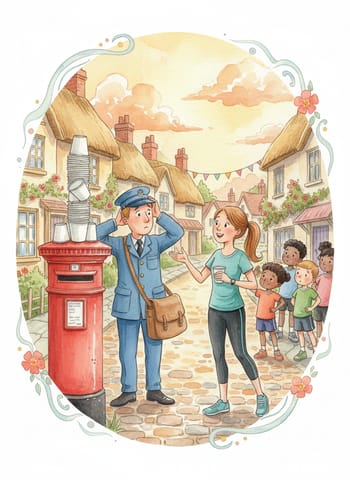
On a Monday in May, something new sits on top of the box. It is a stack of paper cups, about thirty of them, held down by a flat stone.
في أحد أيام الاثنين من شهر مايو يوجد فوق الصندوق شيء جديد: كومة من الأكواب الورقية، نحو ثلاثين كوبًا، يضغط عليها حجر مسطح.
Ilan frowns. "Somebody's rubbish," he says to the empty road.
يعبس إيلان. «قمامة أحدهم»، يقول للطريق الخالي.
He picks up the cups and carries them to the bin by the school gate. He puts the stone back in the hedge, where he thinks it belongs. Then he collects the post and drives away.
يلتقط الأكواب ويحملها إلى سلة القمامة عند بوابة المدرسة. ويعيد الحجر إلى السياج النباتي، حيث يظن أنه مكانه. ثم يجمع البريد ويمضي بسيارته.
On Tuesday, there is another stack and a different stone. Ilan throws them away too. On Wednesday, the stack is taller, and the stone is bigger. He sighs, and he throws them away again.
وفي يوم الثلاثاء توجد كومة أخرى وحجر مختلف. يرمي إيلان هذه أيضًا. وفي يوم الأربعاء تكون الكومة أعلى، والحجر أكبر. يتنهد ويرميها مرة أخرى.
Kalani, meanwhile, is having a very bad week.
أما كالاني فتمر في هذه الأثناء بأسبوع سيئ جدًا.
She is nineteen, and she has just come home after her first year at college. She wants to do something useful in the village. So she has started a morning running club for beginners. Twelve people have joined. They meet at seven o'clock by the post box, and they run once round the lake.
عمرها تسعة عشر عامًا، وقد عادت للتو إلى البيت بعد سنتها الأولى في الجامعة. تريد أن تفعل شيئًا مفيدًا في القرية. لذلك بدأت نادي ركض صباحيًا للمبتدئين. انضم إليه اثنا عشر شخصًا. يلتقون في السابعة عند صندوق البريد، ويركضون دورة واحدة حول البحيرة.
Kalani is in charge of everything. She plans the route, she counts the runners, and she worries a lot. Every morning at half past six, she leaves a stack of cups on the box. Later, she comes back with a big jug of water for the runners.
كالاني هي المسؤولة عن كل شيء. تخطط المسار، وتعد العدّائين، وتقلق كثيرًا. وكل صباح في السادسة والنصف تترك كومة أكواب على الصندوق. وبعد ذلك تعود ومعها إبريق كبير من الماء للعدّائين.
But every morning, the cups are gone.
لكن في كل صباح تكون الأكواب قد اختفت.
"Someone is stealing them," she tells her friend on the phone. "Or someone doesn't like us. I don't know which is worse."
«هناك من يسرقها»، تقول لصديقتها على الهاتف. «أو هناك من لا يحبنا. لا أعرف أيهما أسوأ.»
"Just ask around," her friend says.
«اسألي في الجوار فقط»، تقول صديقتها.
"I can't," Kalani says. "What if I sound silly?"
«لا أستطيع»، تقول كالاني. «ماذا لو بدوت سخيفة؟»
On Thursday, she writes a note and puts it under the stone. It says, "Please stop taking our cups. They are for the runners."
وفي يوم الخميس تكتب ملاحظة وتضعها تحت الحجر. مكتوب فيها: «من فضلكم توقفوا عن أخذ أكوابنا. هي للعدّائين.»
When Ilan finds the note, he goes very quiet, as he always does when he is annoyed. He reads it twice. Nobody tells a postman what to do with his own post box, he thinks. He takes a pen from his pocket. Underneath, he writes, "Please stop leaving rubbish on a public post box."
حين يجد إيلان الملاحظة يصمت تمامًا، كما يفعل دائمًا حين ينزعج. يقرؤها مرتين. لا أحد يقول لساعي البريد ماذا يفعل بصندوق بريده، يفكر. يخرج قلمًا من جيبه. وتحتها يكتب: «من فضلكم توقفوا عن ترك القمامة على صندوق بريد عام.»
He puts the note back under the stone. Then he feels a little pleased with himself, and a little ashamed.
يعيد الملاحظة تحت الحجر. ثم يشعر بشيء من الرضا عن نفسه، وبشيء من الخجل.
Later that morning, Kalani reads his answer under the stone. She feels her stomach turn over. Rubbish! Those are good cups, and she paid for them with her own money.
وفي وقت لاحق من ذلك الصباح تقرأ كالاني رده تحت الحجر. تشعر بمعدتها تنقلب. قمامة! هذه أكواب جيدة، وقد دفعت ثمنها من مالها الخاص.
She decides that notes are not working. She sets her alarm for five o'clock. At twenty past six, she is sitting on the low wall next to the post box. She has a jug of water and her phone. She is determined to say something to the person who takes her cups, and to say it clearly.
تقرر أن الملاحظات لا تنفع. تضبط منبهها على الخامسة. وفي السادسة وعشرين دقيقة تكون جالسة على السور المنخفض بجانب صندوق البريد. معها إبريق ماء وهاتفها. وهي مصممة على أن تقول شيئًا لمن يأخذ أكوابها، وأن تقوله بوضوح.
At twenty to seven, the white van comes round the corner. Ilan gets out with his small key and his bag. He sees Kalani on the wall, and he stops.
وفي السابعة إلا ثلثًا تظهر الشاحنة الصغيرة البيضاء عند المنعطف. ينزل إيلان ومعه مفتاحه الصغير وحقيبته. يرى كالاني على السور، فيتوقف.
"Good morning," he says carefully.
«صباح الخير»، يقول بحذر.
"Are you the person who throws away my cups?" Kalani asks. Her voice shakes, but she keeps going.
«هل أنت من يرمي أكوابي؟» تسأل كالاني. يرتجف صوتها، لكنها تواصل.
"Are you the person who leaves rubbish on my post box?" Ilan says.
«وهل أنتِ من تترك القمامة على صندوق بريدي؟» يقول إيلان.
For a moment, they look at each other. Then Ilan looks at the jug and at the sports bag beside her. Last, he looks at the stack of cups on the wall.
للحظة، ينظر كل منهما إلى الآخر. ثم ينظر إيلان إلى الإبريق وإلى الحقيبة الرياضية بجانبها. وأخيرًا ينظر إلى كومة الأكواب على السور.
"Rubbish?" Kalani says. "They are for the running club. We meet here every morning at seven."
«قمامة؟» تقول كالاني. «هي لنادي الركض. نلتقي هنا كل صباح في السابعة.»
"I didn't know about a running club," Ilan says slowly. "I just saw cups. Nobody ever leaves anything on this box. I thought somebody was making a joke."
«لم أكن أعرف شيئًا عن نادي ركض»، يقول إيلان ببطء. «رأيت أكوابًا فقط. لا أحد يترك شيئًا على هذا الصندوق أبدًا. ظننت أن أحدهم يمزح.»
"I thought you were stealing them," Kalani says.
«ظننت أنك تسرقها»، تقول كالاني.
"I was," Ilan says. "In a way. I put thirty of them in the bin at the school gate."
«كنت أفعل ذلك»، يقول إيلان. «بطريقة ما. وضعت ثلاثين منها في سلة القمامة عند بوابة المدرسة.»
Kalani laughs suddenly, and the laugh surprises her. Ilan starts to laugh too. It is a rusty sound, because he does not laugh much before breakfast. They stand there for a minute, two people laughing at a post box.
تضحك كالاني فجأة، ويفاجئها الضحك. يبدأ إيلان بالضحك أيضًا. وهو صوت صدئ، لأنه لا يضحك كثيرًا قبل الفطور. يقفان هناك دقيقة، شخصان يضحكان على صندوق بريد.
"I should have asked someone," Kalani says, when she can speak again. "I wrote a note instead. A rude note."
«كان ينبغي أن أسأل أحدًا»، تقول كالاني حين تستطيع الكلام من جديد. «كتبت ملاحظة بدلًا من ذلك. ملاحظة فظة.»
"My note was ruder," Ilan says. "I am sorry. If you had put your name on it, I would have understood."
«ملاحظتي كانت أفظّ»، يقول إيلان. «أنا آسف. لو كتبتِ اسمك عليها لفهمت.»
"I was afraid," Kalani says. "I'm not very good at telling people things."
«كنت خائفة»، تقول كالاني. «لست بارعة في إخبار الناس بالأشياء.»
Ilan scratches his chin. "At your age, I left my first job because I wouldn't ask one small question," he says. "It took me three years to find another one. Ask early, and ask out loud. That is my only advice."
يحك إيلان ذقنه. «في مثل عمرك تركت أول وظيفة لي لأنني لم أرد أن أسأل سؤالًا صغيرًا واحدًا»، يقول. «واستغرق الأمر ثلاث سنوات حتى وجدت غيرها. اسألي مبكرًا، واسألي بصوت عالٍ. هذه نصيحتي الوحيدة.»
Kalani nods slowly. For a long time, nobody has given her advice that did not feel like an order. She thinks about it all the way round the lake that morning, with twelve runners puffing behind her.
تومئ كالاني ببطء. ومنذ وقت طويل لم يقدم لها أحد نصيحة لا تبدو كأنها أمر. تفكر فيها طوال دورتها حول البحيرة في ذلك الصباح، واثنا عشر عدّاءً يلهثون خلفها.
On Saturday, Ilan arrives at twenty to seven as usual. This time, he brings something with him. It is a small wooden shelf from his garage. He screws it to the wall beside the post box, a handspan from the ground.
وفي يوم السبت يصل إيلان في السابعة إلا ثلثًا كالمعتاد. ومعه هذه المرة شيء. رف خشبي صغير من مرآبه. يثبته بالبراغي في الجدار بجانب صندوق البريد، على ارتفاع شبر واحد من الأرض.
"Cups can go here," he says to nobody in particular. "Out of the way of the letters, and out of the way of my bin."
«يمكن وضع الأكواب هنا»، يقول دون أن يخاطب أحدًا بعينه. «بعيدًا عن الرسائل، وبعيدًا عن سلة القمامة الخاصة بي.»
When Kalani comes with her jug, she finds the shelf and the cups already lined up on it. She says nothing for a second. Then she pours the first cup of water and holds it out to him.
حين تأتي كالاني ومعها إبريقها تجد الرف والأكواب مصفوفة عليه بالفعل. لا تقول شيئًا لثانية. ثم تصب أول كوب من الماء وتمده إليه.
"For the postman," she says.
«لساعي البريد»، تقول.
Ilan takes it, drinks it in one go, and gives the cup back. "Better than coffee," he says. "Don't tell anyone."
يأخذه إيلان ويشربه دفعة واحدة ويعيد الكوب. «أفضل من القهوة»، يقول. «لا تخبري أحدًا.»
By Monday, the runners have a new rule. Every morning, someone brings a stack of cups for the shelf. Every morning, Ilan checks that it is neatly done. If the cups are straight, he gives two short beeps on his horn. If they are crooked, he gives one long one.
وبحلول يوم الاثنين يصبح لدى العدّائين قاعدة جديدة. كل صباح يحضر أحدهم كومة أكواب للرف. وكل صباح يتأكد إيلان أنها مرتبة. إذا كانت الأكواب مستقيمة يطلق نفيرين قصيرين من بوق سيارته. وإذا كانت معوجة يطلق نفيرًا طويلًا واحدًا.
On Friday, Kalani lifts the last stack from the shelf to pour the water. She turns the bottom cup over in her hand and stops. Inside the rim, in thin blue pencil, someone has drawn a tiny bird.
وفي يوم الجمعة ترفع كالاني آخر كومة عن الرف لتصب الماء. تقلب الكوب السفلي في يدها وتتوقف. داخل الحافة، بقلم رصاص أزرق رفيع، رسم أحدهم طائرًا صغيرًا.
She did not draw it. She looks at Ilan, who is locking the post box, and he shakes his head.
لم تكن هي من رسمه. تنظر إلى إيلان، الذي يقفل صندوق البريد، فيهز رأسه.
"Not mine," he says. "I can't draw a bird to save my life."
«ليس مني»، يقول. «لا أستطيع رسم طائر ولو كانت حياتي ثمنًا.»
They both look at the empty road. Then, far away, at the other end of the lake, a single runner starts to wave.
ينظران كلاهما إلى الطريق الخالي. ثم، بعيدًا، عند الطرف الآخر من البحيرة، يبدأ عدّاء وحيد بالتلويح.