The Bell-Deep
قصة إنجليزية مجانية بالمستوى C1 لمتعلمي اللغات، يمكن قراءتها على الإنترنت بلغات عددها 8، مع إمكانية الاستماع إليها عبر تطبيق Storyteller المجاني.
In the depths of the Odense-Au a sunken church bell talks each night with the river's water-spirit, retelling the town's darkest secrets — a monk's forbidden love, a buried nun, and the murder of a king.
انتهى المقطع التجريبي! استمع إلى القصة كاملة في تطبيق Storyteller المجاني. حمّل التطبيق
الصوت غير متاح الآن.
"Ding-dong! ding-dong!" It sounds up from the "bell-deep" in the Odense-Au. Every child in the old town of Odense, on the island of Funen, knows the Au, which washes the gardens round about the town, and flows on under the wooden bridges from the dam to the water-mill.
«دينغ دونغ! دينغ دونغ!» يصعد الصوت من «عمق الجرس» في نهر أودنسه. وكل طفل في مدينة أودنسه القديمة، في جزيرة فيونن، يعرف النهر الذي يسقي الحدائق المحيطة بالمدينة، ويمضي تحت الجسور الخشبية من السد إلى طاحونة الماء.
In the Au grow the yellow water-lilies and brown feathery reeds; the dark velvety flag grows there, high and thick; old and decayed willows, slanting and tottering, hang far out over the stream beside the monk's meadow and by the bleaching ground; but opposite there are gardens upon gardens, each different from the rest, some with pretty flowers and bowers like little dolls' pleasure grounds, often displaying cabbage and other kitchen plants; and here and there the gardens cannot be seen at all, for the great elder trees that spread themselves out by the bank, and hang far out over the streaming waters, which are deeper here and there than an oar can fathom.
في النهر تنمو زنابق الماء الصفراء والقصب البني الريشي؛ وينمو السوسن القاتم المخملي هناك عاليًا كثيفًا؛ وتتدلى أشجار الصفصاف القديمة المتهالكة، مائلة مترنحة، بعيدًا فوق الجدول بجانب مرج الرهبان وعند ساحة التبييض؛ أما في الجهة المقابلة فحدائق فوق حدائق، كل منها مختلفة عن الباقي، بعضها بأزهار جميلة وعرائش كأنها متنزهات دمى صغيرة، وكثيرًا ما تعرض الكرنب وسائر نباتات المطبخ؛ وهنا وهناك لا يمكن رؤية الحدائق إطلاقًا، بسبب أشجار البيلسان الكبيرة التي تنشر نفسها عند الضفة وتتدلى بعيدًا فوق المياه المتدفقة، وهي أعمق في مواضع من أن يبلغ قاعها مجداف.
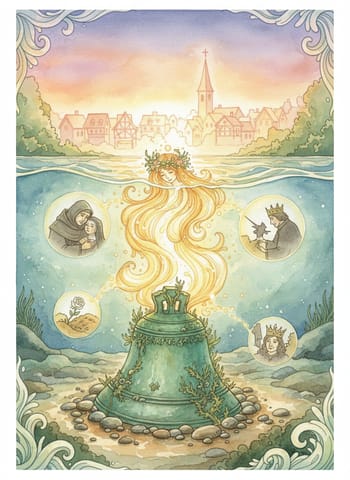
Opposite the old nunnery is the deepest place, which is called the "bell-deep," and there dwells the old water spirit, the "Au-mann." This spirit sleeps through the day while the sun shines down upon the water; but in starry and moonlit nights he shows himself. He is very old.
قبالة دير الراهبات القديم يقع أعمق موضع، ويسمى «عمق الجرس»، وفيه يسكن روح الماء العجوز، «رجل النهر». ينام هذا الروح طوال النهار بينما تسطع الشمس على الماء؛ لكنه يظهر في الليالي المقمرة المرصعة بالنجوم. وهو طاعن في السن.
Grandmother says that she has heard her own grandmother tell of him; he is said to lead a solitary life, and to have nobody with whom he can converse save the great old church Bell. Once the Bell hung in the church tower; but now there is no trace left of the tower or of the church, which was called St. Alban's.
تقول جدتي إنها سمعت جدتها هي تحكي عنه؛ ويقال إنه يعيش حياة منعزلة، وليس له من يحادثه سوى الجرس الكبير القديم للكنيسة. كان الجرس معلقًا ذات يوم في برج الكنيسة؛ أما الآن فلا أثر للبرج ولا للكنيسة، التي كانت تسمى كنيسة القديس ألبان.
"Ding-dong! ding-dong!" sounded the Bell, when the tower still stood there; and one evening, while the sun was setting, and the Bell was swinging away bravely, it broke loose and came flying down through the air, the brilliant metal shining in the ruddy beam.
«دينغ دونغ! دينغ دونغ!» رنّ الجرس، حين كان البرج لا يزال قائمًا هناك؛ وذات مساء، والشمس تغرب، والجرس يتأرجح بحماسة، انفلت وجاء يطير هابطًا عبر الهواء، ومعدنه اللامع يتألق في الشعاع المحمرّ.
"Ding-dong! ding-dong! Now I'll retire to rest!" sang the Bell, and flew down into the Odense-Au, where it is deepest; and that is why the place is called the "bell-deep."
«دينغ دونغ! دينغ دونغ! الآن سأنسحب للراحة!» غنّى الجرس، وطار هابطًا إلى نهر أودنسه، حيث هو أعمق؛ ولهذا سُمّي المكان «عمق الجرس».
But the Bell got neither rest nor sleep. Down in the Au-mann's haunt it sounds and rings, so that the tones sometimes pierce upward through the waters; and many people maintain that its strains forebode the death of some one; but that is not true, for the Bell is only talking with the Au-mann, who is now no longer alone.
لكن الجرس لم ينل راحة ولا نومًا. ففي مأوى رجل النهر في الأسفل يرنّ ويدوّي، حتى إن النغمات تخترق المياه أحيانًا صاعدة؛ ويؤكد كثيرون أن أنغامه تنذر بموت أحد؛ لكن ذلك غير صحيح، فالجرس إنما يتحدث مع رجل النهر، الذي لم يعد وحيدًا الآن.
And what is the Bell telling? It is old, very old, as we have already observed; it was there long before grandmother's grandmother was born; and yet it is but a child in comparison with the Au-mann, who is quite an old quiet personage, an oddity, with his hose of eel-skin, and his scaly Jacket with the yellow lilies for buttons, and a wreath of reed in his hair and seaweed in his beard; but he looks very pretty for all that.
وماذا يحكي الجرس؟ إنه قديم، قديم جدًا، كما لاحظنا من قبل؛ كان هناك قبل مولد جدة جدتي بزمن طويل؛ ومع ذلك فهو طفل قياسًا إلى رجل النهر، الذي هو شخصية عجوز هادئة تمامًا، غريب الأطوار، بجوربيه من جلد الأنقليس، وسترته المغطاة بالحراشف التي أزرارها زنابق صفراء، وإكليل من القصب في شعره وأعشاب بحرية في لحيته؛ لكنه يبدو جميلًا جدًا مع ذلك.
What the Bell tells? To repeat it all would require years and days; for year by year it is telling the old stories, sometimes short ones, sometimes long ones, according to its whim; it tells of old times, of the dark hard times, thus:
ماذا يحكي الجرس؟ لتكرار كل ذلك يلزم سنوات وأيام؛ فهو يروي، عامًا تلو الآخر، الحكايات القديمة، قصيرة أحيانًا وطويلة أحيانًا، بحسب نزوته؛ يحكي عن الأزمنة القديمة، عن الأزمنة المظلمة القاسية، هكذا:
"In the church of St. Alban, the monk had mounted up into the tower. He was young and handsome, but thoughtful exceedingly. He looked through the loophole out upon the Odense-Au, when the bed of the water was yet broad, and the monks' meadow was still a lake. He looked out over it, and over the rampart, and over the nuns' hill opposite, where the convent lay, and the light gleamed forth from the nun's cell. He had known the nun right well, and he thought of her, and his heart beat quicker as he thought. Ding-dong! ding-dong!"
«في كنيسة القديس ألبان، كان الراهب قد صعد إلى البرج. كان شابًا وسيمًا، لكنه شديد التأمل. نظر من كوّة البرج إلى نهر أودنسه، حين كان قاع الماء لا يزال واسعًا، وكان مرج الرهبان لا يزال بحيرة. نظر خارجًا فوقه، وفوق السور، وفوق تل الراهبات المقابل، حيث يقع الدير، وحيث يلمع الضوء من قلاية الراهبة. كان يعرف الراهبة حق المعرفة، وكان يفكر فيها، وخفق قلبه أسرع وهو يفكر. دينغ دونغ! دينغ دونغ!»
Yes, this was the story the Bell told.
أجل، كانت هذه هي الحكاية التي رواها الجرس.
"Into the tower came also the dapper man-servant of the bishop; and when I, the Bell, who am made of metal, rang hard and loud, and swung to and fro, I might have beaten out his brains. He sat down close under me, and played with two little sticks as if they had been a stringed instrument; and he sang to it.
«وإلى البرج جاء أيضًا خادم الأسقف الأنيق؛ وحين رننتُ، أنا الجرس، المصنوع من المعدن، بقوة وعلو، وتأرجحتُ ذهابًا وإيابًا، كان يمكن أن أحطّم دماغه. جلس قريبًا جدًا تحتي، وراح يلعب بعودين صغيرين كأنهما آلة وترية؛ وغنّى لها.
"'Now I may sing it out aloud, though at other times I may not whisper it. I may sing of everything that is kept concealed behind lock and bars. Yonder it is cold and wet. The rats are eating her up alive! Nobody knows of it! Nobody hears of it! Not even now, for the bell is ringing and singing its loud Ding-dong, ding-dong!'
«أستطيع الآن أن أنشدها بصوت عالٍ، وإن كنتُ في سائر الأوقات لا أستطيع حتى أن أهمس بها. أستطيع أن أنشد كل ما يُخفى خلف الأقفال والقضبان. هناك بارد ورطب. الجرذان تأكلها حية! لا أحد يعلم بذلك! لا أحد يسمع به! ولا حتى الآن، لأن الجرس يدق ويغني دينغ دونغ العالي، دينغ دونغ!
"There was a King in those days. They called him Canute. He bowed himself before bishop and monk; but when he offended the free peasants with heavy taxes and hard words, they seized their weapons and put him to flight like a wild beast. He sought shelter in the church, and shut gate and door behind him. The violent band surrounded the church; I heard tell of it. The crows, ravens and magpies started up in terror at the yelling and shouting that sounded around. They flew into the tower and out again, they looked down upon the throng below, and they also looked into the windows of the church, and screamed out aloud what they saw there.
«وكان هناك ملك في تلك الأيام. كانوا يسمونه كانوت. انحنى أمام الأسقف والراهب؛ لكن حين أغضب الفلاحين الأحرار بضرائب ثقيلة وكلام قاسٍ، أمسكوا أسلحتهم وطردوه كأنه وحش بري. التمس المأوى في الكنيسة، وأغلق خلفه البوابة والباب. وأحاطت العصابة العنيفة بالكنيسة؛ سمعتُ بذلك. فزعت الغربان والغداف والعقعق من الصراخ والهتاف الذي دوّى حولها. طارت إلى البرج وخرجت منه، ونظرت إلى الحشد في الأسفل، ونظرت أيضًا إلى نوافذ الكنيسة، وصاحت بصوت عالٍ بما رأته هناك.
"King Canute knelt before the altar in prayer; his brothers Eric and Benedict stood by him as a guard with drawn swords; but the King's servant, the treacherous Blake, betrayed his master. The throng in front of the church knew where they could hit the King, and one of them flung a stone through a pane of glass, and the King lay there dead! The cries and screams of the savage horde and of the birds sounded through the air, and I joined in it also; for I sang 'Ding-dong! ding-dong!'
«وركع الملك كانوت أمام المذبح في صلاة؛ ووقف أخواه إيريك وبينيديكت إلى جانبه حارسين بسيوف مسلولة؛ لكن خادم الملك، الغادر بليك، خان سيده. وعرف الحشد أمام الكنيسة أين يمكنهم أن يصيبوا الملك، فرمى أحدهم حجرًا عبر لوح زجاج، فوقع الملك هناك قتيلًا! وارتفعت صيحات وصرخات الجمع الوحشي والطيور في الهواء، وانضممتُ إليها أنا أيضًا؛ إذ غنيتُ دينغ دونغ! دينغ دونغ!
"The church bell hangs high, and looks far around, and sees the birds around it, and understands their language. The wind roars in upon it through windows and loopholes; and the wind knows everything, for he gets it from the air, which encircles all things, and the church bell understands his tongue, and rings it out into the world, 'Ding-dong! ding-dong!'
«جرس الكنيسة يتدلى عاليًا، وينظر إلى ما حوله بعيدًا، ويرى الطيور من حوله، ويفهم لغتها. والريح تزأر عليه من النوافذ والكوى؛ والريح تعلم كل شيء، لأنها تتلقاه من الهواء، الذي يحيط بكل الأشياء، وجرس الكنيسة يفهم لسانها، ويرنّ به في أنحاء العالم: دينغ دونغ! دينغ دونغ!
"But it was too much for me to hear and to know; I was not able any longer to ring it out. I became so tired, so heavy, that the beam broke, and I flew out into the gleaming Au, where the water is deepest, and where the Au-mann lives, solitary and alone; and year by year I tell him what I have heard and what I know. Ding-dong! ding-dong!"
«لكن كان ذلك أكثر من أن أحتمله، سماعًا ومعرفة؛ لم أعد قادرًا على أن أدقّه. صرتُ متعبًا إلى هذا الحد، ثقيلًا إلى هذا الحد، حتى انكسرت العارضة الخشبية، وطرتُ إلى النهر المتلألئ، حيث الماء أعمق ما يكون، وحيث يعيش رجل النهر، وحيدًا منفردًا؛ وعامًا تلو الآخر أحكي له ما سمعتُ وما أعرف. دينغ دونغ! دينغ دونغ!»
Thus it sounds complainingly out of the bell-deep in the Odense-Au. That is what grandmother told us.
هكذا يتصاعد الصوت شاكيًا من عمق الجرس في نهر أودنسه. هذا ما حكته لنا جدتي.
But the schoolmaster says that there was not any bell that rung down there, for that it could not do so; and that no Au-mann dwelt yonder, for there was no Au-mann at all! And when all the other church bells are sounding sweetly, he says that it is not really the bells that are sounding, but that it is the air itself which sends forth the notes; and grandmother said to us that the Bell itself said it was the air who told it to him, consequently they are agreed on that point, and this much is sure.
لكن المعلم يقول إنه لم يكن هناك أي جرس يدق في الأسفل، لأنه لا يستطيع ذلك؛ وإن رجل نهر لم يسكن هناك، فلا وجود لرجل نهر أصلًا! وحين تدق كل أجراس الكنائس الأخرى بعذوبة، يقول إنها ليست الأجراس في الحقيقة هي التي تدق، بل الهواء نفسه هو الذي يرسل النغمات؛ وقالت لنا جدتي إن الجرس نفسه قال إن الهواء هو الذي أخبره بذلك، وبالتالي فهما متفقان في هذه النقطة، وهذا القدر مؤكد.
"Be cautious, cautious, and take good heed to thyself," they both say.
«كن حذرًا، حذرًا، وانتبه لنفسك جيدًا»، يقولان كلاهما.
The air knows everything. It is around us, it is in us, it talks of our thoughts and of our deeds, and it speaks longer of them than does the Bell down in the depths of the Odense-Au where the Au-mann dwells. It rings it out in the vault of heaven, far, far out, forever and ever, till the heaven bells sound "Ding-dong! ding-dong!"
الهواء يعلم كل شيء. إنه حولنا، وفينا، ويتحدث عن أفكارنا وعن أفعالنا، ويتحدث عنها مدة أطول مما يفعل الجرس هناك في أعماق نهر أودنسه حيث يسكن رجل النهر. إنه يدقّها في قبة السماء، بعيدًا، بعيدًا جدًا، إلى الأبد، حتى تدق أجراس السماء «دينغ دونغ! دينغ دونغ!»