Clever Hans
قصة إنجليزية مجانية بالمستوى A2 لمتعلمي اللغات، يمكن قراءتها على الإنترنت بلغات عددها 8، مع إمكانية الاستماع إليها عبر تطبيق Storyteller المجاني.
A foolish young man follows his mother's advice so literally, one gift at a time, that he manages to ruin every single one.
انتهى المقطع التجريبي! استمع إلى القصة كاملة في تطبيق Storyteller المجاني. حمّل التطبيق
الصوت غير متاح الآن.
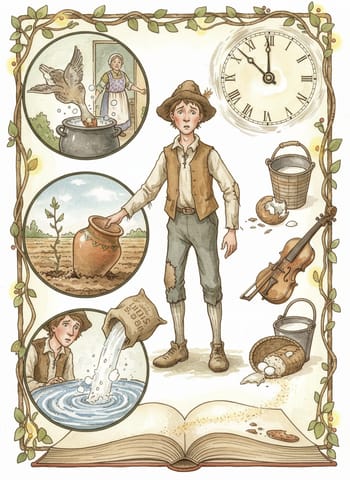
The mother of Hans said, “Whither away, Hans?” Hans answered, “To Grethel.” “Behave well, Hans.” “Oh, I’ll behave well. Good-bye, mother.” “Good-bye, Hans.” Hans comes to Grethel, “Good day, Grethel.” “Good day, Hans. What dost thou bring that is good?” “I bring nothing, I want to have something given me.” Grethel presents Hans with a needle. Hans says, “Good-bye, Grethel.” “Good-bye, Hans.”
قالت أم هانس: «إلى أين يا هانس؟» أجاب هانس: «إلى غريتل.» «احسن التصرف يا هانس.» «أوه، سأحسن التصرف. وداعًا يا أمي.» «وداعًا يا هانس.» يصل هانس إلى غريتل: «يوم سعيد يا غريتل.» «يوم سعيد يا هانس. ماذا تحمل معك من خير؟» «لا أحمل شيئًا، أريد أن يُعطى لي شيء.» تقدم غريتل لهانس إبرة. يقول هانس: «وداعًا يا غريتل.» «وداعًا يا هانس.»
Hans takes the needle, sticks it into a hay-cart, and follows the cart home. “Good evening, mother.” “Good evening, Hans. Where hast thou been?” “With Grethel.” “What didst thou take her?” “Took nothing; had something given me.” “What did Grethel give thee?” “Gave me a needle.” “Where is the needle, Hans?” “Stuck it in the hay-cart.” “That was ill done, Hans. Thou shouldst have stuck the needle in thy sleeve.” “Never mind, I’ll do better next time.”
يأخذ هانس الإبرة ويغرزها في عربة قش ويتبع العربة إلى البيت. «مساء الخير يا أمي.» «مساء الخير يا هانس. أين كنتَ؟» «عند غريتل.» «وماذا أخذتَ لها؟» «لم آخذ لها شيئًا، بل أُعطيت شيئًا.» «وماذا أعطتك غريتل؟» «أعطتني إبرة.» «أين الإبرة يا هانس؟» «غرزتُها في عربة القش.» «أسأت صنعًا يا هانس. كان عليك أن تغرزها في كمّك.» «لا بأس، سأحسن صنعًا في المرة القادمة.»
“Whither away, Hans?” “To Grethel, mother.” “Behave well, Hans.” “Oh, I’ll behave well. Good-bye, mother.” “Good-bye, Hans.”
«إلى أين يا هانس؟» «إلى غريتل يا أمي.» «احسن التصرف يا هانس.» «أوه، سأحسن التصرف. وداعًا يا أمي.» «وداعًا يا هانس.»
Hans comes to Grethel. “Good day, Grethel.” “Good day, Hans. What dost thou bring that is good?” “I bring nothing; I want to have something given to me.” Grethel presents Hans with a knife. “Good-bye, Grethel.” “Good-bye Hans.”
يصل هانس إلى غريتل. «يوم سعيد يا غريتل.» «يوم سعيد يا هانس. ماذا تحمل معك من خير؟» «لا أحمل شيئًا، أريد أن يُعطى لي شيء.» تقدم غريتل لهانس سكينًا. «وداعًا يا غريتل.» «وداعًا يا هانس.»
Hans takes the knife, sticks it in his sleeve, and goes home. “Good evening, mother.” “Good evening, Hans. Where hast thou been?” “With Grethel.” “What didst thou take her?” “Took her nothing, she gave me something.” “What did Grethel give thee?” “Gave me a knife.” “Where is the knife, Hans?” “Stuck in my sleeve.” “That’s ill done, Hans, thou shouldst have put the knife in thy pocket.” “Never mind, will do better next time.” “Whither away, Hans?” “To Grethel, mother.” “Behave well, Hans.” “Oh, I’ll behave well. Good-bye, mother.” “Good-bye, Hans.”
يأخذ هانس السكين ويغرزها في كمّه ثم يعود إلى البيت. «مساء الخير يا أمي.» «مساء الخير يا هانس. أين كنتَ؟» «عند غريتل.» «وماذا أخذتَ لها؟» «لم آخذ لها شيئًا، بل أُعطيت شيئًا.» «وماذا أعطتك غريتل؟» «أعطتني سكينًا.» «أين السكين يا هانس؟» «مغروزة في كمّي.» «أسأت صنعًا يا هانس. كان عليك أن تضع السكين في جيبك.» «لا بأس، سأحسن صنعًا في المرة القادمة.» «إلى أين يا هانس؟» «إلى غريتل يا أمي.» «احسن التصرف يا هانس.» «أوه، سأحسن التصرف. وداعًا يا أمي.» «وداعًا يا هانس.»
Hans comes to Grethel. “Good day, Grethel.” “Good day, Hans. What good thing dost thou bring?” “I bring nothing, I want something given me.” Grethel presents Hans with a young goat. “Good-bye, Grethel.” “Good-bye, Hans.” Hans takes the goat, ties its legs, and puts it in his pocket. When he gets home it is suffocated. “Good evening, mother.” “Good evening, Hans. Where hast thou been?” “With Grethel.” “What didst thou take her?” “Took nothing, she gave me something.” “What did Grethel give thee?” “She gave me a goat.” “Where is the goat, Hans?” “Put it in my pocket.” “That was ill done, Hans, thou shouldst have put a rope round the goat’s neck.” “Never mind, will do better next time.”
يصل هانس إلى غريتل. «يوم سعيد يا غريتل.» «يوم سعيد يا هانس. ماذا تحمل معك من خير؟» «لا أحمل شيئًا، أريد أن يُعطى لي شيء.» تقدم غريتل لهانس جديًا صغيرًا. «وداعًا يا غريتل.» «وداعًا يا هانس.» يأخذ هانس الجدي ويربط قوائمه ويضعه في جيبه. وحين يصل إلى البيت يكون قد اختنق. «مساء الخير يا أمي.» «مساء الخير يا هانس. أين كنتَ؟» «عند غريتل.» «وماذا أخذتَ لها؟» «لم آخذ لها شيئًا، بل أُعطيت شيئًا.» «وماذا أعطتك غريتل؟» «أعطتني جديًا.» «أين الجدي يا هانس؟» «وضعتُه في جيبي.» «أسأت صنعًا يا هانس. كان عليك أن تضع حبلًا حول عنق الجدي.» «لا بأس، سأحسن صنعًا في المرة القادمة.»
“Whither away, Hans?” “To Grethel, mother.” “Behave well, Hans.” “Oh, I’ll behave well. Good-bye, mother.” “Good-bye, Hans.” Hans comes to Grethel. “Good day, Grethel.” “Good day, Hans. What good thing dost thou bring?” “I bring nothing, I want something given me.” Grethel presents Hans with a piece of bacon. “Good-bye, Grethel.” “Good-bye, Hans.”
«إلى أين يا هانس؟» «إلى غريتل يا أمي.» «احسن التصرف يا هانس.» «أوه، سأحسن التصرف. وداعًا يا أمي.» «وداعًا يا هانس.» يصل هانس إلى غريتل. «يوم سعيد يا غريتل.» «يوم سعيد يا هانس. ماذا تحمل معك من خير؟» «لا أحمل شيئًا، أريد أن يُعطى لي شيء.» تقدم غريتل لهانس قطعة من لحم الخنزير المقدد. «وداعًا يا غريتل.» «وداعًا يا هانس.»
Hans takes the bacon, ties it to a rope, and drags it away behind him. The dogs come and devour the bacon. When he gets home, he has the rope in his hand, and there is no longer anything hanging to it.
يأخذ هانس اللحم المقدد ويربطه بحبل ويجره خلفه وهو يمشي. تأتي الكلاب وتلتهم اللحم. وحين يصل إلى البيت يكون الحبل في يده، ولا يوجد شيء معلق به بعد الآن.
“Good evening, mother.” “Good evening, Hans.” “Where hast thou been?” “With Grethel.” “What didst thou take her?” “I took her nothing, she gave me something.” “What did Grethel give thee?” “Gave me a bit of bacon.” “Where is the bacon, Hans?” “I tied it to a rope, brought it home, dogs took it.” “That was ill done, Hans, thou shouldst have carried the bacon on thy head.” “Never mind, will do better next time.” “Whither away, Hans?” “To Grethel, mother.” “Behave well, Hans.” “I’ll behave well. Good-bye, mother.” “Good-bye, Hans.”
«مساء الخير يا أمي.» «مساء الخير يا هانس. أين كنتَ؟» «عند غريتل.» «وماذا أخذتَ لها؟» «لم آخذ لها شيئًا، بل أُعطيت شيئًا.» «وماذا أعطتك غريتل؟» «أعطتني قطعة من لحم الخنزير المقدد.» «أين اللحم يا هانس؟» «ربطتُه بحبل وجئتُ به إلى البيت، فأخذته الكلاب.» «أسأت صنعًا يا هانس. كان عليك أن تحمل اللحم على رأسك.» «لا بأس، سأحسن صنعًا في المرة القادمة.» «إلى أين يا هانس؟» «إلى غريتل يا أمي.» «احسن التصرف يا هانس.» «أوه، سأحسن التصرف. وداعًا يا أمي.» «وداعًا يا هانس.»
Hans comes to Grethel. “Good day, Grethel.” “Good day, Hans.” “What good thing dost thou bring?” “I bring nothing, but would have something given.” Grethel presents Hans with a calf. “Good-bye, Grethel.” “Good-bye, Hans.”
يصل هانس إلى غريتل. «يوم سعيد يا غريتل.» «يوم سعيد يا هانس. ماذا تحمل معك من خير؟» «لا أحمل شيئًا، أريد أن يُعطى لي شيء.» تقدم غريتل لهانس عجلًا. «وداعًا يا غريتل.» «وداعًا يا هانس.»
Hans takes the calf, puts it on his head, and the calf kicks his face. “Good evening, mother.” “Good evening, Hans. Where hast thou been?” “With Grethel.” “What didst thou take her?” “I took nothing, but had something given me.” “What did Grethel give thee?” “A calf.” “Where hast thou the calf, Hans?” “I set it on my head and it kicked my face.” “That was ill done, Hans, thou shouldst have led the calf, and put it in the stall.” “Never mind, will do better next time.”
يأخذ هانس العجل ويضعه على رأسه، فيرفس العجل وجهه. «مساء الخير يا أمي.» «مساء الخير يا هانس. أين كنتَ؟» «عند غريتل.» «وماذا أخذتَ لها؟» «لم آخذ لها شيئًا، بل أُعطيت شيئًا.» «وماذا أعطتك غريتل؟» «أعطتني عجلًا.» «أين العجل يا هانس؟» «وضعتُه على رأسي فرفسني في وجهي.» «أسأت صنعًا يا هانس. كان عليك أن تقود العجل وتضعه في الحظيرة.» «لا بأس، سأحسن صنعًا في المرة القادمة.»
“Whither away, Hans?” “To Grethel, mother.” “Behave well, Hans.” “I’ll behave well. Good-bye, mother.” “Good-bye, Hans.”
«إلى أين يا هانس؟» «إلى غريتل يا أمي.» «احسن التصرف يا هانس.» «أوه، سأحسن التصرف. وداعًا يا أمي.» «وداعًا يا هانس.»
Hans comes to Grethel. “Good day, Grethel.” “Good day, Hans. What good thing dost thou bring?” “I bring nothing, but would have something given.” Grethel says to Hans, “I will go with thee.”
يصل هانس إلى غريتل. «يوم سعيد يا غريتل.» «يوم سعيد يا هانس. ماذا تحمل معك من خير؟» «لا أحمل شيئًا، أريد أن يُعطى لي شيء.» تقول غريتل لهانس: «سأذهب معك.»
Hans takes Grethel, ties her to a rope, leads her to the rack and binds her fast. Then Hans goes to his mother. “Good evening, mother.” “Good evening, Hans. Where hast thou been?” “With Grethel.” “What didst thou take her?” “I took her nothing.” “What did Grethel give thee?” “She gave me nothing, she came with me.” “Where hast thou left Grethel?” “I led her by the rope, tied her to the rack, and scattered some grass for her.” “That was ill done, Hans, thou shouldst have cast friendly eyes on her.” “Never mind, will do better.”
يأخذ هانس غريتل ويربطها بحبل ويقودها إلى المعلف ويوثقها بإحكام. ثم يذهب هانس إلى أمه. «مساء الخير يا أمي.» «مساء الخير يا هانس. أين كنتَ؟» «عند غريتل.» «وماذا أخذتَ لها؟» «لم آخذ لها شيئًا.» «وماذا أعطتك غريتل؟» «لم تعطني شيئًا، بل جاءت معي.» «وأين تركتَ غريتل؟» «قدتُها بالحبل، وربطتُها بالمعلف، ونثرتُ لها بعض العشب.» «أسأت صنعًا يا هانس. كان عليك أن ترمقها بعيون ودودة.» «لا بأس، سأحسن صنعًا في المرة القادمة.»
Hans went into the stable, gathered up all the calves’ and sheep’s eyes he could find, and tossed them to Grethel as a token of his goodwill. Then Grethel became angry, tore herself loose and ran away, and became the bride of Hans.
ذهب هانس إلى الإسطبل، وجمع كل عيون العجول والخراف التي استطاع أن يجدها، ورماها على غريتل علامةً على حسن نيته. فغضبت غريتل عندئذ، وانتزعت نفسها وهربت، وصارت عروس هانس.