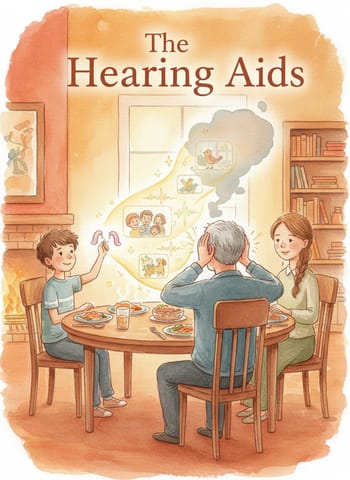
For about two years, Enrique's father had been nodding at the right moments. Enrique noticed it first at family dinners. There was the small, confident "Yes, yes" in reply to questions that had not quite been asked. There was the pause before he laughed, as if he were waiting to see whether everyone else was laughing too.
大约两年来,恩里克的父亲一直在恰当的时刻点头。恩里克最先是在家庭聚餐时注意到的。别人问的问题明明没完全问出口,他却自信地小声回一句“对,对”。他在笑之前总要停顿一下,好像在等着看别人是不是也在笑。
Whenever anyone mentioned hearing aids, the old man shook his head. His ears were fine, he said. The rest of the world had simply started mumbling.
每当有人提到助听器,老人就摇头。他说他的耳朵好得很。是这世界的人突然都开始含糊不清地嘟囔了。
Enrique had tried reasoning with him, and he had tried joking. Neither worked. What finally changed his mind was something much smaller. On a Sunday in March, he asked his father whether he wanted more soup, and his father answered, "Thursday is best for me."
恩里克试过讲道理,也试过开玩笑。都没用。最终改变他想法的,是一件小得多的事。三月的一个周日,他问父亲要不要再喝点汤,父亲回答说:“星期四对我最合适。”
Enrique said nothing at the time. But that evening, he sat in his car outside the house and wondered how many conversations had been going on without his father. They must have sounded like a radio playing in another room.
当时恩里克什么也没说。可那天傍晚,他坐在家门外的车里,想着有多少场谈话是在没有父亲参与的情况下进行的。在他听来,那一定像隔壁房间里放着的收音机。
The next Sunday, he propped his phone against the salt shaker, with the recorder switched on. Nobody noticed. The table was crowded, as usual, with cousins, a neighbor, and a niece who talked quickly with her mouth full. The recording picked up everything: the clatter of plates, the overlapping voices, and, in the middle of it all, his father's deep, cheerful "Yes, yes."
下个周日,他把手机靠在盐瓶上,打开了录音。没有人注意到。和往常一样,餐桌旁坐得满满当当,有表兄弟姐妹,有一位邻居,还有一个嘴里塞着东西还说得飞快的侄女。录音录下了一切:盘子的碰撞声,七嘴八舌的说话声,还有在这一切当中,他父亲低沉而愉快的“对,对”。
On Monday, Enrique drove over with the phone in his pocket. He made tea, sat across the kitchen table, and said he wanted to play something. His father put on his reading glasses, as though that would help him listen.
周一,恩里克把手机放在口袋里开车过去。他泡了茶,在厨房的桌子对面坐下,说想放点东西给父亲听。他父亲戴上了老花镜,好像那样就能帮他听得更清楚。
At first, the old man just frowned. He could not make out the voices. Enrique turned up the volume and then played it again, slowly, with the speaker next to his father's good ear.
起初,老人只是皱着眉。他分辨不出那些声音。恩里克把音量调大,再慢慢放一遍,把扬声器凑到父亲那只好些的耳朵旁边。
"Is that Sunday?" his father asked.
“这是周日吗?”父亲问。
"Yes. Listen to the part about the lost suitcase."
“是的。听听丢行李箱的那一段。”
On the recording, someone told a long, funny story about a lost suitcase, and the whole table burst into laughter. Then his father's voice said, solemnly, "That's terrible." There was a short silence. Then someone, quite kindly, giggled.
录音里,有人讲了一个关于丢行李箱的又长又好笑的故事,整桌人哄堂大笑。然后他父亲的声音郑重地说:“真糟糕。”接着是一小阵沉默。然后有人,非常善意地,咯咯笑了起来。
His father listened to it twice. His face did not change, but his hand, which had been resting on the table, slowly closed.
他父亲听了两遍。他的脸色没有变,但搁在桌上的那只手慢慢地攥紧了。
"I thought it was a sad story," he said at last.
“我还以为那是个悲伤的故事,”他终于说。
"It wasn't."
“不是的。”
"What else did I miss?" His voice was smaller than Enrique had ever heard it. "If I'd heard everything, I would have asked to go home earlier. Or I would have stayed later."
“我还错过了什么?”他的声音比恩里克听过的任何时候都小。“要是我全都听见了,我会早点要求回家的。要不就会待得更晚些。”
Enrique didn't answer right away. He had not expected to win the argument this way, and he found that he didn't want to.
恩里克没有马上回答。他没想到会以这种方式赢得这场争论,而且他发现自己并不想赢。
After a long moment, his father took off his glasses and rubbed his eyes. "Make the appointment," he said. "Thursday morning. And write down the time. I'm told I miss things."
过了好一会儿,父亲摘下眼镜,揉了揉眼睛。“去约个时间吧,”他说,“星期四早上。把时间写下来。听说我会漏掉一些事。”