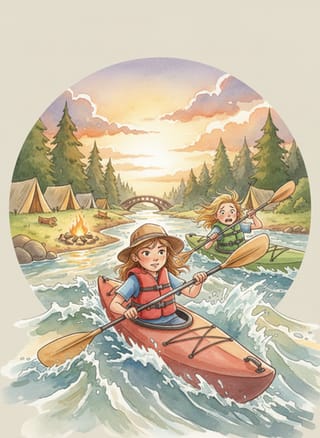
Saoirse and Finn had paddled canoes together at camp for three summers. This was their first time on the river's longer route, an all-day trip to a lake. A cabin waited for them on the far shore. Their counselor had given them a paper map marked with a dotted line for the easy sections.
西尔莎和芬恩已经一起在营地划了三个夏天的独木舟。这是他们第一次走这条河更长的路线,要划一整天才能到一个湖。远处的岸边有一间小木屋在等着他们。辅导员给了他们一张纸质地图,容易走的河段用虚线标了出来。
By early afternoon, they reached a stretch of water neither of them recognized from the map. The current grew faster. Ahead of them, the river dropped over a line of rocks into churning white water. There was no safe way to paddle through.
到了下午早些时候,他们来到一段水面,地图上的样子两人都认不出来。水流变快了。前方,河水从一排岩石上跌落下去,变成翻腾的白色急流。根本没有安全的办法划过去。
"We're supposed to carry the canoe around this part," Finn said, checking the map again. "There's a little symbol here we didn't notice before."
“这一段我们应该把独木舟扛着绕过去,”芬恩说着,又看了一遍地图,“这里有个小符号,我们之前没注意到。”
They pulled the canoe onto a narrow bank and studied the portage trail. It was a rough path through the trees that rejoined the river past the rocks. Carrying a canoe alone would have been nearly impossible. Together, with Finn at the front and Saoirse steadying the back, they managed slow, careful steps.
他们把独木舟拖上一处狭窄的河岸,仔细看了看那条陆上搬运的小路。那是一条穿过树林的崎岖小径,过了岩石之后又回到河边。一个人扛独木舟几乎不可能。他们两人一起,芬恩在前面,西尔莎在后面稳住船尾,慢慢地、小心地一步一步走。
The trail was longer than it looked on the map. By the time they reached calmer water again, the afternoon light had turned gold and low. Saoirse checked her watch and did the math out loud. If they paddled steadily from here, they should still reach the cabin before dark. There wasn't much room for delays, though.
这条路比地图上看起来长。等他们回到平缓的水面时,午后的阳光已经变成低低的金色。西尔莎看了看手表,大声算了一遍。如果从这里起稳稳地划,他们应该还能在天黑前到小木屋。不过,留给耽搁的时间并不多。
Finn suggested resting for ten minutes first, since his arms were shaking from the portage. Saoirse wanted to keep moving, worried about losing daylight. Still, she agreed it was probably the smarter choice. A tired paddler makes more mistakes than a rested one.
芬恩提议先休息十分钟,因为扛船走了一路,他的胳膊一直在发抖。西尔莎想继续赶路,担心天光不够用。可她还是同意了,这大概是更明智的选择。累了的桨手比休息好的桨手更容易出错。
They ate a quick snack on a warm rock, then pushed off again into the calmer current. The last hour of paddling felt easier than the rest of the day. The water helped them along, and the hardest part was already behind them.
他们在一块暖暖的岩石上匆匆吃了点零食,然后又划进平缓的水流。最后一个小时的划行比这一天里的其他时候都轻松。河水推着他们往前走,最难的部分已经过去了。
They reached the cabin just as the sky turned pink. They tied up the canoe with hands that finally felt steady again. Their counselor met them at the dock, more relieved than either of them had expected.
他们到达小木屋的时候,天空刚好染成粉红色。他们系好独木舟,双手终于又稳了下来。辅导员在码头上迎接他们,比他们两人想象的还要松了一口气。