The Story of Icarus and Daedalus
A free C1-level English story for language learners, readable online in 7 languages, with an option to listen via the free Storyteller app.
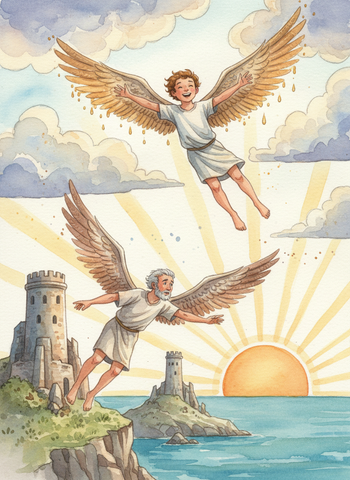
A brilliant inventor builds waxen wings to escape a tower prison with his son, warning the boy not to fly too high — but the thrill of soaring proves impossible to resist.
The labyrinth from which Theseus escaped by means of the clew of Ariadne was built by Daedalus, a most skilful artificer. It was an edifice with numberless winding passages and turnings opening into one another, and seeming to have neither beginning nor end, like the river Maeander, which returns on itself, and flows now onward, now backward, in its course to the sea. Daedalus built the labyrinth for King Minos, but afterwards lost the favor of the king, and was shut up in a tower.
वह भूलभुलैया जिससे थीसियस एरियाडने के धागे की मदद से बाहर निकला था, डेडलस नामक एक अत्यंत कुशल शिल्पकार ने बनाई थी। यह एक ऐसी इमारत थी जिसमें अनगिनत घुमावदार गलियारे और मोड़ थे, जो एक-दूसरे में खुलते थे, और जिसका न कोई आरंभ जान पड़ता था न अंत, ठीक मीएंडर नदी की तरह, जो स्वयं में लौटती है और अपने समुद्र तक के मार्ग में कभी आगे तो कभी पीछे बहती है। डेडलस ने यह भूलभुलैया राजा मिनोस के लिए बनाई थी, परंतु बाद में राजा की कृपादृष्टि खो बैठा, और उसे एक मीनार में बंद कर दिया गया।
He contrived to make his escape from his prison, but could not leave the island by sea, as the king kept strict watch on all the vessels, and permitted none to sail without being carefully searched.
उसने अपनी कैद से भाग निकलने का उपाय ढूँढ लिया, परंतु समुद्र के रास्ते वह द्वीप नहीं छोड़ सकता था, क्योंकि राजा सभी जहाजों पर कड़ी निगरानी रखता था, और बिना गहन तलाशी के किसी को भी रवाना होने की अनुमति नहीं थी।
"Minos may control the land and sea," said Daedalus, "but not the regions of the air. I will try that way." So he set to work to fabricate wings for himself and his young son Icarus. He wrought feathers together, beginning with the smallest and adding larger, so as to form an increasing surface. The larger ones he secured with thread and the smaller with wax, and gave the whole a gentle curvature like the wings of a bird.
"मिनोस भले ही थल और जल पर नियंत्रण रखे," डेडलस ने कहा, "पर आकाश के क्षेत्रों पर नहीं। मैं उसी मार्ग को आज़माऊँगा।" इसलिए उसने अपने और अपने युवा पुत्र इकारस के लिए पंख बनाने का कार्य आरंभ किया। उसने पंखों को एक साथ जोड़ा, सबसे छोटे से आरंभ करके बड़े पंख जोड़ता गया, ताकि एक बढ़ता हुआ धरातल बन सके। बड़े पंखों को उसने धागे से बाँधा और छोटे पंखों को मोम से, और पूरे ढाँचे को पक्षी के पंखों जैसा एक कोमल वक्र दिया।
Icarus, the boy, stood and looked on, sometimes running to gather up the feathers which the wind had blown away, and then handling the wax and working it over with his fingers, by his play impeding his father in his labors.
बालक इकारस खड़ा होकर यह सब देखता रहा, कभी-कभी उन पंखों को बटोरने दौड़ता जिन्हें हवा उड़ा ले जाती, और फिर मोम को अपनी उँगलियों से सहलाकर उसके साथ खेलता, इस तरह अपने खेल से अपने पिता के काम में बाधा डालता।
When at last the work was done, the artist, waving his wings, found himself buoyed upward, and hung suspended, poising himself on the beaten air. He next equipped his son in the same manner, and taught him how to fly, as a bird tempts her young ones from the lofty nest into the air. When all was prepared for flight he said, "Icarus, my son, I charge you to keep at a moderate height, for if you fly too low the damp will clog your wings, and if too high the heat will melt them. Keep near me and you will be safe."
जब अंततः कार्य पूर्ण हुआ, तो शिल्पकार ने अपने पंख फड़फड़ाए और स्वयं को हवा में ऊपर उठा हुआ पाया, और मानो थपकती हवा पर संतुलन साधे हुए लटका रहा। इसके बाद उसने अपने पुत्र को भी उसी विधि से सुसज्जित किया, और उसे उड़ना सिखाया, जैसे कोई पक्षी अपने बच्चों को ऊँचे घोंसले से आकाश में जाने के लिए ललचाती है। जब उड़ान के लिए सब कुछ तैयार हो गया, तो उसने कहा, "इकारस, मेरे पुत्र, मैं तुम्हें आदेश देता हूँ कि उचित ऊँचाई पर ही रहना, क्योंकि यदि तुम बहुत नीचे उड़े तो नमी तुम्हारे पंखों को भारी कर देगी, और यदि बहुत ऊँचे उड़े तो गर्मी उन्हें पिघला देगी। मेरे निकट रहना, तभी तुम सुरक्षित रहोगे।"
While he gave him these instructions and fitted the wings to his shoulders, the face of the father was wet with tears, and his hands trembled. He kissed the boy, not knowing that it was for the last time. Then rising on his wings, he flew off, encouraging him to follow, and looked back from his own flight to see how his son managed his wings. As they flew the ploughman stopped his work to gaze, and the shepherd leaned on his staff and watched them, astonished at the sight, and thinking they were gods who could thus cleave the air.
जब वह उसे ये निर्देश दे रहा था और उसके कंधों पर पंख कस रहा था, पिता का चेहरा आँसुओं से भीग गया, और उसके हाथ काँप रहे थे। उसने बालक को चूमा, यह न जानते हुए कि यह अंतिम बार था। फिर अपने पंखों पर उठकर वह उड़ चला, उसे साथ आने के लिए प्रोत्साहित करते हुए, और अपनी ही उड़ान से पीछे मुड़कर देखता रहा कि उसका पुत्र अपने पंखों को कैसे संभालता है। जब वे उड़ रहे थे, हलवाहे ने अपना काम रोककर देखा, और चरवाहा अपनी लाठी पर टिककर उन्हें देखता रहा, इस दृश्य से चकित होकर, यह सोचते हुए कि वे देवता हैं जो इस प्रकार आकाश को चीर सकते हैं।
They passed Samos and Delos on the left and Lebynthos on the right, when the boy, exulting in his career, began to leave the guidance of his companion and soar upward as if to reach heaven. The nearness of the blazing sun softened the wax which held the feathers together, and they came off. He fluttered with his arms, but no feathers remained to hold the air.
वे समोस और डेलोस को बाईं ओर तथा लेबिंथोस को दाईं ओर छोड़ते हुए आगे बढ़े, तभी बालक, अपनी उड़ान में उत्साहित होकर, अपने साथी के मार्गदर्शन को छोड़ने लगा और मानो स्वर्ग तक पहुँचने के लिए ऊपर उठने लगा। प्रज्वलित सूर्य की निकटता ने उस मोम को नरम कर दिया जो पंखों को जोड़े हुए था, और वे उखड़ गए। उसने अपनी बाँहें फड़फड़ाईं, परंतु हवा को थामने के लिए कोई पंख शेष नहीं बचा था।
While his mouth uttered cries to his father it was submerged in the blue waters of the sea, which thenceforth was called by his name. His father cried, "Icarus, Icarus, where are you?" At last he saw the feathers floating on the water, and bitterly lamenting his own arts, he buried the body and called the land Icaria in memory of his child. Daedalus arrived safe in Sicily, where he built a temple to Apollo, and hung up his wings, an offering to the god.
जब उसका मुख अपने पिता को पुकार रहा था, वह समुद्र के नीले जल में डूब गया, जिसे तब से उसी के नाम से पुकारा जाने लगा। उसके पिता ने पुकारा, "इकारस, इकारस, तुम कहाँ हो?" अंततः उसने पानी पर तैरते हुए पंख देखे, और अपनी ही कला को कोसते हुए, उसने बालक के शरीर को दफनाया और उस भूमि को अपने पुत्र की स्मृति में इकारिया नाम दिया। डेडलस सुरक्षित सिसिली पहुँचा, जहाँ उसने अपोलो के लिए एक मंदिर बनवाया, और अपने पंख उतारकर देवता को अर्पित कर दिए।
Daedalus was so proud of his achievements that he could not bear the idea of a rival. His sister had placed her son Perdix under his charge to be taught the mechanical arts. He was an apt scholar and gave striking evidences of ingenuity. Walking on the seashore he picked up the spine of a fish. Imitating it, he took a piece of iron and notched it on the edge, and thus invented the SAW. He put two pieces of iron together, connecting them at one end with a rivet, and sharpening the other ends, and made a PAIR OF COMPASSES.
डेडलस को अपनी उपलब्धियों पर इतना गर्व था कि वह किसी प्रतिद्वंद्वी के विचार को भी सह नहीं सकता था। उसकी बहन ने अपने पुत्र पर्डिक्स को यांत्रिक कलाएँ सिखाने के लिए उसके संरक्षण में सौंपा था। वह एक होनहार शिष्य था और अपनी सूझबूझ के आश्चर्यजनक प्रमाण देता था। समुद्र तट पर टहलते हुए उसने एक मछली की रीढ़ की हड्डी उठाई। उसकी नकल करते हुए, उसने लोहे का एक टुकड़ा लिया और उसके किनारे पर दाँतेदार निशान बनाए, और इस प्रकार आरा का आविष्कार किया। उसने लोहे के दो टुकड़ों को जोड़ा, उन्हें एक सिरे पर कील से जोड़ते हुए, और दूसरे सिरों को तेज़ करते हुए, एक परकार बनाया।
Daedalus was so envious of his nephew's performances that he took an opportunity, when they were together one day on the top of a high tower, to push him off. But Minerva, who favors ingenuity, saw him falling, and arrested his fate by changing him into a bird called after his name, the Partridge. This bird does not build his nest in the trees, nor take lofty flights, but nestles in the hedges, and mindful of his fall, avoids high places.
डेडलस अपने भांजे की उपलब्धियों से इतना ईर्ष्यालु हो गया कि उसने एक अवसर का लाभ उठाया, जब वे दोनों एक दिन एक ऊँची मीनार के शिखर पर साथ थे, उसे धक्का देकर नीचे गिरा दिया। परंतु सूझबूझ की पक्षधर देवी मिनर्वा ने उसे गिरते देख लिया, और उसे एक पक्षी में बदलकर उसके भाग्य को थाम लिया, जिसे उसी के नाम पर तीतर कहा गया। यह पक्षी न तो पेड़ों पर अपना घोंसला बनाता है, न ऊँची उड़ानें भरता है, बल्कि झाड़ियों में छिपा रहता है, और अपने पतन को स्मरण रखते हुए ऊँचे स्थानों से बचता है।
The death of Icarus is told in the following lines by Darwin:
इकारस की मृत्यु का वर्णन डार्विन ने निम्नलिखित पंक्तियों में किया है:
"… with melting wax and loosened strings Sunk hapless Icarus on unfaithful wings; Headlong he rushed through the affrighted air, With limbs distorted and dishevelled hair; His scattered plumage danced upon the wave, And sorrowing Nereids decked his watery grave; O'er his pale corse their pearly sea-flowers shed, And strewed with crimson moss his marble bed; Struck in their coral towers the passing bell, And wide in ocean tolled his echoing knell."
"…पिघलते मोम और ढीले होते बंधनों के साथ अभागा इकारस विश्वासघाती पंखों पर धँस गया; वह सिर के बल भयभीत वायु को चीरता हुआ गिरा, उसके अंग मुड़े हुए और बाल बिखरे हुए थे; उसके बिखरे हुए पंख लहरों पर नाचते रहे, और शोकमग्न नेरैड्स ने उसकी जलमय समाधि सजाई; उसके पीले शव पर उन्होंने मोती-सी समुद्री-कलियाँ बिखेरीं, और उसके संगमरमरी शयन को लाल काई से ढँक दिया; अपने प्रवाल-मीनारों में उन्होंने विदाई की घंटी बजाई, और सागर में दूर तक उसकी प्रतिध्वनित शोक-घंटी गूँजी।"
