The Quiet Carriage
भाषा सीखने वालों के लिए स्तर C1 की एक मुफ़्त अंग्रेज़ी कहानी, जिसे 6 भाषाओं में ऑनलाइन पढ़ा जा सकता है और मुफ़्त Storyteller ऐप में सुना भी जा सकता है।
A commuter who silently judges every rule-breaker in the quiet carriage overhears a whispered phone call that undermines her certainty.
झलक पूरी हुई! पूरी कहानी मुफ़्त Storyteller ऐप में सुनें। ऐप पाएँ
अभी ऑडियो उपलब्ध नहीं है।
Liv has chosen the quiet carriage for the same reason she chooses most things: it promises that other people will behave. The sign above the door shows a face with a finger across its lips, and she settles beneath it with the satisfaction of someone who has, for once, read the instructions. Before the train has cleared the platform she has opened a mental file on the man opposite, who is eating crisps with the slow, wet commitment of a person alone in his kitchen.
लिव ने शांत डिब्बा उसी वजह से चुना है जिस वजह से वह ज़्यादातर चीज़ें चुनती है: उसका वादा है कि दूसरे लोग सलीके से पेश आएँगे। दरवाज़े के ऊपर लगे चिह्न में एक चेहरा है जिसके होंठों पर उँगली रखी है, और वह उसके नीचे ऐसे इत्मीनान से बैठ जाती है जैसे कोई, जिसने एक बार के लिए सचमुच हिदायतें पढ़ ली हों। ट्रेन के प्लेटफ़ॉर्म छोड़ने से पहले ही वह सामने बैठे आदमी की एक मानसिक फ़ाइल खोल चुकी है, जो चिप्स ऐसे धीमे, गीले इत्मीनान से खा रहा है जैसे अपनी रसोई में अकेला हो।
The file grows. A woman across the aisle types as though she were arguing with her keyboard; a student's headphones leak a thin, insect hiss; somebody's bag occupies a seat as if it had paid for the ticket. Liv says nothing, naturally. Saying something would make her one of the people who cause scenes, and what she prefers, always, is the superior silence of the person keeping score.
फ़ाइल बढ़ती जाती है। गलियारे के पार एक औरत ऐसे टाइप कर रही है जैसे कीबोर्ड से झगड़ रही हो; एक छात्र के हेडफ़ोन से कीड़े जैसी पतली फुसफुसाहट रिस रही है; किसी का बैग एक सीट पर ऐसे पसरा है जैसे उसने भी टिकट लिया हो। लिव, ज़ाहिर है, कुछ नहीं कहती। कुछ कहना उसे उन लोगों में गिना देता जो तमाशे खड़े करते हैं, और उसे हमेशा जो पसंद है, वह है हिसाब रखने वाले इंसान की श्रेष्ठता भरी चुप्पी।
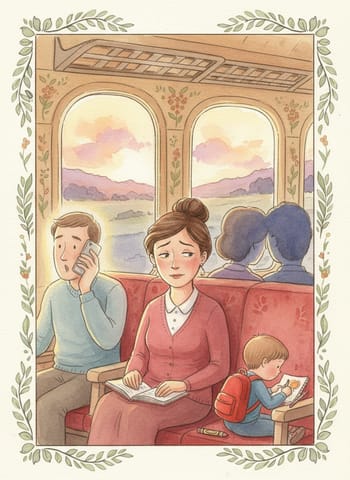
Forty minutes in, a man two rows ahead lifts a phone to his ear. Her stomach tightens in advance, and she is already composing the look she will give him when he speaks. But he cups his hand around the mouthpiece and, in a voice so low that she has to lean in against her own principles, he says, "Hello, bear. Is it story time already?"
चालीस मिनट बाद दो पंक्तियाँ आगे बैठा एक आदमी फ़ोन कान से लगाता है। उसका पेट पहले से सिकुड़ जाता है, और वह अभी से वह नज़र गढ़ने लगती है जो उसके बोलते ही उस पर डालेगी। पर वह आदमी फ़ोन के माउथपीस के आसपास हथेली ढक लेता है और इतनी धीमी आवाज़ में, कि उसे अपने ही उसूलों के ख़िलाफ़ आगे झुकना पड़ता है, कहता है, "हेलो, भालू। क्या कहानी का वक़्त हो गया?"
There is a pause while he listens, nodding at the seat in front of him. He explains, in a murmur that barely reaches her, that he is on the train and that the carriage has a rule about voices. Tonight, therefore, the story will be told in the small voice, the one bears use in winter. It would seem that somebody at the other end has agreed to these terms.
एक ठहराव आता है जब वह सुनता है, अपने सामने की सीट की ओर सिर हिलाते हुए। वह धीमे स्वर में समझाता है, जो मुश्किल से उस तक पहुँचता है, कि वह ट्रेन में है और इस डिब्बे में आवाज़ों को लेकर एक नियम है। इसलिए आज रात कहानी छोटी आवाज़ में सुनाई जाएगी, उस आवाज़ में जो भालू सर्दियों में इस्तेमाल करते हैं। लगता है, दूसरी तरफ़ किसी ने इन शर्तों के लिए हामी भर दी है।
What strikes Liv is not the tenderness, which she would have expected to find irritating, but the care with which he is obeying the rule. He could have walked to the end of the carriage, where nothing forbids a phone call. Instead he has stayed in his seat, bent towards the window, spending an entire evening's voice through the narrowest possible channel. If she had been asked an hour earlier who in this carriage was breaking the rules, she would have named him first.
लिव को जो बात छूती है, वह कोमलता नहीं है, जो उसे चिढ़ाने वाली लगनी चाहिए थी, बल्कि वह एहतियात है जिससे वह नियम का पालन कर रहा है। वह डिब्बे के दूसरे छोर तक जा सकता था, जहाँ फ़ोन पर बात करने की कोई मनाही नहीं है। इसके बजाय वह अपनी सीट पर ही रुका है, खिड़की की ओर झुका हुआ, एक पूरी शाम की आवाज़ को सबसे संकरे रास्ते से ख़र्च करता हुआ। अगर एक घंटा पहले उससे पूछा जाता कि इस डिब्बे में नियम कौन तोड़ रहा है, तो वह सबसे पहले उसी का नाम लेती।
The bear in the story, it turns out, is lost in a snowstorm and keeps arriving at the same fallen tree. Listening in against her will, Liv catches this in fragments, a word here, a rustle there. Only when the bear reaches home does she realise that she has stopped composing anything at all. The man opposite has folded his empty packet into a neat square. Even the woman with the keyboard has paused, hands hovering over the keys, in what might well be the first silence she has kept all journey.
कहानी का भालू, पता चलता है, बर्फ़ीले तूफ़ान में खो गया है और बार-बार उसी गिरे हुए पेड़ पर पहुँच जाता है। अनचाहे ही सुनते हुए लिव यह टुकड़ों में पकड़ती है, यहाँ एक शब्द, वहाँ एक सरसराहट। जब भालू घर पहुँचता है, तब जाकर उसे एहसास होता है कि उसने कुछ भी गढ़ना बंद कर दिया है। सामने बैठा आदमी अपना ख़ाली पैकेट तह करके एक साफ़ चौकोर बना चुका है। यहाँ तक कि कीबोर्ड वाली औरत भी रुक गई है, हाथ चाबियों के ऊपर टिके हुए, शायद उस पूरे सफ़र की अपनी पहली चुप्पी में।
Then the man ahead says goodnight three times, each one smaller than the last, and lowers the phone. Liv looks at her own phone, face down on the table, and at the note on it titled "Carriage offences", which runs to nine entries. At the next station he stands, collects his coat without a sound, and is gone.
फिर आगे वाला आदमी तीन बार शुभरात्रि कहता है, हर बार पिछली से धीमी, और फ़ोन नीचे रख देता है। लिव अपने फ़ोन को देखती है, जो मेज़ पर उलटा पड़ा है, और उस पर रखे उस नोट को जिसका शीर्षक है "डिब्बे के अपराध", जिसमें नौ प्रविष्टियाँ हैं। अगले स्टेशन पर वह खड़ा होता है, बिना आहट के अपना कोट उठाता है, और चला जाता है।
Liv watches the door close behind him. Then she turns to the man opposite and, in the smallest voice she owns, asks whether she might have one of his crisps.
लिव दरवाज़े को उसके पीछे बंद होते देखती है। फिर वह सामने बैठे आदमी की ओर मुड़ती है और, अपनी सबसे छोटी आवाज़ में, पूछती है कि क्या वह उसके चिप्स में से एक ले सकती है।