The Quarrel of the Monkey and the Crab
A free B1-level English story for language learners, readable online in 7 languages, with an option to listen via the free Storyteller app.
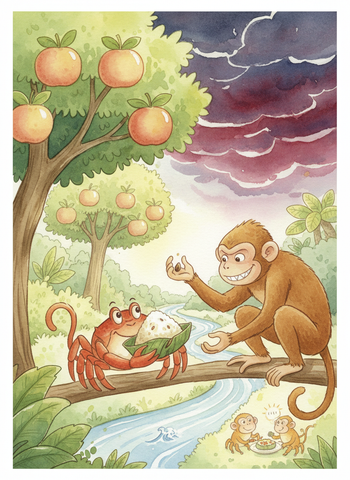
A crab trades her rice-dumpling for a monkey's worthless seed, trusting his promise of future fruit — but greed turns their old friendship into a deadly betrayal.
Long, long ago, one bright autumn day in Japan, it happened, that a pink-faced monkey and a yellow crab were playing together along the bank of a river. As they were running about, the crab found a rice-dumpling and the monkey a persimmon-seed.
बहुत, बहुत पहले, जापान में शरद ऋतु के एक चमकीले दिन, ऐसा हुआ कि एक गुलाबी चेहरे वाला बंदर और एक पीला केकड़ा नदी के किनारे साथ खेल रहे थे। जब वे इधर-उधर दौड़ रहे थे, केकड़े को एक चावल की पिंडी मिली और बंदर को एक टेसू (पर्सिमन) का बीज।
The crab picked up the rice-dumpling and showed it to the monkey, saying:
केकड़े ने चावल की पिंडी उठाई और उसे बंदर को दिखाते हुए बोला:
“Look what a nice thing I have found!”
"देखो मुझे कितनी अच्छी चीज़ मिली है!"
Then the monkey held up his persimmon-seed and said:
फिर बंदर ने अपना टेसू का बीज ऊपर उठाया और कहा:
“I also have found something good! Look!”
"मुझे भी कुछ अच्छा मिला है! देखो!"
Now though the monkey is always very fond of persimmon fruit, he had no use for the seed he had just found. The persimmon-seed is as hard and uneatable as a stone. He, therefore, in his greedy nature, felt very envious of the crab’s nice dumpling, and he proposed an exchange. The crab naturally did not see why he should give up his prize for a hard stone-like seed, and would not consent to the monkey’s proposition.
अब हालाँकि बंदर हमेशा टेसू के फल का बहुत शौक़ीन होता है, उसे अभी-अभी मिले बीज का कोई इस्तेमाल नहीं था। टेसू का बीज पत्थर जितना कठोर और अखाद्य होता है। इसलिए, अपने लालची स्वभाव में, वह केकड़े की अच्छी पिंडी से बहुत ईर्ष्या करने लगा, और उसने अदला-बदली का प्रस्ताव रखा। केकड़े को स्वाभाविक रूप से यह समझ नहीं आया कि वह अपना ईनाम एक कठोर पत्थर जैसे बीज के लिए क्यों छोड़े, और उसने बंदर के प्रस्ताव के लिए राज़ी होने से इनकार कर दिया।
Then the cunning monkey began to persuade the crab, saying:
तब चालाक बंदर केकड़े को समझाने लगा, कहते हुए:
“How unwise you are not to think of the future! Your rice-dumpling can be eaten now, and is certainly much bigger than my seed; but if you sow this seed in the ground it will soon grow and become a great tree in a few years, and bear an abundance of fine ripe persimmons year after year. If only I could show it to you then with the yellow fruit hanging on its branches! Of course, if you don’t believe me I shall sow it myself; though I am sure, later on, you will be very sorry that you did not take my advice.”
"तुम भविष्य के बारे में न सोचकर कितने नासमझ हो! तुम्हारी चावल की पिंडी अभी खाई जा सकती है, और यह निश्चित रूप से मेरे बीज से बहुत बड़ी है; पर अगर तुम इस बीज को ज़मीन में बोओ तो यह जल्द ही बढ़ेगा और कुछ ही सालों में एक बड़ा पेड़ बन जाएगा, और साल-दर-साल भरपूर पके हुए टेसू के फल देगा। काश मैं तुम्हें उसे तब दिखा पाता जब उसकी टहनियों पर पीले फल लटक रहे हों! बेशक, अगर तुम्हें मेरी बात पर यक़ीन नहीं है तो मैं इसे ख़ुद बो दूँगा; हालाँकि मुझे यक़ीन है, बाद में, तुम्हें बहुत पछतावा होगा कि तुमने मेरी सलाह नहीं मानी।"
The simple-minded crab could not resist the monkey’s clever persuasion. He at last gave in and consented to the monkey’s proposal, and the exchange was made. The greedy monkey soon gobbled up the dumpling, and with great reluctance gave up the persimmon-seed to the crab. He would have liked to keep that too, but he was afraid of making the crab angry and of being pinched by his sharp scissor-like claws. They then separated, the monkey going home to his forest trees and the crab to his stones along the river-side. As soon as the crab reached home he put the persimmon-seed in the ground as the monkey had told him.
सीधा-सादा केकड़ा बंदर की चतुर मनुहार का विरोध नहीं कर सका। वह आख़िरकार मान गया और बंदर के प्रस्ताव के लिए राज़ी हो गया, और अदला-बदली हो गई। लालची बंदर ने जल्द ही पिंडी चट कर ली, और बड़ी अनिच्छा से केकड़े को टेसू का बीज दे दिया। वह उसे भी रखना चाहता था, पर उसे डर था कि केकड़ा नाराज़ हो जाएगा और उसके तेज़ कैंची जैसे पंजों से चिकोटी काट देगा। फिर वे अलग हो गए, बंदर अपने जंगल के पेड़ों की ओर घर गया और केकड़ा नदी किनारे अपने पत्थरों की ओर। जैसे ही केकड़ा घर पहुँचा, उसने टेसू का बीज ज़मीन में बो दिया जैसा बंदर ने उसे बताया था।
In the following spring the crab was delighted to see the shoot of a young tree push its way up through the ground. Each year it grew bigger, till at last it blossomed one spring, and in the following autumn bore some fine large persimmons. Among the broad smooth green leaves the fruit hung like golden balls, and as they ripened they mellowed to a deep orange. It was the little crab’s pleasure to go out day by day and sit in the sun and put out his long eyes in the same way as a snail puts out its horn, and watch the persimmons ripening to perfection.
अगली बसंत में केकड़ा यह देखकर बहुत ख़ुश हुआ कि एक जवान पेड़ की कोंपल ज़मीन से होकर ऊपर निकल रही है। हर साल यह और बड़ा होता गया, जब तक कि आख़िरकार एक बसंत में इसमें फूल आए, और अगली शरद ऋतु में इसमें कुछ अच्छे बड़े टेसू के फल लगे। चौड़े चिकने हरे पत्तों के बीच फल सुनहरी गेंदों की तरह लटके थे, और जैसे-जैसे वे पकते गए वे गहरे नारंगी रंग के हो गए। छोटे केकड़े को यह अच्छा लगता था कि वह रोज़ बाहर जाए और धूप में बैठे और अपनी लंबी आँखें बाहर निकाले उसी तरह जैसे एक घोंघा अपना सींग निकालता है, और टेसू के फलों को पूर्णता तक पकते हुए देखे।
“How delicious they will be to eat!” he said to himself.
"खाने में ये कितने स्वादिष्ट होंगे!" उसने ख़ुद से कहा।
At last, one day, he knew the persimmons must be quite ripe and he wanted very much to taste one. He made several attempts to climb the tree, in the vain hope of reaching one of the beautiful persimmons hanging above him; but he failed each time, for a crab’s legs are not made for climbing trees but only for running along the ground and over stones, both of which he can do most cleverly. In his dilemma he thought of his old playmate the monkey, who, he knew, could climb trees better than any one else in the world. He determined to ask the monkey to help him, and set out to find him.
आख़िरकार, एक दिन, उसे पता चला कि टेसू के फल बिल्कुल पके होंगे और वह एक चखना बहुत चाहता था। उसने पेड़ पर चढ़ने की कई कोशिशें कीं, इस व्यर्थ उम्मीद में कि वह उसके ऊपर लटके सुंदर टेसू के फलों में से एक तक पहुँच सके; पर हर बार वह असफल रहा, क्योंकि केकड़े की टाँगें पेड़ों पर चढ़ने के लिए नहीं बनी होतीं बल्कि सिर्फ़ ज़मीन पर और पत्थरों पर दौड़ने के लिए बनी होती हैं, ये दोनों काम वह बहुत चतुराई से कर सकता है। अपनी इस दुविधा में उसे अपने पुराने खेल के साथी बंदर की याद आई, जो, वह जानता था, दुनिया में किसी से भी बेहतर पेड़ों पर चढ़ सकता था। उसने बंदर से मदद माँगने का फ़ैसला किया, और उसे ढूँढने निकल पड़ा।
Running crab-fashion up the stony river bank, over the pathways into the shadowy forest, the crab at last found the monkey taking an afternoon nap in his favorite pine-tree, with his tail curled tight around a branch to prevent him from falling off in his dreams. He was soon wide awake, however, when he heard himself called, and eagerly listening to what the crab told him. When he heard that the seed which he had long ago exchanged for a rice-dumpling had grown into a tree and was now bearing good fruit, he was delighted, for he at once devised a cunning plan which would give him all the persimmons for himself.
केकड़े की तरह चलते हुए पथरीले नदी किनारे से ऊपर, रास्तों से होकर छायादार जंगल में, केकड़े को आख़िरकार बंदर मिला जो अपने पसंदीदा चीड़ के पेड़ में दोपहर की झपकी ले रहा था, अपनी पूँछ को एक टहनी के चारों ओर कसकर लपेटे हुए ताकि वह अपने सपनों में गिर न जाए। हालाँकि, जब उसने ख़ुद को पुकारा जाते सुना तो वह जल्द ही पूरी तरह जाग गया, और उत्सुकता से सुनने लगा कि केकड़ा उसे क्या बता रहा है। जब उसने सुना कि जो बीज उसने बहुत पहले चावल की पिंडी के बदले दिया था वह एक पेड़ बन गया है और अब अच्छा फल दे रहा है, तो वह बहुत ख़ुश हुआ, क्योंकि उसने तुरंत एक चालाक योजना बना ली जिससे उसे सारे टेसू के फल ख़ुद मिल जाएँगे।
He consented to go with the crab to pick the fruit for him. When they both reached the spot, the monkey was astonished to see what a fine tree had sprung from the seed, and with what a number of ripe persimmons the branches were loaded.
वह उसके लिए फल तोड़ने केकड़े के साथ जाने को राज़ी हो गया। जब वे दोनों उस जगह पहुँचे, तो बंदर यह देखकर हैरान रह गया कि बीज से कितना बढ़िया पेड़ उग आया है, और टहनियों पर कितने सारे पके हुए टेसू के फल लदे हुए हैं।
He quickly climbed the tree and began to pluck and eat, as fast as he could, one persimmon after another. Each time he chose the best and ripest he could find, and went on eating till he could eat no more. Not one would he give to the poor hungry crab waiting below, and when he had finished there was little but the hard, unripe fruit left.
वह जल्दी से पेड़ पर चढ़ गया और जितनी तेज़ी से हो सके फल तोड़कर खाने लगा, एक के बाद एक टेसू का फल। हर बार उसने वही चुना जो उसे सबसे अच्छा और सबसे पका मिला, और तब तक खाता रहा जब तक वह और नहीं खा सकता था। नीचे इंतज़ार करते बेचारे भूखे केकड़े को उसने एक भी नहीं दिया, और जब वह खा चुका तो सिवाय कठोर, कच्चे फलों के कुछ नहीं बचा था।
You can imagine the feelings of the poor crab after waiting patiently, for so long as he had done, for the tree to grow and the fruit to ripen, when he saw the monkey devouring all the good persimmons. He was so disappointed that he ran round and round the tree calling to the monkey to remember his promise. The monkey at first took no notice of the crab’s complaints, but at last he picked out the hardest, greenest persimmon he could find and aimed it at the crab’s head.
तुम कल्पना कर सकते हो बेचारे केकड़े की भावनाओं की, इतने धैर्य से इतने लंबे समय तक इंतज़ार करने के बाद, पेड़ के बढ़ने और फल के पकने का, जब उसने बंदर को सारे अच्छे टेसू के फल चट करते देखा। वह इतना निराश हुआ कि वह पेड़ के चारों ओर दौड़ने लगा बंदर को उसका वादा याद दिलाते हुए। बंदर ने पहले तो केकड़े की शिकायतों पर कोई ध्यान नहीं दिया, पर आख़िरकार उसने सबसे कठोर, सबसे हरा टेसू का फल चुना जो उसे मिल सकता था और उसे केकड़े के सिर पर निशाना बनाकर फेंका।
The persimmon is as hard as stone when it is unripe. The monkey’s missile struck home and the crab was sorely hurt by the blow. Again and again, as fast as he could pick them, the monkey pulled off the hard persimmons and threw them at the defenseless crab till he dropped dead, covered with wounds all over his body. There he lay a pitiful sight at the foot of the tree he had himself planted.
टेसू का फल जब कच्चा होता है तो पत्थर जितना कठोर होता है। बंदर का प्रक्षेपास्त्र सीधे लगा और केकड़ा उस चोट से बुरी तरह घायल हो गया। बार-बार, जितनी तेज़ी से वह उन्हें तोड़ सकता था, बंदर कठोर टेसू के फल तोड़ता और असहाय केकड़े पर फेंकता रहा जब तक कि वह मर नहीं गया, अपने पूरे शरीर पर घावों से ढका हुआ। वहाँ वह एक दयनीय दृश्य बनकर उस पेड़ की जड़ में पड़ा रहा जिसे उसने ख़ुद लगाया था।
When the wicked monkey saw that he had killed the crab he ran away from the spot as fast as he could, in fear and trembling, like a coward as he was.
जब दुष्ट बंदर ने देखा कि उसने केकड़े को मार डाला है तो वह डर और काँपते हुए, जैसा वह एक कायर था, उस जगह से जितनी तेज़ी से हो सके भाग गया।
Now the crab had a son who had been playing with a friend not far from the spot where this sad work had taken place. On the way home he came across his father dead, in a most dreadful condition—his head was smashed and his shell broken in several places, and around his body lay the unripe persimmons which had done their deadly work. At this dreadful sight the poor young crab sat down and wept.
अब केकड़े का एक बेटा था जो उस जगह से ज़्यादा दूर नहीं एक दोस्त के साथ खेल रहा था जहाँ यह दुखद घटना हुई थी। घर के रास्ते में उसे अपना पिता मृत मिला, बहुत भयानक हालत में—उसका सिर कुचला हुआ था और उसका खोल कई जगहों से टूटा हुआ था, और उसके शरीर के चारों ओर वे कच्चे टेसू के फल पड़े थे जिन्होंने अपना घातक काम किया था। इस भयानक दृश्य को देखकर बेचारा जवान केकड़ा बैठ गया और रोने लगा।
But when he had wept for some time he told himself that this crying would do no good; it was his duty to avenge his father’s murder, and this he determined to do. He looked about for some clue which would lead him to discover the murderer. Looking up at the tree he noticed that the best fruit had gone, and that all around lay bits of peel and numerous seeds strewn on the ground as well as the unripe persimmons which had evidently been thrown at his father.
पर जब वह कुछ देर रो चुका तो उसने ख़ुद से कहा कि यह रोना कोई फ़ायदा नहीं करेगा; यह उसका कर्तव्य था कि वह अपने पिता की हत्या का बदला ले, और उसने ऐसा करने का फ़ैसला किया। उसने कुछ ऐसे सुराग़ों के लिए इधर-उधर देखा जो उसे हत्यारे तक ले जा सकें। पेड़ की ओर ऊपर देखते हुए उसने देखा कि सबसे अच्छे फल जा चुके थे, और चारों ओर छिलकों के टुकड़े और कई बीज ज़मीन पर बिखरे पड़े थे साथ ही वे कच्चे टेसू के फल भी जो साफ़ तौर पर उसके पिता पर फेंके गए थे।
Then he understood that the monkey was the murderer, for he now remembered that his father had once told him the story of the rice-dumpling and the persimmon-seed. The young crab knew that monkeys liked persimmons above all other fruit, and he felt sure that his greed for the coveted fruit had been the cause of the old crab’s death. Alas!
तब उसे समझ आया कि बंदर ही हत्यारा था, क्योंकि उसे अब याद आया कि उसके पिता ने एक बार उसे चावल की पिंडी और टेसू के बीज की कहानी बताई थी। जवान केकड़ा जानता था कि बंदरों को सभी फलों से ज़्यादा टेसू के फल पसंद होते हैं, और उसे यक़ीन हो गया कि उस लोभनीय फल के लिए उसका लालच ही बूढ़े केकड़े की मृत्यु का कारण था। हाय!
He at first thought of going to attack the monkey at once, for he burned with rage. Second thoughts, however, told him that this was useless, for the monkey was an old and cunning animal and would be hard to overcome. He must meet cunning with cunning and ask some of his friends to help him, for he knew it would be quite out of his power to kill him alone.
उसने पहले सोचा कि तुरंत बंदर पर हमला करने जाए, क्योंकि वह ग़ुस्से से जल रहा था। पर दूसरे विचार ने उसे बताया कि यह बेकार होगा, क्योंकि बंदर एक बूढ़ा और चालाक जानवर था और उस पर क़ाबू पाना मुश्किल होगा। उसे चालाकी का सामना चालाकी से करना होगा और अपने कुछ दोस्तों से मदद माँगनी होगी, क्योंकि वह जानता था कि उसे अकेले मार देना उसके बस से बिल्कुल बाहर होगा।
The young crab set out at once to call on the mortar, his father’s old friend, and told him of all that had happened. He besought the mortar with tears to help him avenge his father’s death. The mortar was very sorry when he heard the woful tale and promised at once to help the young crab punish the monkey to death. He warned him that he must be very careful in what he did, for the monkey was a strong and cunning enemy.
जवान केकड़ा तुरंत ऊखल से मिलने निकल पड़ा, जो उसके पिता का पुराना दोस्त था, और उसे सब कुछ बताया जो हुआ था। उसने आँसुओं के साथ ऊखल से विनती की कि वह उसे अपने पिता की मृत्यु का बदला लेने में मदद करे। ऊखल को जब यह दुखद कहानी सुनी तो उसे बहुत अफ़सोस हुआ और उसने तुरंत जवान केकड़े को बंदर को मृत्युदंड देने में मदद करने का वादा किया। उसने उसे चेतावनी दी कि उसे जो भी करे उसमें बहुत सावधान रहना होगा, क्योंकि बंदर एक मज़बूत और चालाक दुश्मन था।
The mortar now sent to fetch the bee and the chestnut (also the crab’s old friends) to consult them about the matter. In a short time the bee and the chestnut arrived. When they were told all the details of the old crab’s death and of the monkey’s wickedness and greed, they both gladly consented to help the young crab in his revenge.
ऊखल ने अब मधुमक्खी और शाहबलूत (जो भी केकड़े के पुराने दोस्त थे) को बुलाने भेजा ताकि इस मामले पर उनसे सलाह ली जा सके। थोड़ी देर में मधुमक्खी और शाहबलूत पहुँच गए। जब उन्हें बूढ़े केकड़े की मृत्यु और बंदर की दुष्टता और लालच की सारी बातें बताई गईं, तो वे दोनों ख़ुशी से जवान केकड़े के बदले में मदद करने के लिए राज़ी हो गए।
After talking for a long time as to the ways and means of carrying out their plans they separated, and Mr. Mortar went home with the young crab to help him bury his poor father.
अपनी योजनाओं को अंजाम देने के तरीक़ों और साधनों के बारे में लंबे समय तक बात करने के बाद वे अलग हो गए, और श्रीमान ऊखल जवान केकड़े के साथ घर गए ताकि वह उसके बेचारे पिता को दफ़नाने में उसकी मदद कर सके।
While all this was taking place the monkey was congratulating himself (as the wicked often do before their punishment comes upon them) on all he had done so neatly. He thought it quite a fine thing that he had robbed his friend of all his ripe persimmons and then that he had killed him. Still, smile as hard as he might, he could not banish altogether the fear of the consequences should his evil deeds be discovered.
जब यह सब हो रहा था, बंदर ख़ुद को बधाई दे रहा था (जैसा दुष्ट अक्सर अपनी सज़ा आने से पहले करते हैं) कि उसने यह सब कितनी सफ़ाई से किया है। उसे यह बहुत अच्छी बात लगी कि उसने अपने दोस्त के सारे पके टेसू के फल लूटे और फिर उसे मार डाला। फिर भी, चाहे वह कितना भी मुस्कुराए, वह अपने बुरे कामों के उजागर होने पर होने वाले नतीजों के डर को पूरी तरह दूर नहीं कर पाया।
If he were found out (and he told himself that this could not be for he had escaped unseen) the crab’s family would be sure to bear him hatred and seek to take revenge on him. So he would not go out, and kept himself at home for several days. He found this kind of life, however, extremely dull, accustomed as he was to the free life of the woods, and at last he said:
अगर उसे पकड़ा जाता (और उसने ख़ुद से कहा कि यह नहीं हो सकता क्योंकि वह बिना देखे भाग निकला था) तो केकड़े का परिवार निश्चित रूप से उससे नफ़रत करता और उससे बदला लेने की कोशिश करता। तो वह बाहर नहीं गया, और कई दिनों तक घर पर ही रहा। पर उसने इस तरह की ज़िंदगी को बहुत उबाऊ पाया, क्योंकि वह जंगलों की आज़ाद ज़िंदगी का आदी था, और आख़िरकार उसने कहा:
“No one knows that it was I who killed the crab! I am sure that the old thing breathed his last before I left him. Dead crabs have no mouths! Who is there to tell that I am the murderer? Since no one knows, what is the use of shutting myself up and brooding over the matter? What is done cannot be undone!”
"किसी को नहीं पता कि केकड़े को मैंने मारा! मुझे यक़ीन है कि मेरे वहाँ से जाने से पहले ही वह बूढ़ी चीज़ अपनी आख़िरी साँस ले चुकी थी। मरे हुए केकड़ों के मुँह नहीं होते! कौन है जो बताए कि हत्यारा मैं हूँ? जब किसी को पता ही नहीं है, तो ख़ुद को बंद कर लेने और इस मामले पर सोचते रहने का क्या फ़ायदा? जो हो गया वह वापस नहीं हो सकता!"
With this he wandered out into the crab settlement and crept about as slyly as possible near the crab’s house and tried to hear the neighbors’ gossip round about. He wanted to find out what the crabs were saving about their chief’s death, for the old crab had been the chief of the tribe. But he heard nothing and said to himself:
इसके साथ वह केकड़ों की बस्ती में घूमने निकल पड़ा और केकड़े के घर के पास जितना हो सके चोरी-छिपे रेंगते हुए पड़ोसियों की गप्प सुनने की कोशिश करने लगा। वह जानना चाहता था कि केकड़े अपने सरदार की मृत्यु के बारे में क्या कह रहे थे, क्योंकि बूढ़ा केकड़ा उस क़बीले का सरदार था। पर उसे कुछ नहीं सुनाई दिया और उसने ख़ुद से कहा:
“They are all such fools that they don’t know and don’t care who murdered their chief!”
"वे सब इतने मूर्ख हैं कि उन्हें नहीं पता और न ही उन्हें परवाह है कि उनके सरदार को किसने मारा!"
Little did he know in his so-called “monkey’s wisdom” that this seeming unconcern was part of the young crab’s plan. He purposely pretended not to know who killed his father, and also to believe that he had met his death through his own fault. By this means he could the better keep secret the revenge on the monkey, which he was meditating.
अपनी तथाकथित "बंदर की बुद्धिमानी" में उसे बिल्कुल भी पता नहीं था कि यह लगती हुई बेपरवाही जवान केकड़े की योजना का हिस्सा थी। उसने जान-बूझकर यह दिखावा किया कि उसे नहीं पता कि उसके पिता को किसने मारा, और यह भी मानने का दिखावा किया कि उसकी मृत्यु उसकी अपनी ग़लती से हुई थी। इस तरीक़े से वह बंदर के ख़िलाफ़ अपने बदले को, जो वह सोच रहा था, बेहतर तरीक़े से गुप्त रख सकता था।
So the monkey returned home from his walk quite content. He told himself he had nothing now to fear.
तो बंदर अपनी सैर से बिल्कुल संतुष्ट होकर घर लौट आया। उसने ख़ुद से कहा कि उसे अब कुछ भी डरने की ज़रूरत नहीं है।
One fine day, when the monkey was sitting at home, he was surprised by the appearance of a messenger from the young crab. While he was wondering what this might mean, the messenger bowed before him and said:
एक सुहाने दिन, जब बंदर घर पर बैठा था, वह जवान केकड़े के एक दूत के आने से हैरान रह गया। जब वह सोच ही रहा था कि इसका क्या मतलब हो सकता है, दूत ने उसके सामने झुककर कहा:
“I have been sent by my master to inform you that his father died the other day in falling from a persimmon tree while trying to climb the tree after fruit. This, being the seventh day, is the first anniversary after his death, and my master has prepared a little festival in his father’s honor, and bids you come to participate in it as you were one of his best friends. My master hopes you will honor his house with your kind visit.”
"मुझे मेरे स्वामी ने तुम्हें यह बताने भेजा है कि उनके पिता की मृत्यु दूसरे दिन एक टेसू के पेड़ से फल के लिए चढ़ने की कोशिश करते हुए गिरने से हुई। यह, सातवाँ दिन होने के कारण, उनकी मृत्यु के बाद की पहली वर्षगाँठ है, और मेरे स्वामी ने अपने पिता के सम्मान में एक छोटा सा समारोह तैयार किया है, और वे तुम्हें उसमें शामिल होने के लिए बुलाते हैं क्योंकि तुम उनके सबसे अच्छे दोस्तों में से एक थे। मेरे स्वामी को उम्मीद है कि तुम अपनी दयालु उपस्थिति से उनके घर का सम्मान बढ़ाओगे।"
When the monkey heard these words he rejoiced in his inmost heart, for all his fears of being suspected were now at rest. He could not guess that a plot had just been set in motion against him. He pretended to be very surprised at the news of the crab’s death, and said:
जब बंदर ने ये शब्द सुने तो वह अपने अंतरतम में बहुत ख़ुश हुआ, क्योंकि शक किए जाने का उसका सारा डर अब शांत हो गया था। वह अंदाज़ा नहीं लगा सका कि उसके ख़िलाफ़ अभी-अभी एक साज़िश शुरू की गई थी। उसने केकड़े की मृत्यु की ख़बर सुनकर बहुत हैरान होने का दिखावा किया, और कहा:
“I am, indeed, very sorry to hear of your chief’s death. We were great friends as you know. I remember that we once exchanged a rice-dumpling for a persimmon-seed. It grieves me much to think that that seed was in the end the cause of his death. I accept your kind invitation with many thanks. I shall be delighted to do honor to my poor old friend!” And he screwed some false tears from his eyes.
"मुझे तुम्हारे सरदार की मृत्यु सुनकर सचमुच बहुत अफ़सोस है। हम बहुत अच्छे दोस्त थे जैसा तुम जानते हो। मुझे याद है हमने एक बार एक चावल की पिंडी टेसू के बीज के बदले दी थी। यह सोचकर मुझे बहुत दुख होता है कि आख़िरकार वह बीज ही उनकी मृत्यु का कारण बना। मैं तुम्हारा दयालु निमंत्रण बहुत धन्यवाद के साथ स्वीकार करता हूँ। मुझे अपने बेचारे बूढ़े दोस्त का सम्मान करने में बहुत ख़ुशी होगी!" और उसने अपनी आँखों से कुछ झूठे आँसू निकाले।
The messenger laughed inwardly and thought, “The wicked monkey is now dropping false tears, but within a short time he shall shed real ones.” But aloud he thanked the monkey politely and went home.
दूत मन ही मन हँसा और सोचा, "दुष्ट बंदर अभी झूठे आँसू बहा रहा है, पर थोड़े ही समय में वह असली आँसू बहाएगा।" पर ज़ोर से उसने बंदर को शिष्टता से धन्यवाद दिया और घर चला गया।
When he had gone, the wicked monkey laughed aloud at what he thought was the young crab’s innocence, and without the least feeling began to look forward to the feast to be held that day in honor of the dead crab, to which he had been invited. He changed his dress and set out solemnly to visit the young crab.
जब वह चला गया, दुष्ट बंदर ने ज़ोर से हँसा उस पर जो उसने सोचा था कि जवान केकड़े की मासूमियत है, और बिना किसी भावना के उस दावत का इंतज़ार करने लगा जो उस दिन मृत केकड़े के सम्मान में होनी थी, जिसमें उसे बुलाया गया था। उसने अपने कपड़े बदले और गंभीरता से जवान केकड़े से मिलने निकल पड़ा।
He found all the members of the crab’s family and his relatives waiting to receive and welcome him. As soon as the bows of meeting were over they led him to a hall. Here the young chief mourner came to receive him. Expressions of condolence and thanks were exchanged between them, and then they all sat down to a luxurious feast and entertained the monkey as the guest of honor.
उसने केकड़े के परिवार के सारे सदस्यों और उसके रिश्तेदारों को उसे प्राप्त करने और स्वागत करने के लिए इंतज़ार करते पाया। जैसे ही मिलने के अभिवादन ख़त्म हुए वे उसे एक हॉल में ले गए। यहाँ जवान शोक-प्रमुख उसे प्राप्त करने आया। उनके बीच संवेदना और धन्यवाद के भाव आदान-प्रदान हुए, और फिर वे सब एक शानदार दावत पर बैठ गए और बंदर का सम्मानित अतिथि के रूप में आतिथ्य किया।
The feast over, he was next invited to the tea-ceremony room to drink a cup of tea. When the young crab had conducted the monkey to the tearoom he left him and retired. Time passed and still he did not return. At last the monkey became impatient. He said to himself:
दावत ख़त्म होने पर, उसे अगली बार चाय-समारोह वाले कमरे में एक प्याला चाय पीने के लिए बुलाया गया। जब जवान केकड़ा बंदर को चाय के कमरे में ले गया तो उसने उसे छोड़ दिया और चला गया। समय बीत गया और वह अभी भी वापस नहीं आया। आख़िरकार बंदर अधीर होने लगा। उसने ख़ुद से कहा:
“This tea ceremony is always a very slow affair. I am tired of waiting so long. I am very thirsty after drinking so much sake at the dinner!”
"यह चाय समारोह हमेशा बहुत धीमा मामला होता है। मैं इतनी देर इंतज़ार करते-करते थक गया हूँ। दावत में इतना सारा साके पीने के बाद मुझे बहुत प्यास लगी है!"
He then approached the charcoal fire-place and began to pour out some hot water from the kettle boiling there, when something burst out from the ashes with a great pop and hit the monkey right in the neck. It was the chestnut, one of the crab’s friends, who had hidden himself in the fireplace. The monkey, taken by surprise, jumped backward, and then started to run out of the room.
फिर वह कोयले की चूल्हे के पास गया और वहाँ उबल रही केतली से कुछ गरम पानी उड़ेलने लगा, तभी राख में से कुछ एक बड़े धमाके के साथ फूटा और बंदर की गर्दन पर सीधा लगा। यह शाहबलूत था, केकड़े के दोस्तों में से एक, जो चूल्हे में ख़ुद को छिपाए हुए था। बंदर, अचानक चौंककर, पीछे उछला, और फिर कमरे से बाहर भागने लगा।
The bee, who was hiding outside the screens, now flew out and stung him on the cheek. The monkey was in great pain, his neck was burned by the chestnut and his face badly stung by the bee, but he ran on screaming and chattering with rage.
मधुमक्खी, जो पर्दों के बाहर छिपी हुई थी, अब उड़ी और उसके गाल पर डंक मार दिया। बंदर को बहुत दर्द हो रहा था, उसकी गर्दन शाहबलूत से जल गई थी और उसका चेहरा मधुमक्खी के डंक से बुरी तरह सूजा हुआ था, पर वह चिल्लाते और ग़ुस्से से बड़बड़ाते हुए भागता रहा।
Now the stone mortar had hidden himself with several other stones on the top of the crab’s gate, and as the monkey ran underneath, the mortar and all fell down on the top of the monkey’s head. Was it possible for the monkey to bear the weight of the mortar falling on him from the top of the gate? He lay crushed and in great pain, quite unable to get up. As he lay there helpless the young crab came up, and, holding his great claw scissors over the monkey, he said:
अब पत्थर का ऊखल ख़ुद को कई दूसरे पत्थरों के साथ केकड़े के फाटक के ऊपर छिपाए हुए था, और जैसे ही बंदर नीचे से भागा, ऊखल और सब कुछ बंदर के सिर के ऊपर गिर पड़ा। क्या यह बंदर के लिए संभव था कि वह फाटक के ऊपर से गिरते ऊखल का वज़न सह सके? वह कुचला हुआ और बहुत तक़लीफ़ में पड़ा रहा, बिल्कुल उठने में असमर्थ। जब वह वहाँ असहाय पड़ा था, जवान केकड़ा आया, और, बंदर के ऊपर अपनी बड़ी कैंची जैसे पंजे को थामे हुए, उसने कहा:
“Do you now remember that you murdered my father?”
"क्या अब तुम्हें याद है कि तुमने मेरे पिता की हत्या की थी?"
“Then you—are—my—enemy?” gasped the monkey brokenly.
"तो तुम—मेरे—दुश्मन—हो?" बंदर टूटी-फूटी आवाज़ में हाँफते हुए बोला।
“Of course,” said the young crab.
"बेशक," जवान केकड़े ने कहा।
“It—was—your—father’s—fault—not—mine!” gasped the unrepentant monkey.
"यह—तुम्हारे—पिता—की—ग़लती—थी—मेरी—नहीं!" पश्चाताप-रहित बंदर हाँफते हुए बोला।
“Can you still lie? I will soon put an end to your breath!” and with that he cut off the monkey’s head with his pitcher claws. Thus the wicked monkey met his well-merited punishment, and the young crab avenged his father’s death.
"क्या तुम अभी भी झूठ बोल सकते हो? मैं जल्द ही तुम्हारी साँसों का अंत कर दूँगा!" और इसके साथ उसने अपने घड़े जैसे पंजों से बंदर का सिर काट दिया। इस तरह दुष्ट बंदर को उसकी योग्य सज़ा मिली, और जवान केकड़े ने अपने पिता की मृत्यु का बदला ले लिया।
This is the end of the story of the monkey, the crab, and the persimmon-seed.
यह बंदर, केकड़े, और टेसू के बीज की कहानी का अंत है।
