The Mentor's Borrowed Words
Una historia gratuita en inglés de nivel C1 para estudiantes, para leer en línea en 4 idiomas, con opción de escucharla en la app gratuita Storyteller.
A junior researcher finds an obscure student thesis that her admired mentor's famous lecture seems to borrow from, and must choose how to raise it.
¡Ese fue el avance! Escucha la historia completa en la app gratuita Storyteller. Descargar la app
El audio no está disponible en este momento.
Stefania was looking for something else entirely when she found it: a grey, unbound thesis on the bottom shelf of the department's back room. Its spine was cracked, and its loan card showed three borrowers in nineteen years. She opened it because the title, a study of how damp and neglect decide what a town can remember, sounded so much like Vivienne's famous autumn lecture that she assumed it was a tribute. She sat down on the floor to read the first page.
Stefania buscaba algo del todo distinto cuando lo encontró: una tesis gris, sin encuadernar, en el estante más bajo del cuarto trasero del departamento. Tenía el lomo agrietado y su ficha de préstamo mostraba tres lectores en diecinueve años. La abrió porque el título, un estudio sobre cómo la humedad y el abandono deciden lo que un pueblo puede recordar, sonaba tanto a la célebre conferencia de otoño de Vivienne que supuso que era un homenaje. Se sentó en el suelo a leer la primera página.
It was not a tribute. By page forty she had stopped reading and started comparing, her laptop balanced on one knee, Vivienne's published lecture notes scrolled to the matching passages. The three-part structure was the same. So was the central example, a flooded parish register whose surviving pages told a different history from the lost ones. Even the odd detail matched: the water had spared only the entries written in the cheapest ink. What struck her most was how thoroughly the lecture had been polished, every awkward student phrase sanded into something elegant, which made the debt harder to see and, somehow, harder to forgive.
No era un homenaje. Hacia la página cuarenta había dejado de leer y había empezado a comparar, con el portátil en equilibrio sobre una rodilla y los apuntes publicados de la conferencia de Vivienne desplazados hasta los pasajes correspondientes. La estructura en tres partes era la misma. También el ejemplo central, un registro parroquial inundado cuyas páginas supervivientes contaban una historia distinta de las perdidas. Hasta el detalle extraño coincidía: el agua había respetado solo las anotaciones escritas con la tinta más barata. Lo que más la impresionó fue lo a fondo que se había pulido la conferencia, cada torpe giro de estudiante lijado hasta volverse elegante, lo cual hacía la deuda más difícil de ver y, de algún modo, más difícil de perdonar.
The author was a student called Ulla, whose name appeared nowhere in the department's alumni list. The dedication read: "For whoever finds this useful." Given what Stefania was holding, it sounded either like a joke or like a prophecy.
La autora era una estudiante llamada Ulla, cuyo nombre no aparecía en ninguna parte de la lista de egresados del departamento. La dedicatoria decía: «Para quien le resulte útil». Dado lo que Stefania tenía entre las manos, sonaba o bien a broma o bien a profecía.
She told nobody for a week. If she had admired Vivienne less, the matter would be simple by now: one tidy email to the head of department, a folder of marked-up pages, a procedure with its own forms. But Vivienne had once read Stefania's clumsiest draft over a weekend and returned it with a single line in the margin: "You are cleverer than this paragraph." Nobody had ever thought her worth that sentence before. Had anyone else pulled the thesis off the shelf, it would very likely have stayed there for another twenty years, and Stefania was not sure whether that thought was a temptation or an accusation.
No se lo dijo a nadie durante una semana. Si hubiera admirado menos a Vivienne, el asunto estaría ya resuelto: un correo ordenado a la jefa del departamento, una carpeta de páginas marcadas, un procedimiento con sus propios formularios. Pero Vivienne había leído una vez el borrador más torpe de Stefania a lo largo de un fin de semana y se lo había devuelto con una sola línea al margen: «Eres más lista que este párrafo». Nadie había pensado nunca que valiera esa frase. De haber sacado cualquier otra persona la tesis del estante, muy probablemente habría seguido allí otros veinte años, y Stefania no sabía si ese pensamiento era una tentación o una acusación.
There were, she reckoned, three ways to proceed. She could go over Vivienne's head, which was fast and permanent. She could say nothing and carry the knowledge about like a stone in a coat pocket, which was cheap and corrosive. Or she could do the thing that frightened her most, which was to walk up to the second floor and ask. She spent most of the week choosing, though it would be truer to say she spent it pretending that the first two were real options.
Había, calculaba, tres maneras de proceder. Podía pasar por encima de Vivienne, lo cual era rápido y permanente. Podía no decir nada y llevar el conocimiento como una piedra en el bolsillo del abrigo, lo cual era barato y corrosivo. O podía hacer lo que más la asustaba, que era subir al segundo piso y preguntar. Pasó casi toda la semana eligiendo, aunque sería más cierto decir que la pasó fingiendo que las dos primeras eran opciones reales.
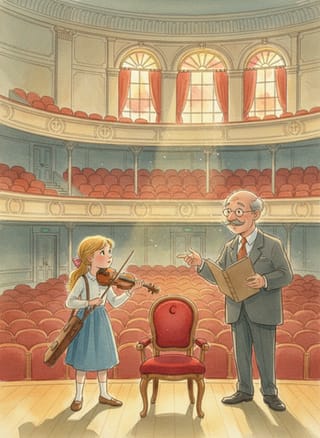
On Friday she went down the corridor holding the thesis in both hands, as if it might spill. Vivienne was eating a pear over a pile of marking, and she looked up with the open, unguarded pleasure that Stefania had always found so disarming.
El viernes recorrió el pasillo sosteniendo la tesis con ambas manos, como si pudiera derramarse. Vivienne comía una pera sobre una pila de exámenes por corregir, y levantó la vista con ese placer abierto y sin defensas que a Stefania siempre le había parecido tan desarmante.
"You look like someone with a question," Vivienne said.
«Tienes cara de tener una pregunta», dijo Vivienne.
"Do you remember a student called Ulla?" Stefania set the thesis on the desk, squarely, title upward. "Her work on damp and memory."
«¿Te acuerdas de una estudiante llamada Ulla?» Stefania dejó la tesis sobre el escritorio, bien alineada, con el título hacia arriba. «Su trabajo sobre humedad y memoria».
Vivienne stopped chewing. For a moment the only sound was the radiator ticking against the wall. Not until then did Stefania understand that she had been braced for denial, and that denial was not what she was about to get.
Vivienne dejó de masticar. Por un momento el único sonido fue el radiador tintineando contra la pared. Solo entonces comprendió Stefania que había estado preparada para una negativa, y que una negativa no era lo que iba a recibir.
Vivienne put down the pear and looked at the grey cover without touching it. "I wondered," she said, "how long it would take somebody to ask."
Vivienne dejó la pera y miró la cubierta gris sin tocarla. «Me preguntaba», dijo, «cuánto tardaría alguien en preguntarlo».