The Fox as Herdsman
Una historia gratuita en inglés de nivel B1 para estudiantes, para leer en línea en 7 idiomas, con opción de escucharla en la app gratuita Storyteller.
A woman looking for a herdsman turns down a growling bear and a howling wolf, then hires a fox with a lovely singing voice — a choice that explains a curious mark every fox still carries.
¡Ese fue el avance! Escucha la historia completa en la app gratuita Storyteller. Descargar la app
El audio no está disponible en este momento.
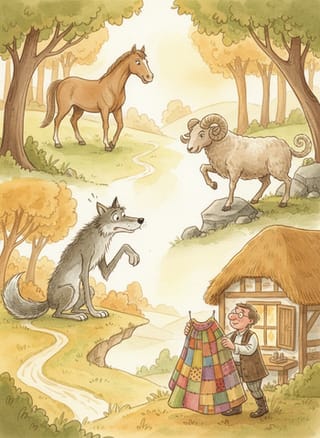
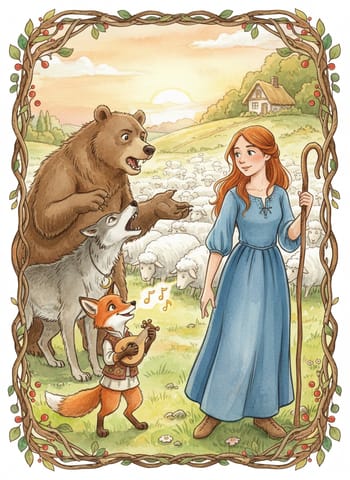
Once on a time there was a woman who went out to hire a herdsman, and she met a bear.
Érase una vez una mujer que salió a contratar a un pastor, y se encontró con un oso.
“Whither away, Goody?” said Bruin.
«¿Adónde vas, buena mujer?», dijo Bruno.
“Oh, I’m going out to hire a herdsman”, answered the woman.
«Ah, voy a contratar a un pastor», respondió la mujer.
“Why not have me for a herdsman?” said Bruin.
«¿Por qué no me tomas a mí como pastor?», dijo Bruno.
“Well, why not?” said the woman. “If you only knew how to call the flock; just let me hear?”
«Bueno, ¿por qué no?», dijo la mujer. «Si supieras cómo llamar al rebaño; déjame oírlo».
“OW, OW!” growled the bear.
«¡UUUH, UUUH!», gruñó el oso.
“No, no! I won’t have you”, said the woman, as soon as she heard him say that, and off she went on her way.
«¡No, no! No te tomaré a ti», dijo la mujer, tan pronto como lo oyó decir eso, y siguió su camino.
So, when she had gone a bit further, she met a wolf.
Así que, cuando había avanzado un poco más, se encontró con un lobo.
“Whither away, Goody?” asked the Wolf.
«¿Adónde vas, buena mujer?», preguntó el Lobo.
“Oh!” said she, “I’m going out to hire a herdsman.”
«¡Ah!», dijo ella, «voy a contratar a un pastor».
“Why not have me for a herdsman?” said the Wolf.
«¿Por qué no me tomas a mí como pastor?», dijo el Lobo.
“Well, why not? if you can only call the flock; let me hear?” said she.
«Bueno, ¿por qué no? Si sabes llamar al rebaño; déjame oírlo», dijo ella.
“UH, UH!” said the Wolf.
«¡UAH, UAH!», dijo el Lobo.
“No, no!” said the woman; “you’ll never do for me.”
«¡No, no!», dijo la mujer; «tú nunca me servirás».
Well, after she had gone a while longer, she met a fox.
Bueno, después de haber caminado un poco más, se encontró con un zorro.
“Whither away, Goody?” asked the Fox.
«¿Adónde vas, buena mujer?», preguntó el Zorro.
“Oh, I’m just going out to hire a herdsman”, said the woman.
«Ah, voy a contratar a un pastor», dijo la mujer.
“Why not have me for your herdsman?” asked the Fox.
«¿Por qué no me tomas a mí como tu pastor?», preguntó el Zorro.
“Well, why not?” said she; “if you only knew how to call the flock; let me hear?”
«Bueno, ¿por qué no?», dijo ella; «si supieras cómo llamar al rebaño; déjame oírlo».
“DIL-DAL-HOLOM”, sung out the Fox, in such a fine clear voice.
«DIL-DAL-HOLOM», entonó el Zorro, con una voz tan fina y clara.
“Yes; I’ll have you for my herdsman”, said the woman; and so she set the Fox to herd her flock.
«Sí; te tomaré como mi pastor», dijo la mujer; y así puso al Zorro a cuidar su rebaño.
The first day the Fox was herdsman he ate up all the woman’s goats; the next day he made an end of all her sheep; and the third day he ate up all her kine. So, when he came home at even, the woman asked what he had done with all her flocks?
El primer día que el Zorro fue pastor, se comió todas las cabras de la mujer; al día siguiente acabó con todas sus ovejas; y al tercer día se comió todas sus vacas. Así que, cuando volvió a casa al anochecer, la mujer le preguntó qué había hecho con todo su rebaño.
“Oh!” said the Fox, “their skulls are in the stream, and their bodies in the holt.”
«¡Ah!», dijo el Zorro, «sus cráneos están en el arroyo, y sus cuerpos en el bosquecillo».
Now, the Goody stood and churned when the fox said this, but she thought she might as well step out and see after her flock; and while she was away the Fox crept into the churn and ate up the cream. So when the Goody came back and saw that, she fell into such a rage, that she snatched up the little morsel of the cream that was left, and threw it at the fox as he ran off, so that he got a dab of it on the end of his tail, and that’s the reason why the fox has a white tip to his brush.
Ahora bien, la buena mujer estaba batiendo mantequilla cuando el zorro dijo esto, pero pensó que bien podría salir a ver cómo estaba su rebaño; y mientras estaba fuera, el Zorro se metió a hurtadillas en la mantequera y se comió la nata. Así que cuando la buena mujer volvió y vio aquello, se puso tan furiosa que agarró el pequeño resto de nata que quedaba y se lo arrojó al zorro mientras huía, de modo que le cayó un poco en la punta de la cola, y esa es la razón por la que el zorro tiene la punta de la cola blanca.