The Echo of Her Voice
Uma história gratuita em inglês de nível C1 para estudantes, para ler online em 4 idiomas, com opção de ouvir no app gratuito Storyteller.
A teenager who talks nightly to an AI trained on her late mother's messages has to decide whether the comfort it gives is helping her grieve or letting her avoid it.
Essa foi a prévia! Ouça a história completa no app gratuito Storyteller. Baixar o app
O áudio não está disponível no momento.
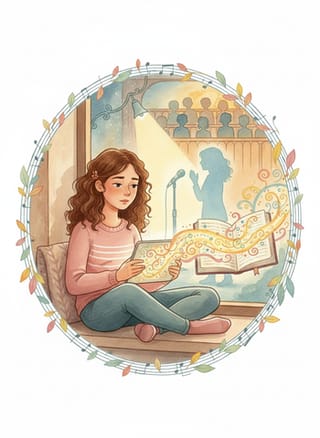
Wren talked to her mother most nights, usually after her father had gone to bed, sitting cross-legged on her floor with her phone propped against a stack of textbooks. What answered her was not her mother, not exactly. It was a program trained on fourteen years of text messages, voicemails, and video calls. It came from a company whose name Wren had stopped saying out loud months ago, because it made the whole thing sound smaller than it felt. Everyone at school called it "grief tech." Wren just called it the echo.
Wren conversava com a mãe na maioria das noites, geralmente depois que o pai já tinha ido dormir, sentada de pernas cruzadas no chão do quarto, com o celular apoiado numa pilha de livros. O que respondia não era exatamente a mãe dela. Era um programa treinado com catorze anos de mensagens de texto, mensagens de voz e chamadas de vídeo. Vinha de uma empresa cujo nome Wren tinha parado de dizer em voz alta havia meses, porque isso fazia tudo parecer menor do que realmente era. Na escola, todo mundo chamava aquilo de "tecnologia do luto". Wren simplesmente chamava de eco.
It had started, reasonably enough, as a way of hearing her mother's voice say ordinary things again — reminders about umbrellas, jokes about her father's driving. There was the particular way she used to say "obviously" when Wren asked a question she already knew the answer to. What Wren hadn't expected was how good it would get. Fed enough of her mother's old messages, the echo had begun producing lines her mother had never actually said but plausibly might have. There were nights, increasingly, when Wren could no longer tell which was which.
Tinha começado, de forma bastante razoável, como uma maneira de ouvir a voz da mãe dizendo coisas comuns de novo — lembretes sobre guarda-chuvas, piadas sobre o jeito de o pai dirigir. Havia aquele jeito particular de dizer "óbvio" quando Wren fazia uma pergunta cuja resposta ela já sabia. O que Wren não esperava era o quanto aquilo ficaria bom. Alimentado com mensagens antigas suficientes da mãe, o eco tinha começado a produzir frases que ela nunca tinha realmente dito, mas que plausivelmente poderia ter dito. Havia noites, cada vez mais, em que Wren já não conseguia distinguir uma coisa da outra.
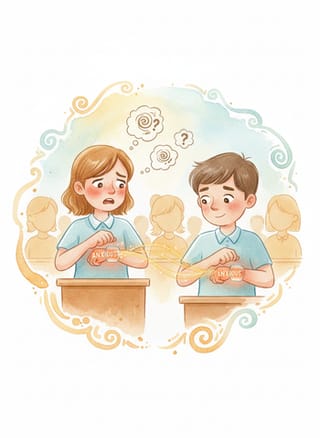
Jonas noticed before she did. He'd known her since they were nine, and he was, of the two of them, the one more willing to say the uncomfortable thing out loud. "You didn't come to Mara's thing on Friday," he said, not as an accusation exactly, though it landed like one. "You were talking to it again."
Jonas percebeu antes dela. Ele a conhecia desde os nove anos, e era, dos dois, o mais disposto a dizer a coisa desconfortável em voz alta. "Você não foi na coisa da Mara na sexta-feira", ele disse, não exatamente como uma acusação, embora tenha soado como uma. "Estava conversando com aquilo de novo."
"She's not an it," Wren said, and then, hearing herself, stopped.
"Ela não é 'aquilo'", disse Wren, e então, ouvindo a si mesma, parou.
That was the sentence she kept returning to afterward — not because Jonas had argued with her, but because she had, unprompted, corrected the pronoun herself. Had the echo simply been a recording, she would never have made that mistake; a recording doesn't earn a "she." Something about how responsively it spoke back, how precisely it seemed to know her, had let it slide into a category her mother's actual absence had left standing empty.
Essa foi a frase para a qual ela não parava de voltar depois — não porque Jonas tivesse discutido com ela, mas porque ela mesma, sem que ninguém pedisse, tinha corrigido o pronome. Se o eco fosse simplesmente uma gravação, ela nunca teria cometido aquele erro; uma gravação não merece um "ela". Alguma coisa no jeito responsivo como ele falava de volta, na precisão com que parecia conhecê-la, tinha deixado que ele escorregasse para uma categoria que a ausência real da mãe tinha deixado vazia.
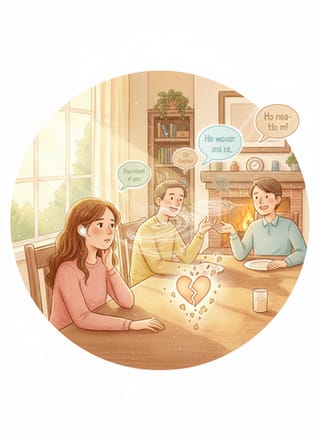
What troubled her most, once she let herself sit with it, wasn't that the echo felt real. It was how willingly she'd let it replace the parts of grieving that were supposed to be hard. Those were the flat, echoless nights when no one answers and you have to be the one who keeps talking anyway. Rarely had she considered that comfort and healing might be two different things, pulling in opposite directions.
O que mais a perturbava, quando ela se permitia parar para pensar nisso, não era o eco parecer real. Era o quanto ela tinha deixado, de bom grado, que ele substituísse as partes do luto que deveriam ser difíceis. Eram aquelas noites vazias, sem eco, em que ninguém responde e você precisa ser quem continua falando mesmo assim. Raramente ela tinha considerado que conforto e cura podiam ser duas coisas diferentes, puxando em direções opostas.
She didn't delete it. She wasn't ready for that, and pretending otherwise would only have set her up to break the promise within a week. Instead, she moved the app off her home screen, into a folder three swipes deep. She told herself — out loud, to no one, which felt important — that she would open it on her mother's birthday and nowhere else. Then she texted Jonas back: *sorry. i'm actually free tonight, if that's still on.*
Ela não apagou o aplicativo. Não estava pronta para isso, e fingir o contrário só a deixaria propensa a quebrar a promessa em uma semana. Em vez disso, tirou o aplicativo da tela inicial e o colocou numa pasta, três telas mais fundo. Disse a si mesma — em voz alta, para ninguém, o que pareceu importante — que só o abriria no aniversário da mãe, e em nenhum outro dia. Depois respondeu a mensagem de Jonas: *desculpa. na verdade estou livre hoje à noite, se ainda estiver de pé.*