An Unfinished Story
A free C1-level English story for language learners, readable online in 7 languages, with an option to listen via the free Storyteller app.
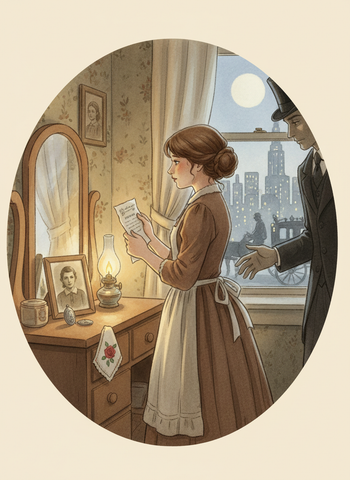
A shop-girl surviving New York on six dollars a week accepts a dinner invitation from a wealthy 'swell' with a dangerous reputation — until something on her dresser makes her change her mind.
We no longer groan and heap ashes upon our heads when the flames of Tophet are mentioned. For, even the preachers have begun to tell us that God is radium, or ether or some scientific compound, and that the worst we wicked ones may expect is a chemical reaction. This is a pleasing hypothesis; but there lingers yet some of the old, goodly terror of orthodoxy.
Ya no gemimos ni nos echamos cenizas sobre la cabeza cuando se mencionan las llamas del Tofet. Pues hasta los predicadores han empezado a decirnos que Dios es radio, o éter, o algún compuesto científico, y que lo peor que los malvados podemos esperar es una reacción química. Es una hipótesis agradable; pero aún perdura algo del viejo y bondadoso terror de la ortodoxia.
There are but two subjects upon which one may discourse with a free imagination, and without the possibility of being controverted. You may talk of your dreams; and you may tell what you heard a parrot say. Both Morpheus and the bird are incompetent witnesses; and your listener dare not attack your recital. The baseless fabric of a vision, then, shall furnish my theme—chosen with apologies and regrets instead of the more limited field of pretty Polly’s small talk.
Solo hay dos temas sobre los cuales uno puede disertar con imaginación libre, y sin posibilidad de que lo contradigan. Se puede hablar de los sueños; y se puede contar lo que uno oyó decir a un loro. Ni Morfeo ni el pájaro son testigos competentes; y quien escucha no se atreve a rebatir el relato. La tela sin fundamento de una visión, entonces, será mi tema, elegido con disculpas y pesares en lugar del campo más limitado de la cháchara de la linda Polly.
I had a dream that was so far removed from the higher criticism that it had to do with the ancient, respectable, and lamented bar-of-judgment theory.
Tuve un sueño tan alejado de la alta crítica que tenía que ver con la antigua, respetable y llorada teoría del tribunal del juicio.
Gabriel had played his trump; and those of us who could not follow suit were arraigned for examination. I noticed at one side a gathering of professional bondsmen in solemn black and collars that buttoned behind; but it seemed there was some trouble about their real estate titles; and they did not appear to be getting any of us out.
Gabriel había jugado su triunfo; y aquellos de nosotros que no pudimos seguirle el palo fuimos procesados para el examen. Noté a un lado un grupo de fiadores profesionales de solemne negro y cuellos abotonados por detrás; pero parecía haber algún problema con los títulos de sus bienes raíces; y no parecían estar sacando a ninguno de nosotros.
A fly cop—an angel policeman—flew over to me and took me by the left wing. Near at hand was a group of very prosperous-looking spirits arraigned for judgment.
Un policía volador —un ángel policía— voló hacia mí y me tomó por el ala izquierda. Cerca había un grupo de espíritus de aspecto muy próspero procesados para el juicio.
“Do you belong with that bunch?” the policeman asked.
—¿Perteneces a ese grupo? —me preguntó el policía.
“Who are they?” was my answer.
—¿Quiénes son? —fue mi respuesta.
“Why,” said he, “they are—”
—Bueno —dijo él—, son…
But this irrelevant stuff is taking up space that the story should occupy.
Pero esta paja irrelevante está ocupando espacio que debería ocupar el relato.
Dulcie worked in a department store. She sold Hamburg edging, or stuffed peppers, or automobiles, or other little trinkets such as they keep in department stores. Of what she earned, Dulcie received six dollars per week. The remainder was credited to her and debited to somebody else’s account in the ledger kept by G–––– Oh, primal energy, you say, Reverend Doctor—Well then, in the Ledger of Primal Energy.
Dulcie trabajaba en unos grandes almacenes. Vendía puntillas de Hamburgo, o pimientos rellenos, o automóviles, u otras chucherías de las que se guardan en los grandes almacenes. De lo que ganaba, Dulcie recibía seis dólares por semana. El resto se acreditaba a su nombre y se debitaba a la cuenta de alguien más en el libro mayor que lleva D… Ah, energía primordial, dice usted, reverendo doctor… Bueno, entonces, en el Libro Mayor de la Energía Primordial.
During her first year in the store, Dulcie was paid five dollars per week. It would be instructive to know how she lived on that amount. Don’t care? Very well; probably you are interested in larger amounts. Six dollars is a larger amount. I will tell you how she lived on six dollars per week.
Durante su primer año en la tienda, a Dulcie le pagaban cinco dólares por semana. Sería instructivo saber cómo vivía con esa cantidad. ¿No le interesa? Muy bien; probablemente le interesen sumas mayores. Seis dólares es una suma mayor. Le contaré cómo vivía con seis dólares a la semana.
One afternoon at six, when Dulcie was sticking her hat-pin within an eighth of an inch of her medulla oblongata, she said to her chum, Sadie—the girl that waits on you with her left side:
Una tarde a las seis, cuando Dulcie se clavaba el alfiler del sombrero a un octavo de pulgada de su bulbo raquídeo, le dijo a su amiga Sadie —la muchacha que atiende de perfil izquierdo—:
“Say, Sade, I made a date for dinner this evening with Piggy.”
—Oye, Sade, quedé en cenar esta noche con Piggy.
“You never did!” exclaimed Sadie admiringly. “Well, ain’t you the lucky one? Piggy’s an awful swell; and he always takes a girl to swell places. He took Blanche up to the Hoffman House one evening, where they have swell music, and you see a lot of swells. You’ll have a swell time, Dulce.”
—¡No puede ser! —exclamó Sadie con admiración—. Vaya, ¿no eres afortunada? Piggy es la mar de elegante; y siempre lleva a las chicas a lugares elegantes. Llevó a Blanche una noche al Hoffman House, donde tienen música elegante, y ves a un montón de gente elegante. Vas a pasarla en grande, Dulce.
Dulcie hurried homeward. Her eyes were shining, and her cheeks showed the delicate pink of life’s—real life’s—approaching dawn. It was Friday; and she had fifty cents left of her last week’s wages.
Dulcie se apresuró camino a casa. Le brillaban los ojos, y sus mejillas mostraban el delicado rosa del alba que se acercaba de la vida, de la vida de verdad. Era viernes; y le quedaban cincuenta centavos del sueldo de la semana pasada.
The streets were filled with the rush-hour floods of people. The electric lights of Broadway were glowing—calling moths from miles, from leagues, from hundreds of leagues out of darkness around to come in and attend the singeing school. Men in accurate clothes, with faces like those carved on cherry stones by the old salts in sailors’ homes, turned and stared at Dulcie as she sped, unheeding, past them. Manhattan, the night-blooming cereus, was beginning to unfold its dead-white, heavy-odoured petals.
Las calles estaban llenas de las multitudes de la hora pico. Las luces eléctricas de Broadway resplandecían, llamando a las polillas desde millas, desde leguas, desde cientos de leguas de oscuridad a su alrededor, a venir a asistir a la escuela de chamuscarse. Hombres de ropa impecable, con rostros como los tallados en huesos de cereza por los viejos marinos en los hogares de asilo de marineros, se volteaban a mirar a Dulcie mientras ella pasaba veloz, sin prestarles atención. Manhattan, la flor nocturna, empezaba a desplegar sus pétalos blanco muerto, de olor pesado.
Dulcie stopped in a store where goods were cheap and bought an imitation lace collar with her fifty cents. That money was to have been spent otherwise—fifteen cents for supper, ten cents for breakfast, ten cents for lunch. Another dime was to be added to her small store of savings; and five cents was to be squandered for licorice drops—the kind that made your cheek look like the toothache, and last as long. The licorice was an extravagance—almost a carouse—but what is life without pleasures?
Dulcie se detuvo en una tienda donde la mercancía era barata y compró un cuello de encaje imitación con sus cincuenta centavos. Ese dinero se suponía debía gastarse de otro modo: quince centavos para la cena, diez centavos para el desayuno, diez centavos para el almuerzo. Otros diez centavos se sumarían a sus pequeños ahorros; y cinco centavos se malgastarían en gotas de regaliz, de esas que hacían que la mejilla pareciera hinchada de dolor de muelas, y que duraban lo mismo. El regaliz era un derroche, casi una juerga, pero ¿qué es la vida sin placeres?
Dulcie lived in a furnished room. There is this difference between a furnished room and a boarding-house. In a furnished room, other people do not know it when you go hungry.
Dulcie vivía en una habitación amueblada. Hay esta diferencia entre una habitación amueblada y una pensión con comida: en una habitación amueblada, los demás no se enteran cuando uno pasa hambre.
Dulcie went up to her room—the third floor back in a West Side brownstone-front. She lit the gas. Scientists tell us that the diamond is the hardest substance known. Their mistake. Landladies know of a compound beside which the diamond is as putty. They pack it in the tips of gas-burners; and one may stand on a chair and dig at it in vain until one’s fingers are pink and bruised. A hairpin will not remove it; therefore let us call it immovable.
Dulcie subió a su habitación —la trasera del tercer piso en una casa de piedra rojiza del West Side. Encendió el gas. Los científicos nos dicen que el diamante es la sustancia más dura que se conoce. Se equivocan. Las caseras conocen un compuesto junto al cual el diamante es como masilla. Lo empacan en las puntas de los mecheros de gas; y uno puede subirse a una silla y hurgar en vano hasta que los dedos quedan rosados y magullados. Ni una horquilla lo remueve; así que llamémoslo inamovible.
So Dulcie lit the gas. In its one-fourth-candlepower glow we will observe the room.
Así que Dulcie encendió el gas. Bajo su resplandor de un cuarto de bujía observaremos la habitación.
Couch-bed, dresser, table, washstand, chair—of this much the landlady was guilty. The rest was Dulcie’s. On the dresser were her treasures—a gilt china vase presented to her by Sadie, a calendar issued by a pickle works, a book on the divination of dreams, some rice powder in a glass dish, and a cluster of artificial cherries tied with a pink ribbon.
Cama-sofá, cómoda, mesa, lavamanos, silla: de todo esto era culpable la casera. El resto era de Dulcie. Sobre la cómoda estaban sus tesoros: un jarrón de porcelana dorada que le regaló Sadie, un calendario emitido por una fábrica de encurtidos, un libro sobre la adivinación de los sueños, algo de polvo de arroz en un platillo de vidrio, y un racimo de cerezas artificiales atado con un lazo rosa.
Against the wrinkly mirror stood pictures of General Kitchener, William Muldoon, the Duchess of Marlborough, and Benvenuto Cellini. Against one wall was a plaster of Paris plaque of an O’Callahan in a Roman helmet. Near it was a violent oleograph of a lemon-coloured child assaulting an inflammatory butterfly. This was Dulcie’s final judgment in art; but it had never been upset. Her rest had never been disturbed by whispers of stolen copes; no critic had elevated his eyebrows at her infantile entomologist.
Contra el espejo arrugado había retratos del general Kitchener, de William Muldoon, de la duquesa de Marlborough y de Benvenuto Cellini. Contra una pared había una placa de yeso de París de un O'Callahan con casco romano. Cerca había una violenta oleografía de un niño color limón atacando a una mariposa inflamada. Este era el juicio final de Dulcie en materia de arte; y nunca había sido refutado. Su reposo jamás había sido perturbado por susurros de capas robadas; ningún crítico había alzado las cejas ante su entomólogo infantil.
Piggy was to call for her at seven. While she swiftly makes ready, let us discreetly face the other way and gossip.
Piggy iba a pasar a buscarla a las siete. Mientras ella se arregla velozmente, miremos discretamente hacia otro lado y chismeemos un poco.
For the room, Dulcie paid two dollars per week. On week-days her breakfast cost ten cents; she made coffee and cooked an egg over the gaslight while she was dressing. On Sunday mornings she feasted royally on veal chops and pineapple fritters at “Billy’s” restaurant, at a cost of twenty-five cents—and tipped the waitress ten cents. New York presents so many temptations for one to run into extravagance.
Por la habitación, Dulcie pagaba dos dólares por semana. Entre semana, su desayuno le costaba diez centavos; hacía café y cocinaba un huevo sobre la llama del gas mientras se vestía. Los domingos por la mañana se daba un festín regio de chuletas de ternera y buñuelos de piña en el restaurante "Billy's", a un costo de veinticinco centavos, y le daba diez centavos de propina a la mesera. Nueva York presenta tantas tentaciones para caer en el derroche.
She had her lunches in the department-store restaurant at a cost of sixty cents for the week; dinners were $1.05. The evening papers—show me a New Yorker going without his daily paper!—came to six cents; and two Sunday papers—one for the personal column and the other to read—were ten cents. The total amounts to $4.76. Now, one has to buy clothes, and—
Almorzaba en el restaurante de los grandes almacenes, a un costo de sesenta centavos por semana; las cenas eran de un dólar con cinco centavos. Los periódicos vespertinos —¡muéstrenme a un neoyorquino que se quede sin su periódico diario!— costaban seis centavos; y dos periódicos dominicales —uno para la columna personal y el otro para leer— eran diez centavos. El total asciende a cuatro dólares con setenta y seis centavos. Ahora bien, hay que comprar ropa, y…
I give it up. I hear of wonderful bargains in fabrics, and of miracles performed with needle and thread; but I am in doubt. I hold my pen poised in vain when I would add to Dulcie’s life some of those joys that belong to woman by virtue of all the unwritten, sacred, natural, inactive ordinances of the equity of heaven. Twice she had been to Coney Island and had ridden the hobby-horses. ’Tis a weary thing to count your pleasures by summers instead of by hours.
Me rindo. Oigo hablar de maravillosas gangas en telas, y de milagros logrados con aguja e hilo; pero tengo mis dudas. Sostengo la pluma en vano, suspendida, cuando quisiera añadir a la vida de Dulcie algunas de esas alegrías que corresponden a la mujer en virtud de todas las ordenanzas no escritas, sagradas, naturales, inactivas, de la equidad del cielo. Dos veces había ido a Coney Island y había montado los caballitos de feria. Es cosa fatigosa contar los placeres propios por veranos en lugar de por horas.
Piggy needs but a word. When the girls named him, an undeserving stigma was cast upon the noble family of swine. The words-of-three-letters lesson in the old blue spelling book begins with Piggy’s biography. He was fat; he had the soul of a rat, the habits of a bat, and the magnanimity of a cat … He wore expensive clothes; and was a connoisseur in starvation.
De Piggy basta una palabra. Cuando las muchachas lo bautizaron así, se echó un estigma inmerecido sobre la noble familia porcina. La lección de las palabras de tres letras del viejo silabario azul empieza con la biografía de Piggy. Era gordo; tenía el alma de una rata, los hábitos de un murciélago y la magnanimidad de un gato… Vestía ropa costosa; y era todo un conocedor del hambre ajena.
He could look at a shop-girl and tell you to an hour how long it had been since she had eaten anything more nourishing than marshmallows and tea. He hung about the shopping districts, and prowled around in department stores with his invitations to dinner. Men who escort dogs upon the streets at the end of a string look down upon him. He is a type; I can dwell upon him no longer; my pen is not the kind intended for him; I am no carpenter.
Podía mirar a una dependienta y decirle a la hora exacta cuánto tiempo llevaba sin comer algo más nutritivo que malvaviscos y té. Merodeaba por los distritos comerciales, y rondaba los grandes almacenes con sus invitaciones a cenar. Los hombres que pasean a sus perros por la calle atados a una cuerda lo miran por encima del hombro. Es un tipo; no puedo detenerme más en él; mi pluma no es la indicada para él; no soy carpintero.
At ten minutes to seven Dulcie was ready. She looked at herself in the wrinkly mirror. The reflection was satisfactory. The dark blue dress, fitting without a wrinkle, the hat with its jaunty black feather, the but-slightly-soiled gloves—all representing self-denial, even of food itself—were vastly becoming.
A las siete menos diez, Dulcie estaba lista. Se miró en el espejo arrugado. El reflejo era satisfactorio. El vestido azul oscuro, ajustado sin una arruga, el sombrero con su airosa pluma negra, los guantes apenas manchados —todo ello representando renuncia y sacrificio, incluso de la comida misma— le sentaban de maravilla.
Dulcie forgot everything else for a moment except that she was beautiful, and that life was about to lift a corner of its mysterious veil for her to observe its wonders. No gentleman had ever asked her out before. Now she was going for a brief moment into the glitter and exalted show.
Dulcie olvidó todo lo demás por un momento, salvo que era hermosa, y que la vida estaba a punto de alzar una esquina de su velo misterioso para que ella observara sus maravillas. Ningún caballero la había invitado a salir antes. Ahora iba, por un breve instante, hacia el brillo y el exaltado espectáculo.
The girls said that Piggy was a “spender.” There would be a grand dinner, and music, and splendidly dressed ladies to look at, and things to eat that strangely twisted the girls’ jaws when they tried to tell about them. No doubt she would be asked out again. There was a blue pongee suit in a window that she knew—by saving twenty cents a week instead of ten, in—let’s see—Oh, it would run into years! But there was a second-hand store in Seventh Avenue where—
Las muchachas decían que Piggy era un "gastador". Habría una gran cena, y música, y damas espléndidamente vestidas para mirar, y cosas de comer que retorcían extrañamente la mandíbula de las muchachas cuando intentaban describirlas. Sin duda la invitaría de nuevo. Había un traje de pongée azul en un escaparate que ella conocía: ahorrando veinte centavos por semana en lugar de diez, en… veamos… ¡Ah, tardaría años! Pero había una tienda de segunda mano en la Séptima Avenida donde…
Somebody knocked at the door. Dulcie opened it. The landlady stood there with a spurious smile, sniffing for cooking by stolen gas.
Alguien llamó a la puerta. Dulcie abrió. La casera estaba allí con una sonrisa fingida, olfateando en busca de cocina hecha con gas robado.
“A gentleman’s downstairs to see you,” she said. “Name is Mr. Wiggins.”
—Un caballero abajo pregunta por usted —dijo—. Se llama el señor Wiggins.
By such epithet was Piggy known to unfortunate ones who had to take him seriously.
Por tal apelativo se conocía a Piggy entre los desdichados que debían tomarlo en serio.
Dulcie turned to the dresser to get her handkerchief; and then she stopped still, and bit her underlip hard. While looking in her mirror she had seen fairyland and herself, a princess, just awakening from a long slumber. She had forgotten one that was watching her with sad, beautiful, stern eyes—the only one there was to approve or condemn what she did. Straight and slender and tall, with a look of sorrowful reproach on his handsome, melancholy face, General Kitchener fixed his wonderful eyes on her out of his gilt photograph frame on the dresser.
Dulcie se volvió hacia la cómoda para tomar su pañuelo; y entonces se quedó quieta, y se mordió con fuerza el labio inferior. Al mirarse en el espejo había visto el país de las hadas, y a sí misma, una princesa, apenas despertando de un largo sueño. Había olvidado a alguien que la observaba con ojos tristes, hermosos y severos: el único allí con derecho a aprobar o condenar lo que ella hiciera. Erguido, esbelto y alto, con una mirada de dolido reproche en su rostro apuesto y melancólico, el general Kitchener fijó sus maravillosos ojos en ella desde su marco de foto dorado sobre la cómoda.
Dulcie turned like an automatic doll to the landlady.
Dulcie se volvió como una muñeca automática hacia la casera.
“Tell him I can’t go,” she said dully. “Tell him I’m sick, or something. Tell him I’m not going out.”
—Dígale que no puedo ir —dijo con voz apagada—. Dígale que estoy enferma, o algo así. Dígale que no voy a salir.
After the door was closed and locked, Dulcie fell upon her bed, crushing her black tip, and cried for ten minutes. General Kitchener was her only friend. He was Dulcie’s ideal of a gallant knight. He looked as if he might have a secret sorrow, and his wonderful moustache was a dream, and she was a little afraid of that stern yet tender look in his eyes. She used to have little fancies that he would call at the house sometime, and ask for her, with his sword clanking against his high boots. Once, when a boy was rattling a piece of chain against a lamp-post she had opened the window and looked out.
Después de que la puerta se cerró con llave, Dulcie se dejó caer sobre la cama, aplastando su pluma negra, y lloró durante diez minutos. El general Kitchener era su único amigo. Era el ideal de Dulcie de un caballero valeroso. Parecía tener alguna pena secreta, y su maravilloso bigote era un sueño, y a ella le daba un poco de miedo esa mirada severa aunque tierna en sus ojos. Solía imaginar que él vendría alguna vez a la casa, y preguntaría por ella, con la espada tintineando contra sus altas botas. Una vez, cuando un muchacho hacía sonar un trozo de cadena contra un farol, ella había abierto la ventana y mirado afuera.
But there was no use. She knew that General Kitchener was away over in Japan, leading his army against the savage Turks; and he would never step out of his gilt frame for her. Yet one look from him had vanquished Piggy that night. Yes, for that night.
Pero de nada servía. Sabía que el general Kitchener estaba lejos, en Japón, liderando su ejército contra los turcos salvajes; y que él nunca saldría de su marco dorado por ella. Y sin embargo, una sola mirada de él había vencido a Piggy esa noche. Sí, por esa noche.
When her cry was over Dulcie got up and took off her best dress, and put on her old blue kimono. She wanted no dinner. She sang two verses of “Sammy.” Then she became intensely interested in a little red speck on the side of her nose. And after that was attended to, she drew up a chair to the rickety table, and told her fortune with an old deck of cards.
Cuando terminó de llorar, Dulcie se levantó y se quitó su mejor vestido, y se puso su vieja bata azul. No quería cenar. Cantó dos estrofas de "Sammy". Luego se interesó intensamente en una pequeña mancha roja en un costado de su nariz. Y después de atenderla, arrastró una silla hasta la mesa desvencijada, y se leyó la fortuna con un viejo mazo de cartas.
“The horrid, impudent thing!” she said aloud. “And I never gave him a word or a look to make him think it!”
—¡Qué tipo tan horrible y descarado! —dijo en voz alta—. ¡Y yo nunca le di ni una palabra ni una mirada para que pensara eso!
At nine o’clock Dulcie took a tin box of crackers and a little pot of raspberry jam out of her trunk, and had a feast. She offered General Kitchener some jam on a cracker; but he only looked at her as the sphinx would have looked at a butterfly—if there are butterflies in the desert.
A las nueve, Dulcie sacó de su baúl una lata de galletas y un frasquito de mermelada de frambuesa, y se dio un festín. Le ofreció al general Kitchener un poco de mermelada sobre una galleta; pero él solo la miró como la esfinge habría mirado a una mariposa, si es que hay mariposas en el desierto.
“Don’t eat it if you don’t want to,” said Dulcie. “And don’t put on so many airs and scold so with your eyes. I wonder if you’d be so superior and snippy if you had to live on six dollars a week.”
—No la comas si no quieres —dijo Dulcie—. Y no te des tantos aires ni me regañes tanto con los ojos. Me pregunto si serías tan superior y quisquilloso si tuvieras que vivir con seis dólares a la semana.
It was not a good sign for Dulcie to be rude to General Kitchener. And then she turned Benvenuto Cellini face downward with a severe gesture. But that was not inexcusable; for she had always thought he was Henry VIII, and she did not approve of him.
No era buena señal que Dulcie fuera grosera con el general Kitchener. Y entonces volteó a Benvenuto Cellini boca abajo con un gesto severo. Pero eso no era imperdonable; pues siempre había pensado que era Enrique VIII, y no lo aprobaba.
At half-past nine Dulcie took a last look at the pictures on the dresser, turned out the light, and skipped into bed. It’s an awful thing to go to bed with a good-night look at General Kitchener, William Muldoon, the Duchess of Marlborough, and Benvenuto Cellini. This story really doesn’t get anywhere at all. The rest of it comes later—sometime when Piggy asks Dulcie again to dine with him, and she is feeling lonelier than usual, and General Kitchener happens to be looking the other way; and then—
A las nueve y media, Dulcie echó una última mirada a los retratos de la cómoda, apagó la luz, y se metió de un salto en la cama. Es algo terrible irse a la cama con una mirada de buenas noches al general Kitchener, a William Muldoon, a la duquesa de Marlborough y a Benvenuto Cellini. Este relato en realidad no llega a ninguna parte. El resto viene después, algún día cuando Piggy vuelva a invitar a Dulcie a cenar, y ella se sienta más sola que de costumbre, y el general Kitchener resulte estar mirando hacia otro lado; y entonces…
As I said before, I dreamed that I was standing near a crowd of prosperous-looking angels, and a policeman took me by the wing and asked if I belonged with them.
Como dije antes, soñé que estaba parado cerca de una multitud de ángeles de aspecto próspero, y un policía me tomó por el ala y preguntó si yo pertenecía a su grupo.
“Who are they?” I asked.
—¿Quiénes son? —pregunté.
“Why,” said he, “they are the men who hired working-girls, and paid ’em five or six dollars a week to live on. Are you one of the bunch?”
—Bueno —dijo él—, son los hombres que contrataban a muchachas trabajadoras, y les pagaban cinco o seis dólares a la semana para vivir. ¿Eres uno de ellos?
“Not on your immortality,” said I. “I’m only the fellow that set fire to an orphan asylum, and murdered a blind man for his pennies.”
—Ni en tu inmortalidad —dije yo—. Yo solo soy el tipo que le prendió fuego a un orfanato, y que asesinó a un ciego por sus centavos.
