What Was Still Good
一个面向英语学习者的免费 C1 级英语故事,可用 7 种语言在线阅读,也可以在免费的 Storyteller 应用中收听。
A donation-shelter worker who reads strangers' lives through the objects they give away finds a carefully folded coat with a stitched name and no explanation attached to it.
试听结束!在免费的 Storyteller 应用中收听完整故事。 下载应用
音频暂时无法播放。
Wendell sorted donations on Tuesdays and Thursdays, and after six years at the shelter's intake counter, he had stopped being surprised by what people decided they no longer needed. What still caught him, occasionally, was the order in which things arrived. It was never one item alone, but whole clusters that told you, if you paid attention, exactly what had happened in someone's life that month.
温德尔每周二和周四整理捐赠物品。在收容所的接收台前干了六年之后,他已经不再对人们决定不再需要什么感到惊讶。偶尔还会让他留意的,是东西送来的顺序。从来不是单独一件,而是一整批一整批的,只要你留心,就能从中看出那个月在某个人的生活里究竟发生了什么。
A wedding dress, a blender, and four picture frames meant a divorce, usually, though the timing varied. A crib, unused bottles, and a stack of parenting books, still in their shrink wrap, meant something he preferred not to guess at and rarely asked about. Work boots, a hard hat, and a thermos arriving together on the same Thursday meant a job gone bad. It had ended badly enough that a person wanted the whole uniform gone, not sold, not saved for spare parts, simply out of the house.
一件婚纱、一台搅拌机和四个相框,通常意味着离婚,只是时间有早有晚。一张婴儿床、没用过的奶瓶,还有一摞仍裹着塑封的育儿书,意味着一些他宁愿不去猜、也很少去问的事。工作靴、安全帽和一个保温杯在同一个星期四一起送来,意味着一份糟糕的工作。它结束得很不愉快,以至于那个人想把整套行头都清走——不是卖掉,不是留着当备用零件,就是要它离开家。
He had a system for sorting, official and unofficial. Officially, items went into three bins: sellable, recyclable, unsellable. Unofficially, Wendell also sorted by what he privately called the object's temperature. Had it clearly been given away in anger, in grief, or in simple tidiness? Most often it was the plainer, more common case: a person finally getting around to a closet they'd meant to clear for years.
他有一套整理的方法,一套正式的,一套不正式的。正式的是,物品分进三个箱子:可出售的、可回收的、不可出售的。不正式的是,温德尔还会按他私下里称为物品“温度”的东西来分类。它显然是在愤怒中、在悲伤中,还是出于单纯的收拾整齐而被送出来的?最常见的是更平淡、更普通的那种情况:一个人终于动手清理了他想清理好多年的衣柜。
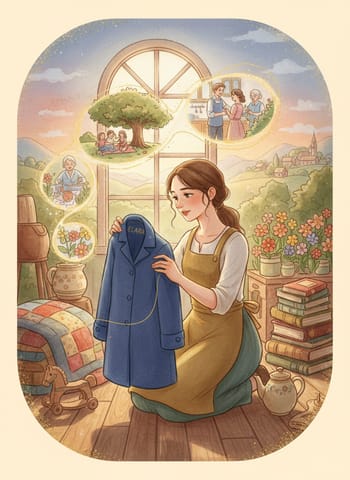
The coat came in on a Tuesday in November, good wool, barely worn, with a name tag stitched inside the collar in careful cursive: R. Okonjo. Had it been dropped in the general bin with everything else, Wendell might never have noticed it at all. Instead it had been folded with unusual care and placed on top, the way a person sets down something they still respect even as they let it go.
那件外套是十一月的一个星期二送来的,上好的羊毛料,几乎没怎么穿过,领子里面用工整的连笔字缝着一块名牌:R·奥孔乔。如果它和别的东西一起被扔进了普通的箱子,温德尔也许根本不会注意到它。可它却被格外用心地叠好,放在最上面,就像一个人放下一件自己依然敬重、哪怕已经决定放手的东西。
He held it a moment longer than the job required. There was no note, no explanation attached to the stitching, only the coat itself and whatever question it was quietly declining to answer. Wendell had learned, over six years, not to invent stories for donations that hadn't offered him one — the temptation was constant, and almost always wrong.
他拿着它的时间比工作需要的多了一会儿。没有字条,没有附在针脚上的任何解释,只有这件外套本身,以及它悄悄拒绝回答的那个问题。六年里,温德尔学会了不为没有向他提供故事的捐赠品编故事——这种诱惑一直都有,而且几乎总是错的。
What he could say, with more confidence, was narrower and truer. Someone had once cared enough about this coat to sew their name into it, and had since decided, for reasons the coat itself would never reveal, that it belonged to someone else's winter now. That was the whole of what the object could honestly tell him, and Wendell had come to think that was not a small thing to know about a stranger.
他能更有把握地说的,范围更窄,也更真实。曾经有人在乎这件外套,在乎到把自己的名字缝了进去,而后来,出于外套本身永远不会透露的原因,那个人决定它现在属于别人的冬天了。这就是这件物品能老老实实告诉他的全部,而温德尔渐渐觉得,对一个陌生人了解到这些,并不算少。
He priced it fairly, hung it on the coat rack near the door, and moved on to a box of mismatched mugs waiting behind it. By Thursday, the coat was gone, sold to someone he never saw and would never think to ask about. Only the name tag stayed with him, R. Okonjo, turning over in his mind on the drive home like a question with no available answer, and no real need for one.
他给它标了个公道的价钱,把它挂在靠近门口的衣架上,接着去整理排在它后面的一箱不成对的马克杯。到星期四,那件外套已经不见了,卖给了某个他没见过、也不会想到去打听的人。只有那块名牌留在了他的心里,R·奥孔乔,在回家的路上在他脑海里翻来覆去,像一个没有答案的问题,也并不真的需要答案。