The Green Door
A free C1-level English story for language learners, readable online in 7 languages, with an option to listen via the free Storyteller app.
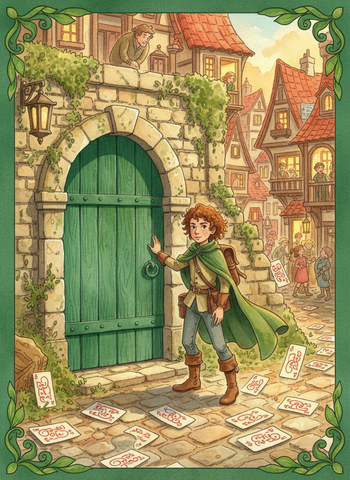
A restless young adventurer follows a trail of cryptic cards marked only "The Green Door" through the city — and knocks on a stranger's door, sure it is fate calling.
Suppose you should be walking down Broadway after dinner, with ten minutes allotted to the consummation of your cigar while you are choosing between a diverting tragedy and something serious in the way of vaudeville. Suddenly a hand is laid upon your arm. You turn to look into the thrilling eyes of a beautiful woman, wonderful in diamonds and Russian sables. She thrusts hurriedly into your hand an extremely hot buttered roll, flashes out a tiny pair of scissors, snips off the second button of your overcoat, meaningly ejaculates the one word, “parallelogram!” and swiftly flies down a cross street, looking back fearfully over her shoulder.
假设你吃过晚饭后正沿着百老汇大街散步,打算用十分钟抽完一支雪茄,一边琢磨着是去看一出滑稽悲剧,还是去看点正经的杂耍表演。忽然间,一只手搭上了你的手臂。你转过身,望进一位美丽女子那双摄人心魄的眼眸,她浑身戴满钻石,裹着俄罗斯貂皮,光彩照人。她匆匆忙忙地把一个滚烫的黄油面包卷塞进你手里,又飞快地掏出一把小剪刀,剪下你大衣上的第二颗纽扣,意味深长地脱口喊出一个词——"平行四边形!"——随即飞快地转身逃进一条横街,一边惊恐地回头张望。
That would be pure adventure. Would you accept it? Not you. You would flush with embarrassment; you would sheepishly drop the roll and continue down Broadway, fumbling feebly for the missing button. This you would do unless you are one of the blessed few in whom the pure spirit of adventure is not dead.
这便是纯粹的冒险了。你会接受它吗?你才不会呢。你会窘得满脸通红;你会讪讪地扔掉那个面包卷,继续沿着百老汇大街走下去,一边有气无力地摸索着那颗丢失的纽扣。除非你恰好是那少数几个心中纯粹冒险精神尚未泯灭的幸运儿,否则你一定会这样做。
True adventurers have never been plentiful. They who are set down in print as such have been mostly business men with newly invented methods. They have been out after the things they wanted—golden fleeces, holy grails, lady loves, treasure, crowns and fame. The true adventurer goes forth aimless and uncalculating to meet and greet unknown fate. A fine example was the Prodigal Son—when he started back home.
真正的冒险家从来都不算多。那些被载入史册、被称为冒险家的人,大多不过是些采用了新颖手法的生意人罢了。他们出发追寻的,是自己想要的东西——金羊毛、圣杯、心上人、财宝、王冠和名声。真正的冒险家出发时是漫无目的、不加算计的,只为迎接和拥抱未知的命运。浪子回头的故事便是一个绝佳的例子——就是他动身返家的那一刻。
Half-adventurers—brave and splendid figures—have been numerous. From the Crusades to the Palisades they have enriched the arts of history and fiction and the trade of historical fiction. But each of them had a prize to win, a goal to kick, an axe to grind, a race to run, a new thrust in tierce to deliver, a name to carve, a crow to pick—so they were not followers of true adventure.
半吊子的冒险家——那些勇敢而光彩夺目的人物——倒是数不胜数。从十字军东征到帕利塞兹悬崖,他们为历史与虚构的艺术,还有历史小说这门行当,添加了不少素材。可他们每个人心里都揣着一个要赢得的奖赏、一个要达成的目标、一桩要了结的心事、一场要跑赢的比赛、一记要出的新剑招、一个要刻下的名字、一笔要清算的旧账——所以他们算不上真正冒险精神的追随者。
In the big city the twin spirits Romance and Adventure are always abroad seeking worthy wooers. As we roam the streets they slyly peep at us and challenge us in twenty different guises.
在这座大都市里,浪漫与冒险这对孪生精灵始终四处游荡,寻觅着值得追求它们的人。当我们漫步街头时,它们便悄悄地窥视着我们,以二十种不同的化身向我们发出挑战。
Without knowing why, we look up suddenly to see in a window a face that seems to belong to our gallery of intimate portraits; in a sleeping thoroughfare we hear a cry of agony and fear coming from an empty and shuttered house; instead of at our familiar curb, a cab-driver deposits us before a strange door, which one, with a smile, opens for us and bids us enter; a slip of paper, written upon, flutters down to our feet from the high lattices of Chance; we exchange glances of instantaneous hate, affection and fear with hurrying strangers in the passing crowds; a sudden douse of rain—and our umbrella may be sheltering the daughter of the Full Moon and first cousin of the Sidereal System; at every corner handkerchiefs drop, fingers beckon, eyes besiege, and the lost, the lonely, the rapturous, the mysterious, the perilous, changing clues of adventure are slipped into our fingers.
我们不知不觉地忽然抬头,望见窗内一张脸庞,仿佛正属于我们心中那画廊里熟悉的肖像之一;在一条沉睡的大道上,我们听见一声痛苦而惊恐的呼喊,从一栋空无一人、门窗紧闭的屋子里传来;一位马车夫没有把我们放在惯常的路边,而是把我们送到了一扇陌生的门前,那扇门笑吟吟地为我们敞开,请我们进去;一张写着字的纸片,从命运那高高的格窗中飘落到我们脚边;我们与匆匆而过的陌生人在人群中交换一个瞬间的憎恶、爱慕或恐惧的眼神;一阵突如其来的骤雨——我们的雨伞下,说不定正遮蔽着满月的女儿、星系家族的表亲;每一个街角,都有手帕落下,手指招引,眼神围困,那些迷失的、孤独的、狂喜的、神秘的、危险的、变幻莫测的冒险线索,便这样悄悄塞进了我们的指间。
But few of us are willing to hold and follow them. We are grown stiff with the ramrod of convention down our backs. We pass on; and some day we come, at the end of a very dull life, to reflect that our romance has been a pallid thing of a marriage or two, a satin rosette kept in a safe-deposit drawer, and a lifelong feud with a steam radiator.
可我们当中,愿意抓住它们、追随它们的人却寥寥无几。我们早已被那根俗套的通条从后背撑得僵直不动。我们径直走了过去;等有一天,在无比乏味的一生尽头,我们才回想起,自己的浪漫史不过是一两桩苍白的婚姻、一个存放在保险柜抽屉里的缎子玫瑰花结,还有跟一台暖气片终生不休的恩怨罢了。
Rudolf Steiner was a true adventurer. Few were the evenings on which he did not go forth from his hall bedchamber in search of the unexpected and the egregious. The most interesting thing in life seemed to him to be what might lie just around the next corner. Sometimes his willingness to tempt fate led him into strange paths. Twice he had spent the night in a station-house; again and again he had found himself the dupe of ingenious and mercenary tricksters; his watch and money had been the price of one flattering allurement. But with undiminished ardour he picked up every glove cast before him into the merry lists of adventure.
鲁道夫·斯坦纳却是个真正的冒险家。他很少有哪个夜晚不从自己那间旅馆卧室里走出来,去寻觅意想不到、离奇古怪的事物。人生中最有意思的事,在他看来,莫过于下一个街角可能藏着什么。有时,他这份甘愿以身试险的心,也把他引上了些古怪的歧途。他曾两次在警局的拘留室里过夜;他也一次又一次地成了那些精明贪财的骗子手下的傻瓜;他的手表和钱财,都曾是某次美妙诱惑付出的代价。可他仍旧兴致不减,每一次都拾起那被抛在他面前、通往冒险乐园的手套。
One evening Rudolf was strolling along a crosstown street in the older central part of the city. Two streams of people filled the sidewalks—the home-hurrying, and that restless contingent that abandons home for the specious welcome of the thousand-candle-power _table d’hôte_.
一天傍晚,鲁道夫正沿着这座城市较古老的中心地段的一条横街漫步。人行道上挤满了两股人流——一股是急着回家的人,另一股则是那些不安分的家伙,宁可抛下家门,去追逐那千烛光照耀下的定食餐馆那虚假的欢迎。
The young adventurer was of pleasing presence, and moved serenely and watchfully. By daylight he was a salesman in a piano store. He wore his tie drawn through a topaz ring instead of fastened with a stick pin; and once he had written to the editor of a magazine that “Junie’s Love Test” by Miss Libbey, had been the book that had most influenced his life.
这位年轻的冒险家仪表堂堂,从容而警觉地行走着。白天,他是一家钢琴行的推销员。他不用领带夹,而是把领带穿过一个黄玉戒指来固定;他还曾给一家杂志的编辑写过信,说莉比小姐所著的《朱妮的爱情考验》一书,对他一生的影响最为深远。
During his walk a violent chattering of teeth in a glass case on the sidewalk seemed at first to draw his attention (with a qualm), to a restaurant before which it was set; but a second glance revealed the electric letters of a dentist’s sign high above the next door. A tall man, fantastically dressed in a red embroidered coat, yellow trousers and a military cap, discreetly distributed cards to those of the passing crowd who consented to take them.
散步途中,人行道上一个玻璃箱里传来一阵剧烈的牙齿咯咯作响的声音,起初似乎(带着一阵不适之感)把他的目光吸引到了这箱子前面的一家餐馆上;可他再定睛一看,才发现原来是隔壁门上方,一块牙医招牌的电灯字母在闪烁着。一个身材高大的男子,穿着一身滑稽古怪的服装——绣花的红色外套、黄色裤子和一顶军帽——彬彬有礼地把名片分发给愿意接过的过往行人。
This mode of dentistic advertising was a common sight to Rudolf. Usually he passed the dispenser of the dentist’s cards without reducing his store; but tonight the card-distributor slipped one into his hand so deftly that he retained it there smiling a little at the successful feat.
这种牙医打广告的方式,鲁道夫早已司空见惯。往常他都是走过发名片的人,连脚步都不停一下;可今晚,这个发名片的人却灵巧地把一张名片塞进了他手里,他捏着名片,脸上还带着一丝得意的笑,为这一次成功的招数而暗自高兴。
When he had travelled a few yards further he glanced at the card indifferently. Surprised, he turned it over and looked again with interest. One side of the card was blank; on the other was written in ink three words, “The Green Door.” And then Rudolf saw, three steps in front of him, a man throw down the card the card-distributor had given him as he passed. Rudolf picked it up. It was printed with the dentist’s name and address and the usual schedule of “plate work” and “bridge work” and “crowns,” and specious promises of “painless” operations.
他又往前走了几码,才漫不经心地瞥了一眼那张名片。他一惊,翻过来又饶有兴致地再看了一遍。名片的一面是空白的;另一面用墨水写着三个字:"绿门"。就在这时,鲁道夫看见前方三步远的地方,有个人把发名片人刚给他的名片随手一扔,扔在了路上。鲁道夫捡了起来。上面印着牙医的姓名和地址,还有惯常的那套"镶牙""镶桥"和"牙冠"的价目,以及"无痛"手术之类的虚假承诺。
The adventurous piano salesman halted at the corner and considered. Then he crossed the street, walked down a block, recrossed and joined the upward current of people again. Without seeming to notice the man as he passed the second time, he carelessly took the card that was handed him. Ten steps away he inspected it. In the same handwriting that appeared on the first card “The Green Door” was inscribed upon it. Three or four cards were tossed to the pavement by pedestrians both following and leading him. These fell blank side up. Rudolf turned them over. Every one bore the printed legend of the dental “parlours.”
这位喜好冒险的钢琴推销员在街角停下脚步,思忖起来。接着他穿过马路,往前走了一个街区,又折回来,重新汇入向上而行的人流中。他假装没注意到那个男子,第二次经过时,随手接过递给他的名片,态度显得漫不经心。走出十步远后,他打量了一下这张名片。上面写着跟第一张同样的字迹——"绿门"。前后几个行人也随手把三四张名片扔在了人行道上。这些名片落地时都是空白的一面朝上。鲁道夫把它们一一翻过来查看。每一张上印的,都是那家牙科"诊所"的广告词。
Rarely did the arch sprite Adventure need to beckon twice to Rudolf Steiner, his true follower. But twice it had been done, and the quest was on.
冒险精灵极少需要向鲁道夫·斯坦纳——它这位忠实的追随者——招手两次。可如今它确确实实招了两次手,这场探寻便这样开始了。
Rudolf walked slowly back to where the tall card-distributor stood by the case of rattling teeth. This time as he passed he received no card. In spite of his gaudy and ridiculous garb, the man displayed a natural dignity as he stood, offering the cards suavely to some, allowing others to pass unmolested. Every half minute he called out a phrase in a showman’s practiced patter. And not only did he withhold a card this time, but it seemed to Rudolf that he received from the man’s broad countenance a look of cold, almost contemptuous disdain.
鲁道夫缓步走回那个身材高大的发名片人站立的地方,他正守着那箱咯咯作响的假牙。这一次他经过时,却没有接到名片。尽管穿着那身花哨而滑稽的服装,他站在那儿的时候,却也自有一种天然的威严,从容地把名片递给一些人,又让另一些人径直走过,不加打扰。他每隔半分钟便用一种小贩叫卖般熟练的腔调喊出一句话。这一次,他不但没给鲁道夫名片,鲁道夫甚至觉得,从他那宽阔的面容上,分明感受到了一种冷漠、近乎轻蔑的神情。
The look stung the adventurer. He read in it a silent accusation that he had been found wanting. Whatever the mysterious written words on the cards might mean, the man had selected him twice from the throng for their recipient; and now seemed to have condemned him as deficient in the wit and spirit to engage the enigma.
这神情刺痛了这位冒险家。他从中读出了一种无声的指责,仿佛他已经被认定是不合格的了。不管名片上那些神秘文字究竟意味着什么,这个男子已经两次特意从人群中挑中他,把名片交给他;如今看来,却似乎已经断定他缺乏应对这个谜题所需的机智与胆识。
Standing aside from the rush, the young man made a rapid estimate of the building in which he conceived that his adventure must lie. Five stories high it rose. A small restaurant occupied the basement.
年轻人站到人流之外,飞快地打量起这栋楼房来,他确信自己的冒险必定就藏在这里面。这楼房共有五层高。地下室里开着一家小餐馆。
The first floor, now closed, seemed to house millinery or furs. The second floor, by the winking electric letters, was the dentist’s. Above this a polyglot babel of signs struggled to indicate the abodes of palmists, dressmakers, musicians and doctors. Still higher up draped curtains and milk bottles white on the window sills proclaimed the regions of domesticity.
一楼这时已经关了门,看样子经营的是女帽或皮草生意。二楼,从那闪烁的电灯字母来看,是牙医诊所。再往上,各种语言混杂的招牌争相标示着相面师、女装裁缝、音乐师和医生们的所在。更高的楼层,窗台上挂着的窗帘和摆着的白色牛奶瓶,则昭示着这里是寻常人家居住的地方。
After concluding his survey Rudolf walked briskly up the high flight of stone steps into the house. Up two flights of the carpeted stairway he continued; and at its top paused. The hallway there was dimly lighted by two pale jets of gas—one far to his right, the other nearer, to his left. He looked toward the nearer light and saw, within its wan halo, a green door. For one moment he hesitated; then he seemed to see the contumelious sneer of the card-distributor; and then he walked straight to the green door and knocked against it.
打量完毕之后,鲁道夫便迈着轻快的步伐,登上那道高高的石阶,走进了这栋楼房。他继续沿着铺着地毯的楼梯,一口气爬了两层,到了楼梯口才停下脚步。那儿的走廊里,只有两盏昏暗的煤气灯照明——一盏在他右手边很远的地方,另一盏则离他较近,在他左手边。他朝那盏较近的灯望去,只见在那朦胧的光晕之中,有一扇绿色的门。他迟疑了片刻;接着他仿佛又看见了那个发名片人那轻蔑的冷笑;于是他径直走向那扇绿门,敲了敲门。
Moments like those that passed before his knock was answered measure the quick breath of true adventure. What might not be behind those green panels! Gamesters at play; cunning rogues baiting their traps with subtle skill; beauty in love with courage, and thus planning to be sought by it; danger, death, love, disappointment, ridicule—any of these might respond to that temerarious rap.
在敲门之后、有人应门之前流逝的那片刻时光,正丈量着真正冒险者急促的呼吸。谁知道那绿色门板背后会藏着什么!也许是玩牌的赌徒;也许是狡诈的骗子,正巧设机关等人上钩;也许是钟情于勇气的美人,故意布下计谋等着被人追求;危险、死亡、爱情、失望、嘲弄——这鲁莽的一敲,随便哪一样都可能应声而至。
A faint rustle was heard inside, and the door slowly opened. A girl not yet twenty stood there, white-faced and tottering. She loosed the knob and swayed weakly, groping with one hand. Rudolf caught her and laid her on a faded couch that stood against the wall. He closed the door and took a swift glance around the room by the light of a flickering gas jet. Neat, but extreme poverty was the story that he read.
屋内传来一阵微弱的窸窣声,门缓缓开了。门口站着一个还不到二十岁的姑娘,脸色苍白,身子摇摇晃晃。她松开了门把手,虚弱地晃了晃,一只手茫然地摸索着。鲁道夫一把接住了她,把她放到墙边一张褪了色的长沙发上。他关上门,借着一盏摇曳的煤气灯的光,飞快地打量了一下屋里的情形。他看出的是一个整洁却极度贫困的故事。
The girl lay still, as if in a faint. Rudolf looked around the room excitedly for a barrel. People must be rolled upon a barrel who—no, no; that was for drowned persons. He began to fan her with his hat. That was successful, for he struck her nose with the brim of his derby and she opened her eyes. And then the young man saw that hers, indeed, was the one missing face from his heart’s gallery of intimate portraits. The frank, grey eyes, the little nose, turning pertly outward; the chestnut hair, curling like the tendrils of a pea vine, seemed the right end and reward of all his wonderful adventures. But the face was wofully thin and pale.
姑娘一动不动地躺着,仿佛昏厥了过去。鲁道夫兴奋地在屋里四下张望,想找个木桶。溺水的人才需要放在木桶上滚——不对,不对;那是对溺水者才用的法子。他开始用帽子给她扇风。这一招果然奏效,因为他不小心用礼帽的帽檐碰到了她的鼻子,她便睁开了眼睛。这时年轻人才发现,她的容貌,正是他心中那画廊里唯一缺失的一幅熟悉肖像。那双坦率的灰色眼眸,那小巧俏皮上翘的鼻子;那头栗色的头发,卷曲得像豌豆藤的卷须一般,似乎正是他这一切奇妙冒险应有的归宿与报偿。可她的面容却憔悴得叫人心疼,苍白无比。
The girl looked at him calmly, and then smiled.
姑娘平静地望着他,随即微微一笑。
“Fainted, didn’t I?” she asked, weakly. “Well, who wouldn’t? You try going without anything to eat for three days and see!”
"我晕过去了,是吧?"她虚弱地问道。"哦,谁能不晕呢?你要是三天没吃一点东西试试看就知道了!"
“Himmel!” exclaimed Rudolf, jumping up. “Wait till I come back.”
"我的天哪!"鲁道夫惊叫一声,跳了起来。"等我一会儿,我这就回来。"
He dashed out the green door and down the stairs. In twenty minutes he was back again, kicking at the door with his toe for her to open it. With both arms he hugged an array of wares from the grocery and the restaurant. On the table he laid them—bread and butter, cold meats, cakes, pies, pickles, oysters, a roasted chicken, a bottle of milk and one of red-hot tea.
他冲出绿门,飞奔下楼。二十分钟后,他又回来了,用脚尖踢着门,让她开门。他两臂抱着一大堆从杂货店和餐馆买来的食物。他把这些东西一一摆到桌上——面包和黄油、冷肉、蛋糕、馅饼、腌菜、牡蛎、一只烤鸡、一瓶牛奶,还有一壶热气腾腾的茶。
“This is ridiculous,” said Rudolf, blusteringly, “to go without eating. You must quit making election bets of this kind. Supper is ready.”
"这简直太荒唐了,"鲁道夫气势汹汹地说道,"竟然饿着不吃东西。你可不能再拿这种事去打赌了。晚饭已经准备好了。"
He helped her to a chair at the table and asked: “Is there a cup for the tea?” “On the shelf by the window,” she answered. When he turned again with the cup he saw her, with eyes shining rapturously, beginning upon a huge Dill pickle that she had rooted out from the paper bags with a woman’s unerring instinct. He took it from her, laughingly, and poured the cup full of milk.
他扶着她在桌旁坐下,问道:"有没有杯子装茶?""在窗边的架子上,"她答道。等他拿着杯子转回身来时,只见她眼中闪着狂喜的光芒,正从那些纸袋里凭着女人那份精准的本能,翻出一根又大又酸的腌黄瓜,开始大口啃了起来。他笑着从她手里把黄瓜拿开,倒了满满一杯牛奶。
“Drink that first” he ordered, “and then you shall have some tea, and then a chicken wing. If you are very good you shall have a pickle to-morrow. And now, if you’ll allow me to be your guest we’ll have supper.”
"先把这个喝了,"他吩咐道,"然后再给你些茶喝,再吃一只鸡翅。要是你乖乖听话,明天就给你一根腌黄瓜。现在,要是你允许我做你的客人,我们就一起吃这顿晚饭吧。"
He drew up the other chair. The tea brightened the girl’s eyes and brought back some of her colour. She began to eat with a sort of dainty ferocity like some starved wild animal.
他拉过另一张椅子坐下。那杯茶让姑娘的眼睛明亮了起来,脸色也恢复了几分血色。她开始吃了起来,带着一种优雅又狼吞虎咽的架势,就像某种饿坏了的野生动物一般。
She seemed to regard the young man’s presence and the aid he had rendered her as a natural thing—not as though she undervalued the conventions; but as one whose great stress gave her the right to put aside the artificial for the human. But gradually, with the return of strength and comfort, came also a sense of the little conventions that belong; and she began to tell him her little story.
她似乎把这位年轻人的存在,以及他向自己伸出的援手,都视为理所当然——倒不是说她轻视世俗的礼节;而是像一个被巨大的困境所迫,因而有权把虚礼放到一边、只顾人之常情的人那样。可随着体力和舒适感渐渐恢复,那些细枝末节的礼数意识也渐渐回到了她心头;于是她便开始向他讲起自己那点小小的故事来。
It was one of a thousand such as the city yawns at every day—the shop girl’s story of insufficient wages, further reduced by “fines” that go to swell the store’s profits; of time lost through illness; and then of lost positions, lost hope, and—the knock of the adventurer upon the green door.
这不过是这座城市每天都司空见惯、令人打哈欠的成千上万个故事中的一个——一个店员姑娘的故事,讲的是微薄的工资,还要被那些"罚款"再刮去一层,好让店铺的利润更丰厚一些;讲的是因病耽误的时日;接着便是丢了工作,丧失了希望,然后——便是这位冒险家敲响绿门的那一刻了。
But to Rudolf the history sounded as big as the Iliad or the crisis in “Junie’s Love Test.”
可在鲁道夫听来,这段经历却如同《伊利亚特》,或是《朱妮的爱情考验》里的高潮那般惊心动魄。
“To think of you going through all that,” he exclaimed.
"想想你竟然经历了这一切,"他惊叹道。
“It was something fierce,” said the girl, solemnly.
"那滋味真是可怕极了,"姑娘郑重其事地说道。
“And you have no relatives or friends in the city?”
"你在这座城市里没有亲戚朋友吗?"
“None whatever.”
"一个也没有。"
“I am all alone in the world, too,” said Rudolf, after a pause.
"我在这世上也是孤零零一个人,"鲁道夫沉默片刻后说道。
“I am glad of that,” said the girl, promptly; and somehow it pleased the young man to hear that she approved of his bereft condition.
"那我可高兴了,"姑娘立即说道;而不知怎的,听到她这样赞同自己孤苦伶仃的境况,这位年轻人心里竟也感到一丝欣慰。
Very suddenly her eyelids dropped and she sighed deeply.
忽然间,她的眼皮垂了下去,深深地叹了一口气。
“I’m awfully sleepy,” she said, “and I feel so good.”
"我困极了,"她说道,"可我觉得好舒服。"
Then Rudolf rose and took his hat. “I’ll say good-night. A long night’s sleep will be fine for you.”
于是鲁道夫站起身,拿起了帽子。"我该道晚安了。好好睡上一整夜,对你会大有好处的。"
He held out his hand, and she took it and said “good-night.” But her eyes asked a question so eloquently, so frankly and pathetically that he answered it with words.
他伸出手,她握住了,说了声"晚安"。可她的眼神却问出了一个问题,问得那样真挚、那样坦率、那样令人心酸,以至于他不得不用言语来回答。
“Oh, I’m coming back to-morrow to see how you are getting along. You can’t get rid of me so easily.”
"哦,我明天还会回来看看你好不好。你可没那么容易摆脱我。"
Then, at the door, as though the way of his coming had been so much less important than the fact that he had come, she asked: “How did you come to knock at my door?”
接着,走到门口时,她仿佛觉得他是怎样来到这儿的,远不如他确实来了这件事本身重要,便问道:"你怎么会想到敲我的门呢?"
He looked at her for a moment, remembering the cards, and felt a sudden jealous pain. What if they had fallen into other hands as adventurous as his? Quickly he decided that she must never know the truth. He would never let her know that he was aware of the strange expedient to which she had been driven by her great distress.
他望了她一会儿,想起了那些名片,心中忽然涌起一阵嫉妒般的刺痛。万一那些名片也落到了别的、跟他一样爱冒险的人手里呢?他很快便打定主意,决不能让她知道真相。他永远也不会让她知道,他其实清楚她是被巨大的困境逼到了那步古怪的境地。
“One of our piano tuners lives in this house,” he said. “I knocked at your door by mistake.”
"我们店里有个调琴师住在这栋楼里,"他说道。"我是敲错了你的门。"
The last thing he saw in the room before the green door closed was her smile.
绿门关上之前,他在屋里最后看见的,是她的一抹微笑。
At the head of the stairway he paused and looked curiously about him. And then he went along the hallway to its other end; and, coming back, ascended to the floor above and continued his puzzled explorations. Every door that he found in the house was painted green.
到了楼梯口,他停下脚步,好奇地四下张望。接着他沿着走廊走到另一头;又折回来,登上了上一层楼,继续困惑不解地探查着。他在这栋楼里找到的每一扇门,都漆成了绿色。
Wondering, he descended to the sidewalk. The fantastic card-distributor was still there. Rudolf confronted him with his two cards in his hand.
他满心疑惑地下了楼,来到人行道上。那个装扮古怪的发名片人还站在那儿。鲁道夫拿着手里那两张名片,走上前去面对着他。
“Will you tell me why you gave me these cards and what they mean?” he asked.
"你能告诉我,你为什么把这些名片给我,它们又是什么意思吗?"他问道。
With a broad, good-natured grin the man exhibited a splendid advertisement of his employer’s profession.
那男子咧开嘴,露出一个宽厚随和的笑容,为雇他的人所从事的这门行当,展示了一则绝妙的广告。
“There it is, sir,” he said, pointing down the street. “But I expect you’re a little late for the first act.”
"就在那儿呢,先生,"他说着,指向街道的方向。"不过我看您怕是赶不上头一幕了。"
Looking the way he pointed Rudolf saw above the entrance to a theatre the blazing electric sign of its new play, “The Green Door.”
鲁道夫顺着他所指的方向望去,看见一家剧院的入口上方,一块闪耀的电灯招牌,正打着它新上演的剧目——《绿门》。
“I’m informed that it’s a first-rate show, sir,” said the man. “The agent who represents it presented me with a dollar, sir, to distribute a few of his cards along with the doctor’s. May I offer you one of the doctor’s cards, sir?”
"我听说这可是出一流的好戏呢,先生,"那男子说道。"那出戏的代理人给了我一块钱,先生,让我把他的一些名片,跟大夫的名片混着一起分发。要不要我也给您一张大夫的名片,先生?"
At the corner of the block in which he lived Rudolf stopped for a glass of beer and a cigar. When he had come out with his lighted weed he buttoned his coat, pushed back his hat and said, stoutly, to the lamp post on the corner:
在自己家所在那个街区的拐角处,鲁道夫停下脚步,要了一杯啤酒和一支雪茄。等他点着雪茄走出来时,他扣上外套,把帽子往后推了推,一本正经地对着街角的那盏路灯说道:
“All the same, I believe it was the hand of Fate that doped out the way for me to find her.”
"不管怎么说,我相信正是命运之手,安排好了让我找到她的这条路。"
Which conclusion, under the circumstances, certainly admits Rudolf Steiner to the ranks of the true followers of Romance and Adventure.
在这样的情形之下,这样的结论,无疑足以让鲁道夫·斯坦纳跻身于浪漫与冒险的真正追随者之列了。
