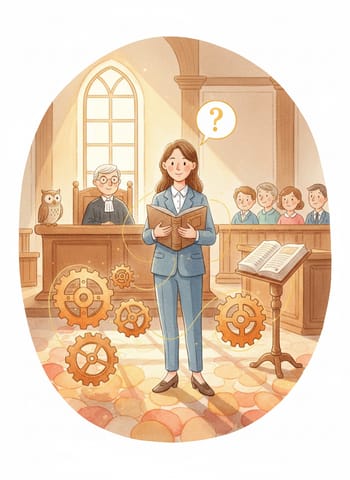
Orsolya had interpreted in the civil courts for eleven years, and the first rule of the work was also the hardest: be a pane of glass. Nobody should notice the person standing between the witness and the bench. If she did her job properly, the judge would hear the witness's voice and see only a faint reflection of her in the window.
奥尔绍利亚在民事法庭做了十一年口译,这份工作的第一条规则同时也是最难的一条:做一块玻璃。没有人应该注意到站在证人与法官席之间的那个人。如果她做得好,法官听到的是证人的声音,在窗子里只看到她淡淡的一道倒影。
The case that morning concerned a rented workshop and some money that had changed hands three years earlier. The witness, a retired carpenter in a jacket too warm for the season, answered every question slowly, as if each word had to be sanded before he let it go. Orsolya rendered his sentences half a beat behind him, in the first person, the way she had been trained. By eleven o'clock her notes covered four pages and her mouth had gone dry.
那天上午的案子涉及一间租来的作坊,以及三年前易手的一笔钱。证人是一位退休木匠,穿着一件对这个季节来说太厚的外套,回答每个问题都很慢,仿佛每个字出口之前都得先打磨一遍。奥尔绍利亚比他慢半拍翻译他的句子,用第一人称,这是她受过的训练。到十一点,她的笔记已经写满四页,嘴里也干了。
It was in the corridor during the break, refilling a paper cup at the water cooler, that the word came back to her. Describing the money he had given the landlord, the witness had used a term that means a sum paid in advance and expected to be returned. She had said "loan." Her mind, hurrying to keep pace, had reached for the commoner word and let the exact one slide past. A deposit and a loan are not the same thing, and the whole case turned on which of them had been handed over.
休庭时,她在走廊里往纸杯里接水,那个词忽然回到了她脑海里。描述他交给房东的那笔钱时,证人用了一个词,意思是预先支付、并且预期会退还的一笔款项。而她说成了“借款”。她的脑子为了跟上节奏,伸手抓了那个更常见的词,让准确的那个词溜了过去。押金和借款并不是一回事,而整个案子的关键,就在交出去的究竟是哪一种。
Standing there with the cup overflowing in her hand, she went through her options with the cold clarity her training had given her. Nobody had noticed. The other side's lawyer was working from her words and would soon build an argument on them, and the witness, who understood only a little of the court's language, had not so much as blinked. Had she said nothing, the error would have stayed in the record for good, and records, in her experience, had a way of hardening.
她站在那里,杯子里的水已经溢了出来,她以训练带给她的冷静清醒,把自己的选择过了一遍。没有人注意到。对方律师正根据她的话来准备,很快就会在上面搭起一套论点,而证人只听得懂一点法庭用语,连眼都没眨一下。要是她什么也不说,这个错误就会永远留在记录里,而在她的经验里,记录有一种变硬的本事。
What troubled her was not the mistake itself; every interpreter made them. It was the prospect of speaking up, of becoming a person in a room that had finally agreed she was not one. Every head would turn to look at the crack in the glass, and a case already running behind would stall while the lawyers argued about what to do with her confession. If she had been a more careless interpreter, she might have slept easily on it. As it was, she knew exactly what her silence would be worth, and exactly who would pay for it.
让她难受的并不是错误本身,每个口译员都会犯错。而是开口纠正的前景,要变成一个出现在一个终于认定她不存在的房间里的人。每个人的头都会转过来,看那块玻璃上的裂缝,一桩本来就拖了进度的案子,会在律师们争论该拿她的坦白怎么办时停下来。如果她是个更粗心的口译员,也许能睡得安稳。可现在,她清楚地知道自己的沉默值多少,也清楚地知道谁来付这个代价。
When the court resumed, she waited for a pause between questions. Not until her own pulse had settled did she speak, and even then her voice came out thinner than she would have liked.
法庭复会后,她等到两个问题之间有了停顿。直到自己的脉搏平稳下来,她才开口,即便如此,她的声音还是比她希望的要细。
"Your Honour, the interpreter requests leave to correct the record. This morning I rendered the witness's word for the money as 'loan.' It means 'deposit,' a payment made in advance and meant to be returned. I apologise for the error."
“法官大人,口译员请求准许更正记录。今天上午,我把证人说的那笔钱译成了‘借款’。它的意思是‘押金’,是预先支付、本应退还的款项。对这个错误,我深表歉意。”
For a moment nobody moved. The other side's lawyer let out a long breath through his nose. The judge's pen stopped, then started again.
有那么一会儿,没有人动。对方律师从鼻子里长长地呼出一口气。法官的笔停了一下,又接着写起来。
"Thank you," the judge said. "We will adjourn for twenty minutes while the recording is checked, and counsel may use the time to reconsider their positions."
“谢谢你,”法官说,“我们休庭二十分钟,核对录音,律师们可以利用这段时间重新考虑各自的立场。”
Somewhere behind Orsolya, a clerk groaned softly.
奥尔绍利亚身后某处,一位书记员轻轻地哀叹了一声。
In the corridor, the witness was waiting by the water cooler, holding a paper cup he had not filled. He spoke in their own language, quietly, so that only she could hear.
走廊里,证人正等在饮水机旁,手里拿着一只没有接水的纸杯。他用他们自己的语言低声说话,只让她一个人听见。
"I heard it the first time," he said. "I wanted to see whether you would."
“第一次我就听出来了,”他说,“我想看看你会不会说。”
Then he opened the courtroom door and held it, waiting for her to go first.
然后他推开法庭的门,扶着,等她先进去。