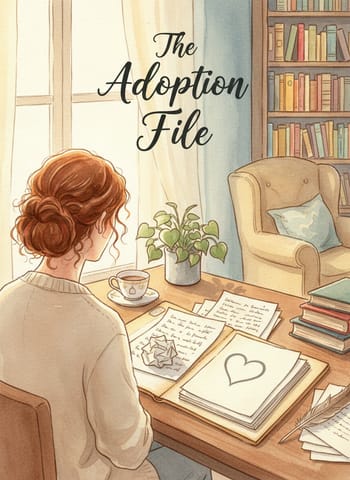
The envelope had been in the kitchen drawer for two years, between the takeaway menus and a roll of tape. Solene had walked past it so often that it had stopped feeling like an object and started feeling like part of the furniture. On a wet Sunday in March, with nothing else left to avoid, she took it out and slit it open with a butter knife.
那只信封在厨房抽屉里放了两年,夹在外卖菜单和一卷胶带之间。索莱娜从它旁边走过的次数太多,它已经不再像一件物品,而成了家具的一部分。三月里一个下雨的星期天,再没有别的事可以用来逃避了,她把它拿出来,用一把黄油刀划开了。
Inside were four things. A short typed summary. A form on which one of two boxes had been ticked, the one that read contact would be welcomed. Beside it was a faint pencil mark, as though someone had begun to change their mind and then thought better of it. A medical history that filled only half a page. And a name and a street, written out in careful capitals. She read the name aloud once, to hear how it sounded in a room, and did not say it again.
里面有四样东西。一份简短的打印摘要。一张表格,两个方框里有一个被勾选了,写的是欢迎联系。旁边有一道淡淡的铅笔痕,仿佛有人刚想改变主意,转念又作罢了。一份病史,只写了半页。还有一个名字和一条街道,用工整的大写字母写成。她把那个名字大声念了一遍,想听听它在房间里是什么声音,然后就没有再念第二遍。
What surprised her was her own calm. She had expected to be flooded, or at least to cry. Instead she sat at the table making tea she did not want and thought, with a clarity she distrusted, that she did not know what she was for. Not a reunion. Not a rescue. She already had the mother who had raised her, who still rang on Thursdays to ask whether she was wearing a coat, and nothing in the file threatened that. Yet the pencil mark sat there, small and unresolved, asking her to say what she wanted.
让她意外的是自己的平静。她原以为会被情绪淹没,至少会哭。可她只是坐在桌边,泡着自己并不想喝的茶,带着一种连自己都不太相信的清醒想,她不知道自己是为了什么。不是为了重逢。不是为了拯救。她已经有了养大她的母亲,母亲每周四还会打电话来问她有没有穿外套,这份档案里没有任何东西会威胁到这一点。可那道铅笔痕就在那里,小小的,悬而未决,要她说出自己想要什么。
She wrote the first letter that afternoon, quickly, and it was angry in a way she had not known she was. It began with a question and had no greeting. She read it back, put it in the bin, and then fished it out again. The second draft was its opposite: nine apologetic lines that thanked the woman for things Solene did not yet know she had done. The third was a list of questions about family, about health, about whether there were other children, and it sounded, even to her, like a form.
那天下午她写了第一封信,写得很快,里面有一种愤怒,连她自己都不知道自己有。信以一个问题开头,没有称呼。她读了一遍,扔进了垃圾桶,随后又把它捞了出来。第二稿则恰恰相反:九行满是歉意的话,感谢那位女士做了一些索莱娜还不知道她做过的事。第三稿是一连串问题,关于家人,关于健康,关于有没有其他孩子,读起来,连她自己也觉得像一张表格。
Not until the fifth draft did she notice that none of her sentences began with the word want. She had been writing around the thing, the way one walks around a hole in a floor. When she put down the pen and asked herself directly, the answer came out smaller than she had feared and less like a wish than a request. She would like to hear a voice say hello. Nothing more was needed on the first page.
直到第五稿,她才注意到,自己写的句子没有一句是以“想要”这个词开头的。她一直在绕着那件事写,就像人绕开地板上的一个洞。当她放下笔,直截了当地问自己时,答案出来得比她担心的要小,与其说是一个愿望,不如说是一个请求。她想听到一个声音说一声你好。第一页上,不需要再多什么了。
The final letter ran to six lines. Her name. That she was well. That she was thirty-four and taught languages to adults in the evenings. That there was no hurry, and no obligation, in either direction. That she would like, if it was welcome, to hear back. If the file had arrived when she was twenty, she would have torn it open on the stairs and written something she regretted by morning. Had it never arrived, she might not have learned that the wanting was there at all.
最后那封信只有六行。她的名字。她过得很好。她三十四岁,晚上给成年人教语言。不用着急,对双方都没有任何义务。如果对方欢迎的话,她希望能收到回音。要是这份档案在她二十岁时送到,她会在楼梯上就把它撕开,写下一些到早上就会后悔的话。要是它根本没有送到,她也许永远不会知道,那份渴望原来一直存在。
She walked to the postbox at the end of the road in the last of the light, the envelope in her coat pocket, her thumb on the corner where the stamp had begun to curl. The brass flap was heavier than she remembered. She lifted it with one finger and held the letter at the lip of the slot, half in and half out, so that it was neither posted nor kept.
她在最后一缕天光里走向路尽头的邮筒,信封放在大衣口袋里,拇指按着邮票开始卷边的那个角。那黄铜的盖板比她记忆中的沉。她用一根手指把它抬起来,把信停在投信口的边缘,一半在里面,一半在外面,这样它既没有被寄出,也没有被留下。
Behind her, a bus drew up at the stop and sighed open its doors. Solene did not turn around.
在她身后,一辆公交车在站台停下,叹息般地打开了车门。索莱娜没有回头。