How to Tell a Story
A free B2-level English story for language learners, readable online in 7 languages, with an option to listen via the free Storyteller app.
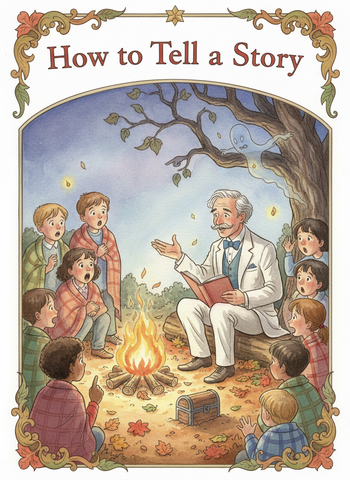
Mark Twain breaks down the secret art of the American humorous story — deadpan delivery, a buried punchline, and a perfectly timed pause — then proves his point with his own spine-tingling campfire tale.
The Humorous Story an American Development.—Its Difference from Comic and Witty Stories.
幽默故事——一种美国独有的创造。——它与滑稽故事、俏皮故事的区别。
I do not claim that I can tell a story as it ought to be told. I only claim to know how a story ought to be told, for I have been almost daily in the company of the most expert story-tellers for many years.
我并不敢说自己能把故事讲得该有的那般好。我只敢说自己知道故事该怎么讲,因为这些年来,我几乎天天都和最会讲故事的行家们混在一起。
There are several kinds of stories, but only one difficult kind—the humorous. I will talk mainly about that one. The humorous story is American, the comic story is English, the witty story is French. The humorous story depends for its effect upon the manner of the telling; the comic story and the witty story upon the matter.
故事有好几种,可只有一种是难讲的——那就是幽默故事。我主要就来谈谈这一种。幽默故事是美国的,滑稽故事是英国的,俏皮故事是法国的。幽默故事的效果全靠讲述的方式,滑稽故事和俏皮故事的效果全靠内容本身。
The humorous story may be spun out to great length, and may wander around as much as it pleases, and arrive nowhere in particular; but the comic and witty stories must be brief and end with a point. The humorous story bubbles gently along, the others burst.
幽默故事可以拖得很长,可以随心所欲地兜圈子,最后也不必落到什么特定的结局;可是滑稽故事和俏皮故事必须简短,还得有个收尾的包袱。幽默故事像水泡一样缓缓地咕嘟咕嘟往前冒,别的两种故事则是一下子炸开来。
The humorous story is strictly a work of art—high and delicate art—and only an artist can tell it; but no art is necessary in telling the comic and the witty story; anybody can do it. The art of telling a humorous story—understand, I mean by word of mouth, not print—was created in America, and has remained at home.
幽默故事严格说来是一门艺术——一门高妙精微的艺术——只有真正的艺人才讲得来;可是讲滑稽故事和俏皮故事却用不着什么艺术,人人都会。讲幽默故事的这门艺术——请注意,我说的是口头讲述,不是印在纸上——是在美国创造出来的,而且始终留在了本土。
The humorous story is told gravely; the teller does his best to conceal the fact that he even dimly suspects that there is anything funny about it; but the teller of the comic story tells you beforehand that it is one of the funniest things he has ever heard, then tells it with eager delight, and is the first person to laugh when he gets through. And sometimes, if he has had good success, he is so glad and happy that he will repeat the “nub” of it and glance around from face to face, collecting applause, and then repeat it again. It is a pathetic thing to see.
幽默故事讲起来一本正经;讲的人竭力掩饰自己哪怕只是隐隐约约觉得这故事有什么好笑之处;可是讲滑稽故事的人却事先就告诉你,这是他听过的最好笑的事情之一,然后满怀热切地讲出来,讲完之后自己第一个笑出声来。有时候,要是他讲得特别成功,他会高兴得又把那个“包袱”重复一遍,一张张脸地扫视过去,收集大家的赞叹,然后再重复一遍。这情景看着实在有些可怜。
Very often, of course, the rambling and disjointed humorous story finishes with a nub, point, snapper, or whatever you like to call it. Then the listener must be alert, for in many cases the teller will divert attention from that nub by dropping it in a carefully casual and indifferent way, with the pretence that he does not know it is a nub.
当然,那些东拉西扯、断断续续的幽默故事,往往也会以一个“包袱”、一个收尾、一个爆点,或者随你怎么称呼它的东西作结。这时听的人可得留神了,因为在许多情形下,讲的人会故意用一种漫不经心、满不在乎的口气把那个包袱随口带出来,装作自己根本不知道那是个包袱似的。
Artemus Ward used that trick a good deal; then when the belated audience presently caught the joke he would look up with innocent surprise, as if wondering what they had found to laugh at. Dan Setchell used it before him, Nye and Riley and others use it to-day.
阿特摩斯·沃德就常用这一招;等到反应慢半拍的听众终于明白过来这个笑话时,他便会带着一脸天真的诧异抬起头来,仿佛纳闷他们究竟在笑些什么。丹·塞契尔在他之前就用过这一招,如今奈伊、赖利等人也在用它。
But the teller of the comic story does not slur the nub; he shouts it at you—every time. And when he prints it, in England, France, Germany, and Italy, he italicizes it, puts some whooping exclamation-points after it, and sometimes explains it in a parenthesis. All of which is very depressing, and makes one want to renounce joking and lead a better life.
可是讲滑稽故事的人绝不会把包袱含糊带过;他每次都要冲着你把它喊出来。等他把这故事印成文字,在英国、法国、德国、意大利,他还要把它排成斜体字,后面加上一连串大喊大叫的感叹号,有时还要在括号里特意解释一番。这一切实在令人扫兴,让人恨不得从此发誓再也不讲笑话,改邪归正、重新做人算了。
Let me set down an instance of the comic method, using an anecdote which has been popular all over the world for twelve or fifteen hundred years. The teller tells it in this way:
让我举一个滑稽讲法的例子,用的是一则在世界各地流传了一千二三百年的轶事。这故事这样讲:
THE WOUNDED SOLDIER.
《受伤的士兵》
In the course of a certain battle a soldier whose leg had been shot off appealed to another soldier who was hurrying by to carry him to the rear, informing him at the same time of the loss which he had sustained; whereupon the generous son of Mars, shouldering the unfortunate, proceeded to carry out his desire. The bullets and cannon-balls were flying in all directions, and presently one of the latter took the wounded man's head off—without, however, his deliverer being aware of it. In no long time he was hailed by an officer, who said:
某次战役中,一个士兵的腿被打断了,他向一个匆匆经过的士兵求助,请他把自己抬到后方去,同时告诉他自己伤了哪里;于是这位战神的慷慨儿子扛起这不幸的伤员,便动身去满足他的要求。子弹和炮弹四面横飞,不久其中一枚炮弹把这伤兵的脑袋打飞了——可是抬他的人却浑然不觉。没过多久,一位军官叫住了他,说道:
“Where are you going with that carcass?”
“你扛着那具尸首要去哪儿?”
“To the rear, sir—he's lost his leg!”
“去后方,长官——他的腿没了!”
“His leg, forsooth?” responded the astonished officer; “you mean his head, you booby.”
“他的腿,你说什么?”那军官吃惊地答道,“你是说他的脑袋,你这个笨蛋。”
Whereupon the soldier dispossessed himself of his burden, and stood looking down upon it in great perplexity. At length he said:
那士兵听罢,便把肩上的重负放了下来,站在那儿低头望着,一脸茫然。过了半晌,他说道:
“It is true, sir, just as you have said.” Then after a pause he added, “But he TOLD me IT WAS HIS LEG—”
“正如长官您所说的,一点不差。”停顿片刻后,他又补上一句,“可他明明告诉我,说的是他的腿呀——”
Here the narrator bursts into explosion after explosion of thunderous horse-laughter, repeating that nub from time to time through his gaspings and shriekings and suffocatings.
说到这里,讲故事的人便爆发出一阵接一阵雷鸣般的哈哈大笑,一边喘着气、尖叫着、几乎要喘不过气来,一边不时把那个包袱重复一遍。
It takes only a minute and a half to tell that in its comic-story form; and isn't worth the telling, after all. Put into the humorous-story form it takes ten minutes, and is about the funniest thing I have ever listened to—as James Whitcomb Riley tells it.
用滑稽故事的讲法,这故事一分半钟就讲完了;而且说到底,也不值得一讲。可若用幽默故事的讲法来讲,得花上十分钟工夫,而且——照詹姆斯·惠特科姆·赖利讲来——是我听过的最好笑的事情之一。
He tells it in the character of a dull-witted old farmer who has just heard it for the first time, thinks it is unspeakably funny, and is trying to repeat it to a neighbor. But he can't remember it; so he gets all mixed up and wanders helplessly round and round, putting in tedious details that don't belong in the tale and only retard it; taking them out conscientiously and putting in others that are just as useless; making minor mistakes now and then and stopping to correct them and explain how he came to make them.
他扮演的是一个迟钝愚笨的老农夫,刚刚头一回听到这故事,觉得它好笑得难以言喻,便想讲给邻居听。可他怎么也记不清楚;于是他把故事讲得乱七八糟,一圈又一圈地兜来兜去,插进许多与故事毫不相干、只会拖慢节奏的琐碎细节;一本正经地把这些删掉,又添上些同样没用的别的细节;不时犯些小错,便停下来纠正,还要解释自己为何会犯这个错。
Remembering things which he forgot to put in in their proper place and going back to put them in there; stopping his narrative a good while in order to try to recall the name of the soldier that was hurt, and finally remembering that the soldier's name was not mentioned, and remarking placidly that the name is of no real importance, anyway—better, of course, if one knew it, but not essential, after all—and so on, and so on, and so on.
他会想起有些事忘了放在该放的地方,便折回去补上;讲着讲着,还要停下老半天,努力回想那受伤士兵的名字,最后终于想起,原来那士兵的名字压根就没被提起过,于是他不慌不忙地说,这名字反正也无关紧要——当然,要是知道就更好了,可到底也不是非知道不可——如此这般,没完没了。
The teller is innocent and happy and pleased with himself, and has to stop every little while to hold himself in and keep from laughing outright; and does hold in, but his body quakes in a jelly-like way with interior chuckles; and at the end of the ten minutes the audience have laughed until they are exhausted, and the tears are running down their faces.
讲故事的人一脸天真、满心欢喜、洋洋自得,还得时不时停下来强忍着不笑出声来;他确实忍住了,可全身却像果冻一样因为内心暗笑而微微颤动;十分钟讲完之后,听众早已笑得筋疲力尽,眼泪都笑出来了。
The simplicity and innocence and sincerity and unconsciousness of the old farmer are perfectly simulated, and the result is a performance which is thoroughly charming and delicious. This is art and fine and beautiful, and only a master can compass it; but a machine could tell the other story.
这老农夫身上那种单纯、天真、诚恳、浑然不觉的神态,被模仿得惟妙惟肖,整场表演也因此变得妙趣横生、令人陶醉。这才是艺术,是精妙而美好的艺术,只有大师才能驾驭它;而另外那个故事,一台机器也能讲出来。
To string incongruities and absurdities together in a wandering and sometimes purposeless way, and seem innocently unaware that they are absurdities, is the basis of the American art, if my position is correct. Another feature is the slurring of the point. A third is the dropping of a studied remark apparently without knowing it, as if one were thinking aloud. The fourth and last is the pause.
依我看,把一些不搭调、荒谬可笑的东西七拼八凑在一起,东拉西扯、有时甚至漫无目的地讲下去,还要装出一副毫不知情、丝毫不觉得它们荒谬的样子,这就是美国这门艺术的根本所在。第二个特征是把包袱含糊带过。第三个特征是像自言自语一样,貌似不经意地抛出一句精心设计的话来。第四点,也是最后一点,就是停顿。
Artemus Ward dealt in numbers three and four a good deal. He would begin to tell with great animation something which he seemed to think was wonderful; then lose confidence, and after an apparently absent-minded pause add an incongruous remark in a soliloquizing way; and that was the remark intended to explode the mine—and it did.
阿特摩斯·沃德常常在第三点和第四点上下功夫。他讲起故事来往往兴致勃勃,仿佛觉得那是件了不起的事;然后忽然没了底气,故作心不在焉地停顿一下,接着像是自言自语似的补上一句不搭调的话来;而这句话,正是用来引爆全场的——而且每次都能奏效。
For instance, he would say eagerly, excitedly, “I once knew a man in New Zealand who hadn't a tooth in his head”—here his animation would die out; a silent, reflective pause would follow, then he would say dreamily, and as if to himself, “and yet that man could beat a drum better than any man I ever saw.”
比方说,他会满脸急切、兴奋地说:“我从前认识一个新西兰人,满口一颗牙也没有”——说到这里他的兴致便突然消失了;跟着是一段沉默、若有所思的停顿,然后他会用一种梦呓般、仿佛只对自己说话的语气道:“可那个人打起鼓来,却比我见过的任何人都强。”
The pause is an exceedingly important feature in any kind of story, and a frequently recurring feature, too. It is a dainty thing, and delicate, and also uncertain and treacherous; for it must be exactly the right length—no more and no less—or it fails of its purpose and makes trouble. If the pause is too short the impressive point is passed, and [and if too long] the audience have had time to divine that a surprise is intended—and then you can't surprise them, of course.
在任何一种故事里,停顿都是极为重要的一个环节,而且是常常反复出现的一个环节。它精巧细腻,却也难以捉摸,稍有不慎便前功尽弃;因为停顿的长短必须恰到好处——不能长,也不能短——否则就达不到目的,反倒坏了事。要是停顿太短,那扣人心弦的重点就一晃而过;要是停顿太长,听众就有时间猜出你是要给他们一个惊喜——这样一来,你当然就没法让他们吃惊了。
On the platform I used to tell a negro ghost story that had a pause in front of the snapper on the end, and that pause was the most important thing in the whole story. If I got it the right length precisely, I could spring the finishing ejaculation with effect enough to make some impressible girl deliver a startled little yelp and jump out of her seat—and that was what I was after. This story was called “The Golden Arm,” and was told in this fashion. You can practise with it yourself—and mind you look out for the pause and get it right.
我以前常在台上讲一个黑人的鬼故事,故事结尾的包袱之前有一处停顿,这个停顿是整个故事里最要紧的一环。要是我把这停顿拿捏得恰到好处,我便能带着十足的效果甩出那最后一声惊呼,让某个容易受惊的姑娘尖叫一声、从座位上跳起来——而这正是我想要的效果。这个故事名叫《金胳膊》,讲法如下。你自己也可以练习一下——只是千万留心那处停顿,务必拿捏得准。
THE GOLDEN ARM.
《金胳膊》
Once 'pon a time dey wuz a monsus mean man, en he live 'way out in de prairie all 'lone by hisself, 'cep'n he had a wife. En bimeby she died, en he tuck en toted her way out dah in de prairie en buried her. Well, she had a golden arm—all solid gold, fum de shoulder down. He wuz pow'ful mean—pow'ful; en dat night he couldn't sleep, Gaze he want dat golden arm so bad.
从前哪,有个抠门抠到家的男人,他一个人远远地住在草原上,只有一个老婆陪着他。后来没多久她死了,他就把她一路抬到草原上,埋了。可她生前有一条金胳膊——通体纯金打造,从肩膀一直到手都是。这男人抠门得很——抠门透了;那天晚上他睡不着,因为他实在太想要那条金胳膊了。
When it come midnight he couldn't stan' it no mo'; so he git up, he did, en tuck his lantern en shoved out thoo de storm en dug her up en got de golden arm; en he bent his head down 'gin de win', en plowed en plowed en plowed thoo de snow. Den all on a sudden he stop (make a considerable pause here, and look startled, and take a listening attitude) en say: “My LAN', what's dat!”
到了半夜,他再也忍不住了;于是他爬起身来,提上灯笼,冒着风雪出了门,把她挖出来,取下了那条金胳膊;他低着头顶着风,深一脚浅一脚地在雪地里走啊走啊走。忽然间他停住了脚步(这里要停顿好一阵子,露出吃惊的神色,摆出侧耳倾听的姿态),说道:“我的天哪,那是什么!”
En he listen—en listen—en de win' say (set your teeth together and imitate the wailing and wheezing singsong of the wind), “Bzzz-z-zzz”—en den, way back yonder whah de grave is, he hear a voice! he hear a voice all mix' up in de win' can't hardly tell 'em 'part—“Bzzz-zzz—W-h-o—g-o-t—m-y—g-o-l-d-e-n arm?—zzz—zzz—W-h-o g-o-t m-y g-o-l-d-e-n arm!” (You must begin to shiver violently now.)
他侧耳一听——再听——只听得风声说着(咬紧牙关,模仿风的呜咽哀鸣的声调):“嗡——嗡——嗡”——接着,从远处坟墓那边,他听见一个声音!那声音跟风声混在一起,简直分不大清楚——“嗡——嗡——谁——拿——了——我——的——金——胳——膊?——嗡——嗡——谁拿了我的金胳膊!”(这时你必须开始浑身剧烈发抖。)
En he begin to shiver en shake, en say, “Oh, my! OH, my lan'!” en de win' blow de lantern out, en de snow en sleet blow in his face en mos' choke him, en he start a-plowin' knee-deep towards home mos' dead, he so sk'yerd—en pooty soon he hear de voice agin, en (pause) it 'us comin' after him! “Bzzz—zzz—zzz—W-h-o—g-o-t m-y—g-o-l-d-e-n—arm?”
他浑身抖啊抖,说道:“哦,天哪!哦,我的老天!”这时风把灯笼吹灭了,雪和冰雹扑在他脸上,差点没把他呛住,他吓得半死,深一脚浅一脚地朝家里的方向走去,走得几乎快要没命了——没过多久,他又听见那个声音了,而且(停顿)——那声音正朝他追过来!“嗡——嗡——嗡——谁——拿——了——我——的——金——胳——膊?”
When he git to de pasture he hear it agin closter now, en a-comin'!—a-comin' back dah in de dark en de storm—(repeat the wind and the voice). When he git to de house he rush up-stairs en jump in de bed en kiver up, head and years, en lay dah shiverin' en shakin'—en den way out dah he hear it agin!—en a-comin'! En bimeby he hear (pause—awed, listening attitude)—pat—pat—pat—hit's acomin' up-stairs! Den he hear de latch, en he know it's in de room!
等他到了牧场,又听见那声音了,这回更近了,而且——还在追过来!——在那黑暗和风雪中一路追来(重复风声和那声音)。等他到了家,他冲上楼去,跳上床,蒙着被子,连头带耳朵都蒙上,躺在那儿浑身发抖——过了一会儿,他又听见那声音了!——而且还在追过来!没多久他又听见(停顿——敬畏地侧耳倾听)——啪嗒——啪嗒——啪嗒——那声音上楼来了!接着他听见了门闩响,他知道那东西已经进了房间!
Den pooty soon he know it's a-stannin' by de bed! (Pause.) Den—he know it's a-bendin' down over him—en he cain't skasely git his breath! Den—den—he seem to feel someth' n c-o-l-d, right down 'most agin his head! (Pause.)
没过多久,他知道它已经站在床边了!(停顿。)接着——他知道它正俯身弯下来看他——他几乎喘不过气来!接着——接着——他好像感觉到有个凉——冰——冰的东西,几乎就贴在他的头边!(停顿。)
Den de voice say, right at his year—“W-h-o g-o-t—m-y—g-o-l-d-e-n arm?” (You must wail it out very plaintively and accusingly; then you stare steadily and impressively into the face of the farthest-gone auditor—a girl, preferably—and let that awe-inspiring pause begin to build itself in the deep hush. When it has reached exactly the right length, jump suddenly at that girl and yell, “You've got it!”)
这时那声音在他耳边说道——“谁——拿——了——我——的——金——胳——膊?”(这句话你必须用极其哀怨、又带着控诉的语气拖长了哭喊出来;然后你要目不转睛、意味深长地盯着离你最远的那位听众——最好是个姑娘——让那份令人敬畏的停顿在一片死寂中慢慢酝酿。等它酝酿到恰到好处的时候,你要猛地朝那姑娘扑过去,大喊一声:“是你拿的!”)
If you've got the pause right, she'll fetch a dear little yelp and spring right out of her shoes. But you must get the pause right; and you will find it the most troublesome and aggravating and uncertain thing you ever undertook.
要是你把停顿拿捏得恰到好处,她准会“哎呀”一声可爱地尖叫起来,从鞋里跳出来似的。可你务必把停顿拿捏准确;你会发现,这是你尝试过的所有事情里,最麻烦、最令人抓狂、最难以捉摸的一件。
